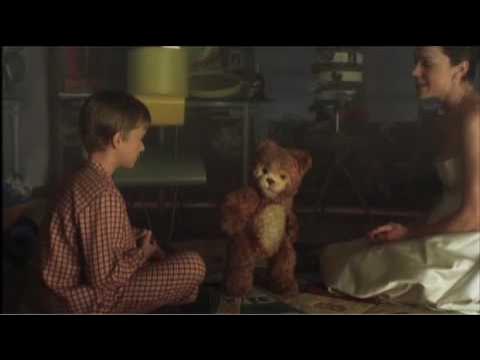
Toymakers in China have declared 2025 the year of artificial intelligence (AI) and are producing robots and teddies that can teach, play and tell stories. Older children, meanwhile, are glued to viral ai videos and ai-enhanced games. At school, many are being taught with materials created with tools like ChatGPT. Some are even learning alongside chatbot-tutors.
In work and play, AI is rewiring childhood. It promises every child the kind of upbringing previously available only to the rich, with private tutors, personalised syllabuses and bespoke entertainment. Children can listen to songs composed about them, read stories in which they star, play video games that adapt to their skill level and have an entourage of chatbot friends cheering them on. A childhood fit for a king could become universal…
… Being reared by robots has advantages. Tech firms are already showing how ai can enhance learning, especially where teachers and materials are scarce. Literacy and language-learning have been boosted in early trials. The dream is that, with an AI tutor, children can be saved from classes pitched to the median, in which bright pupils are bored and dim ones are lost. If you want a version of this leader for an eight-year-oldHindi-speaker, AI can rewrite it; if they would prefer it as a cartoon strip or a song, no problem…
…Yet childhood may be disrupted most radically by things that AI does when it is behaving as intended. The technology quickly learns what its master likes—and shows more of it. Social-media feeds have already created echo chambers where people see only views they agree with (or love to hate). AI threatens to strengthen these echo chambers and lock children into them at an early age. The child who likes football may be told football stories by his teddy and given footballing examples by his ai tutor. Not only does this stamp out serendipity. A favourites-only diet means a child need never learn to tolerate something unfamiliar.
One-sided relationships with chatbots present a similar risk. AI companions that never criticise, nor share feelings of their own, are a poor preparation for dealing with imperfect humans. A third of American teenagers say they find chatting to an AI companion at least as satisfying as talking to a friend, and easier than talking to their parents…
A thought I have every time I see somebody talking to their yappy little dog. Witness the many bumper stickers with a sentiment that they much prefer their dog to any/all humans.
If we think the COVID kids are gonna struggle to be humans in a human society, I fear we ain’t seen nothing yet. The first AI-raised asocial delinquents are about 15 years in the future. So we’ll know soon enough.
What will probably happen is in a ~5 years we will have AI assisted devices we wear that give us constant feedback on social cues we aren’t picking up on. That will enhance socialization, not damage it because the feedback (this person likes you, this person doesn’t like you, this person is afraid, this person is empathetic, this person is upset, this person is stressed, etc) will give people guidance on who to avoid and who to interact with, and give signs on how to socialize.
Nonsense. The devices that will sell will be the ones that tell the wannabe bullies who best to intimidate and how. Not the ones that tell the shy how to be more socially aware.
Our society is entering a death spiral of selfishness. We might hope for the opposite but IMO that will only come after we hit rock bottom. My belief is the rock bottom point is a generation or two in the future. Certainly long past the number of years I have left.
I’m not surprised that it’s back on the market somewhere – when I first heard that there was an AI teddy bear that responded to generic AI questions with only typical success at guard-railing, (including coding, website building, sex, drugs, and rock-n-roll), my immediate reaction was “I want one”. But I heard that the AI provider had disabled it, and I still can’t find it on Amazon or Ebay any more.
Foreign languages taught me more about English grammar than English classes. The way a culture uses language defines many aspects of that culture, and merely being given and repeating a phrase correctly does not offer those deep insights. Learning a language uses many parts of the brain, and so is thought to ward off dementia since connections have been made everywhere even if a small piece of brain later becomes unavailable. How does one learn to communicate with others?
My impression is that people’s lives become easier and safer, they become more pro-social. They become better parents, and those kids grow up to become better adults.
The rates of child abuse have dropped about 60% in the last 30 years. The rates of secure attachment among children is growing. Ideally its a positive feedback loop. A good life makes people better, and better people make life better for others. It also goes in the opposite direction. If the power grid collapses from an EMP, your nice neighbor will be stealing all your food. But if the power grip remains working and his depression gets properly treated, or his child never dies in a car wreck due to better safety features, he gets his chronic pain treated, etc etc. he will become a better person too.
As far as the bullies looking for easy targets, the AI devices will also alert people to the bullies so they know to avoid them, and so people will learn better ways to deal with the abuse to resolve or escape it.
In general I completely agree with your thesis. Better times make for better people. And vice versa. I’ve said similar things here over the years about harsh climates making for harsh ethos.
My meta-point was that for a variety of reasons much of the world and certainly much of the USA is entering a selfish almost psychopathic era. Where bullying and greed and arrogance are celebrated as the highest aspirations.
Such that while you’re surely correct about the flow of causation, I’m predicting the near term will be a very shitty world populated by shitty people competing to be the shittiest possible to one another. All in the name of personal advantage.
At least for another 30 to 50 years until there’s been enough violence to persuade people to try another smarter way. IOW, I’m predicting a mini Dark Ages, but politically / psychologically, not necessarily scientifically / technologically.
If it works as advertised? They grow up extremely submissive to and afraid of authority, due to being both constantly propagandized and living every moment of their life under AI surveillance for disloyalty or dissent.
If it works like it seems to in practice they become progressively delusional as they are fed a constant diet of AI-driven convincing falsehoods.
I agree with the first part of that, but not with the reference to climate and ethos. In general, “better people” tend to be associated with a good standard of living stemming from the strong economies of wealthy countries, not with their climate. Tropical countries are often poor and their governments unstable or dictatorial. I’d rather live in Canada than in, say, El Salvador, Nicaragua, or Haiti, even though they’re toasty warm. For that matter, I’d rather live in Canada than have to put up with the crazy politics and bigotry of much of the southern US. Conversely, Scandinavian countries have a climate as cold or colder than Canada but a warm culture. Sweden is perhaps the world’s most successful true social democracy. If only they would condemn surströmming they’d be even better!
As for your predictions of the enshittification of modern culture, you may be right. There are multiple driving forces including the internet and social media, but I don’t see AI having a particularly malign influence, or at least, I feel that the good it does may well outweigh any harms.
Wow, what a depressing dystopian view of the future! And certainly not one borne out by any present reality that I can see. If ChatGPT were a person, it would be the most congenial and well-informed one that I know! Some of the potential negative outcomes expressed in that Economist article are already here, and are due to the internet and social media. They have little or nothing to do with what we usually mean by “AI”.
Kids may lose some skills to AI the same way that arithmetic skills became superceded to some extent by calculators (but I presume are still taught and considered important for kids to learn), but there’s also the potential for great benefits, like using LLMs as well-informed, patient, interactive tutors. But I don’t think there’s any greater risk of kids losing social skills than there already is. Someone who interacts exclusively with a chatbot and has no friends already has serious problems.
I added the (social) part to the quote for clarity and
that bit is what I’d like to comment on.
As a parent, I don’t see kids losing social skills per se so much as I see what is considered a social skill or even socially acceptable behaviour changing. I do think information technology such as the internet and cell phone has greatly impacted that change, for good or bad I don’t know. That may be a matter or perspective.
OTOH, if the kid’s interlocutor was Grok, not ChatGPT, what do you think of AI influence now?
IMO the future will hold far more Groks than ChatGPTs. And more subtle Groks, who shape opinion and behavior slowly like a potter working clay, not like a thug wielding a club.
How do you suppose Faux News’ own pet AI will behave? What stories and information will it offer? How will it answer seemingly neutral questions? What follow-on questions will it suggest? And, as always, cui bono?
As soon as there is money or political power to be had by using AIs as influencers, they’ll be everywhere. Oh wait; they already are. And we are starting to see the supertanker of global human behavior turning to their rudder orders.
On that particular point, Grok is an outlier funded by a super-rich lunatic. AFAIK there are no other Nazi chatbots.
That’s a cynical take, but a valid one. As the cost of training customized LLMs and hosting them drops, there will no doubt be entities using them the same way that they currently offer perverted versions of Wikipedia, like Grokipedia and the hilarious Conservapedia.
But these have very, very limited audiences, and the mainstream Wikipedia seems to be meeting the challenge of neutrality quite well. I’m not saying you’re wrong, just that it remains to be seen whether biased chatbots would be a significant threat to impartial information beyond the mess we already have today with conventional media.
Which is why Wikipedia will likely be destroyed. Both for not being politically compliant, and for being free of charge.
Under present social trends any question like this needs to be answered with the assumption that the worst possible people will be making the decisions as to how AI will be (mis)used and how children will be educated. Or more accurately, indoctrinated.