Sure but having the thing be a picky eater (and one would think 50 years was time enough to figure it out or else it’s not as bad as everyone says) is a different story than having an infantryperson’s personal weapon be so hi-tech that it could get altogether bricked. So ideally at the core of the iRifle there will be a “dumb” mechanical action that in case of technology failure allows you to just rip all the gadgetry from the rails and fight on springs, gas and iron sights.
(Of course, Sarge will have an ongoing headache trying to get the grunts to NOT try to jailbreak it to download unauthorized apps…)
Robots and drones will do a lot of our fighting.
Weapons will be self aiming with bullets that can be exploded near the target. I’m assuming we aren’t far from weapons that can identify hostiles vs non-combatants and friendly targets, and that can them aim the weapon and fire.
South Korea has weapons like this along their border with North Korea. Self aiming machine guns that can identify hostiles (but maybe they just target everyone).
Basically the role of identifying who is a hostile vs non-combatant, aiming the projectile, and pulling the trigger will all be automated.
[quote=“JRDelirious, post:21, topic:782937”]
snip
So ideally at the core of the iRifle there will be a “dumb” mechanical action that in case of technology failure allows you to just rip all the gadgetry from the rails and fight on springs, gas and iron sights.
snip
QUOTE]
I’m sorry JRDelirious, I can’t let you do that

I want to add that it wasn’t just US combat statistics; that 300 meter threshold is one that pretty much all major combatants came up with based on statistical analysis.
The article was misleading in one place though; it mentions that in Afghanistan the enemy was engaging with PK/PKM type machine guns, and declaring a capability gap because the average M16/M4 can’t engage at that kind of distance. In some sense, they’re saying that US forces are bringing a knife to a gunfight, but more because the PK/PKM series of wepaons are machine guns firing 7.62x54R, not AK-47/74 variants firing rifle rounds.
I suspect that if US forces returned fire with M240B machine guns, they’d be on a more equal footing, since those are both machine guns and have the tripod/bipods and sights to actually engage at that range.
I just want to add that even with a scope, a 300+ yard shot is difficult. Back in the day (like say 1900-1930), infantry units had musketry drills that were more akin to Civil War style musketry (i.e. they’d estimate range, aim and do volley fire at targets past a certain distance), because it was damn near impossible to actually aim with iron sights past about 200-300 yards. Machine guns changed that somewhat, in that they are ideally used more like long-range shotguns with tripods and better sights for long range engagement than your average rifle.
If fired upon my PKs at 500 meters, US forces in Afghanistan would most likely call in air strikes, howitzers, mortars or use the weapons on vehicles they may have with them. One of the great things about fire support is that the infantry doesn’t have to carry them, they can call upon them.
My own design is the super subgun. It’s basically a sub-machine gun that can also launch grenades and fire anti-material missiles. The 9mm or .45 sub is the only defensive feature of the weapon. Main drawbacks are 1) weight (will probably weigh 10 pounds fully outfitted) and 2) the user has to be a walking ammo dump.
That’s a nice theory, kid, but this here is the fleet. You call in close air support and three hours later the wing wipers show up and drop thirty tons of ordnance five klicks southeast of your designated target. Meanwhile, some group of kiddie-fuckers has run you off a hill and stolen your M&Ms, and you’re just hoping you can lead them to some forward support base where they’ll meet a personal hell in the form of a group of sexually frustrated Marines who didn’t get their scheduled USO visit and are looking to take vengence on anything moving.
In other words, while you may be part of an army, you can never depend on anything that isn’t in your TO&E, so in wide open area like Afghanistan you want some weapons capable of making someone regret having gotten out of their cave in the morning at a range of more than 300 meters.
Stranger
I was under the impression that mortars and the heavy weapons on the (very frequently used in Afghanistan) vehicles usually be in the TO&E of infantry units. It’s certainly true that Green Berets/Delta/SAS & such would need more as they may have to go without much support, integral or otherwise.
Do you think 1 DMR per squad would be sufficient for engaging PKs at 500 meters?
I’m reading about WW 1 and my interest grows the more I go into it. Riflemen would engage beginning at 1,000 yards. 30 cal. machine guns were treated as light artillery, often elevated up to reach 3,000 yards, while spiked maces and swords were manufactured and issued to soldiers.
While mortars and artillery have relegated the .30 cal MG to short-range squad-platoon support roles, it’s range potential is still there. Same with .30 cal battle rifles.
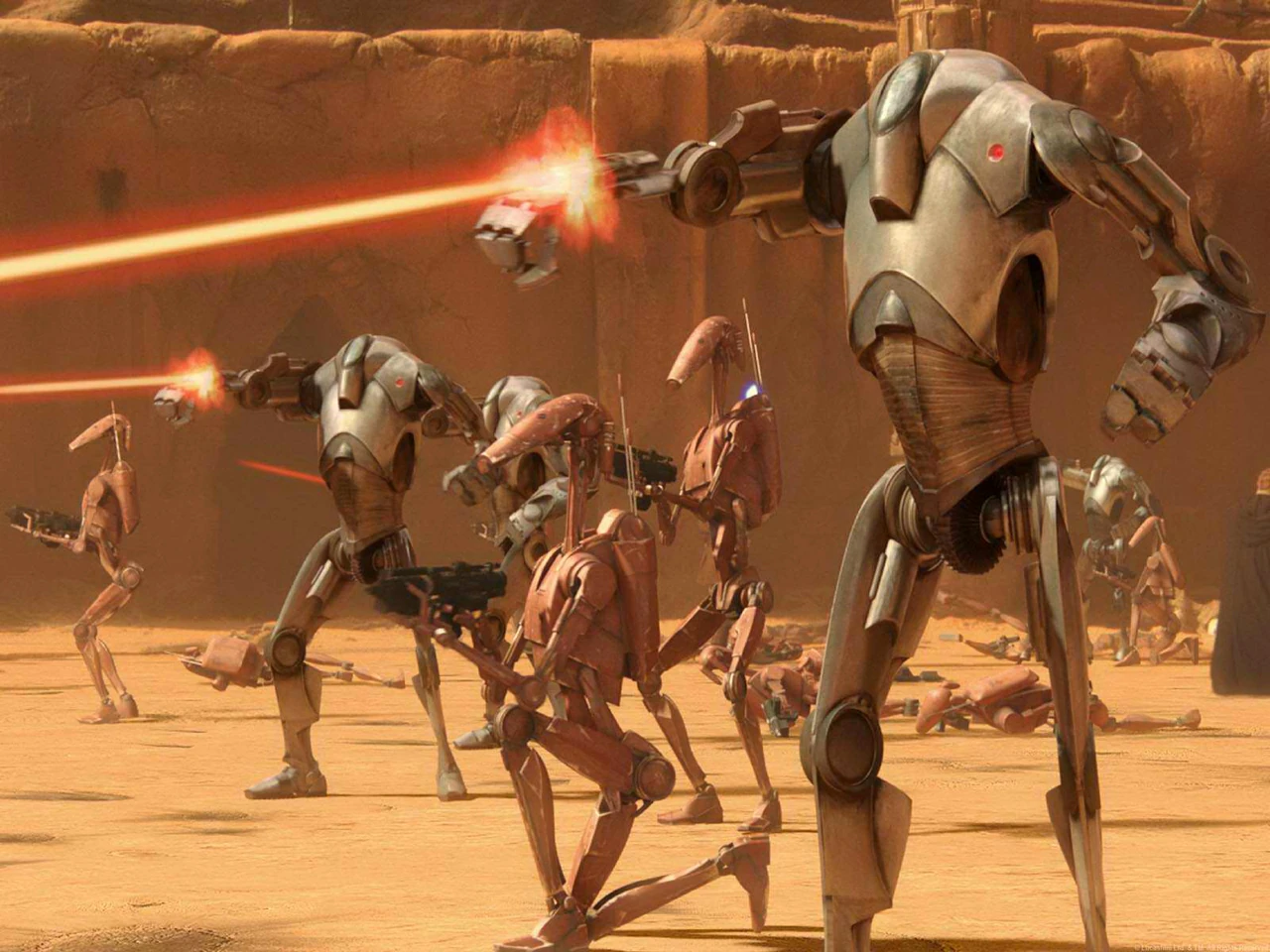

Good guys will be issued guns that fire energy bolts that are colored a cool, pleasing color like blue, and bad guys will be issued guns that fire energy bolts that are colored red. This will be of great help if you don’t know if you’re a good guy or a bad guy.
That’s kind of where I was going with my volley fire comments; I used to have a ca. 1925 junior officer manual of some sort- it was fascinating, in that it talked about how to tell your platoon to do long-ranged fire; it was in essence volley fire, in that it wasn’t individual soldiers firing at individual soldiers, but rather the officer telling the platoon to fire at some particular area some specific distance away, and they’d all adjust their sights, and fire en masse at the large target, because with iron sights and naked eyes, the vast majority of soldiers can’t really see and more importantly hit individual people past a few hundred yards. So they’d fire in groups.
Nowadays, 7.62 firing machine guns would probably take up that long-ranged fire role
Or anti-personnel snipers using rifles chambered in .338 Lapua or .50 BMG.
Stranger
For some reason, beginning in WW 2, small arms engagements shrank to 200 meters average. WW2 soldiers could have done very well armed with M-16’s or AK-47’s. With regard to long range, the modern M-60 on a bipod can aim at man-sized targets up to 500 meters, 1,500 meters for vehicle-sized targets. When on a stationary pintle or tripod, the gunner gets a pre-determined range card so he can elevate to reach as far as 2,500 meters. At that range, 7.62 slugs can still kill but its main use is to enfilade a mass of troops, or keep defiladed enemy troops pinned down while their own soldiers maneuver to a better vantage position.
It’s not the only asset that can help just under current tech/weapons. It’s an asset that happens to allow effective aimed fire at longer ranges.
That squad also has two M249 Squad Automatic Weapons (600m eff range against point targets, 800m for area targets.) They may also be supported by or be assigned one of the M240 general purpose machine gun teams the platoon has. That’s also inside the maximum effective range of the M4 fired at area targets so they can at least put some bullets in the vicinity for suppression. As long as it’s not a battle on a pool table, that can allow it to become a matter of fire AND maneuver. There’s a reason why the old saw about “shoot, move, and communicate” isn’t “shoot, shoot, and shoot some more.” 
How do you think sniper rifles or weapons which fulfill analogous functions will be like? Do you see snipers being able to make 5km shots using .50cal or bigger sniper rifles?
What kind of information is on the HUDs of warplanes aside from the basic altitude, speed and range? What kind of additional information may be there in the future?
So, infantry in Afghanistan are doing fine despite what the article says?
I realize the question may seem broad or basic but what are the functions or some of the actions which come under “move” and “communicate”?
How far away are we from silencing technology that really reduces gunfire to a soft “thwip thwip thwip” like in Hollywood films, inaudible from even short distances away, or is that just physically impossible?
Maybe today. With Tracking Point-like scopes, long range shots using subsonic ammo might be possible since the ballistic solution is precisely worked out by the computer and a highly curved trajectory is less of a problem. Once you’re using subsonic ammo with a weapon whose design is optimized to be silent (e.g.: MP5SD), you might indeed get 500 meter shots with a weapon that goes thwip thwip.
I’d think the issue there might be that even if you can accurately put a subsonic bullet on target with a silenced weapon at 500 meters, you might not have enough “zip” left in the round at that point to reliably incapacitate your enemy. The issue with the 5.56 rounds at longer ranges isn’t one of accuracy, but performance, in that it slows down considerably by the time it’s over 500 meters, and doesn’t reliably incapacitate.
Subsonic rifle rounds are starting out going MUCH slower than stock rounds. For example, your average 7.62 NATO sniper round is something like 175 grains @ 2580 fps. A subsonic version of the same cartridge is probably the same weight, but something like 1080 fps. By way of comparison a standard 9mm FMJ pistol round (known for being an indifferent man-stopper) is 125 grains @ 1200 fps.
The subsonic rounds are probably great for popping an unsuspecting sentry in the back of the head at 150 meters silently, but that’s pretty much their only niche. At 500 meters, they’d be useless, IF they can even make it that far.
As for very effective silencing technology,it exists, but it’s a lot less sexy than you might think.
US sanctuary cities.