I need to talk to sensible people (like you folks) about dietary supplements

Leaving aside, at least to begin with, what I think of as “standard” supplements like multivitamins, as well as supplements suggested by one’s doctor, like iron, I would like to initiate a discussion about the vast sea of other kinds of supplements.

Some of the most common areas where these supplements are advertised are anti-inflammatories, brain function, weight loss, and various “beauty” applications like skin, hair, and nails. Maybe add heart health to that list.

Whenever I look up “health benefits of supplement x” I get articles in WebMD and similar sites that are full of “possible” benefits that the supplement “may” provide. I had a discussion with an orthopedist I was seeing about my osteoarthritis, talking about anti-inflammatories, and he said basically two things: there isn’t enough research about these things for a doctor to advise anyone to take them, and that the ones I mentioned to him are maybe 60/40 worth the cost. There isn’t enough research because no-one wants to bear the expense to research substances that are not proprietary, i.e. the testing company would not make money by proving them effective.

I have started taking some anti-inflammatory and other supplements (glucosamine, MSM, boswellia extract, and turmeric) to help with my arthritis. They actually do seem to help, but I don’t know which one or ones are actually helping, or how much, or whether the apparent benefits actually come from other things, like my body adjusting to and compensating for the sources of pain. But I’m afraid to stop, because when my hip arthritis first manifested the pain was pretty bad.

I need to hear rational perspectives about how to think about supplements. I have so many questions. If I want to try a new supplement for whatever reason, is it possible to find a reliable source that is actually selling what they say they are selling, and not just packaging floor sweepings in a capsule? How do you tell the reliable sources from the scams and fakes? My brain is stuck in a rut, and I need to broaden my thinking. I am strongly convinced of the validity of the scientific method, but it doesn’t seem to be doing me much good in this area due to the general lack of good research.

So there it is. I’m getting older, most of the things medically wrong with me are being treated successfully with standard western medical science, but there are areas that concern me about which medical science doesn’t seem to have much to say. My concerns are not about living longer, but about my quality of life while I am alive.

Now, what do you think? How do you approach this topic? What do you know that I don’t know?
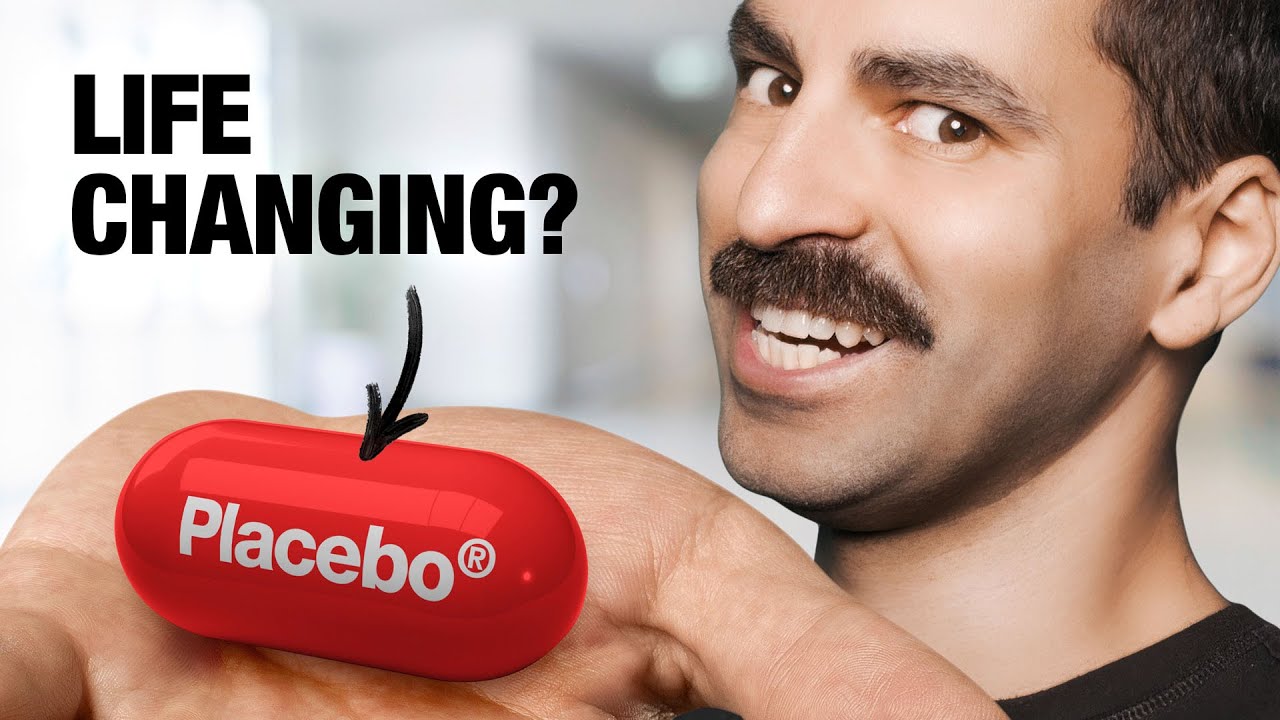
I am not a medical professional (I was a biochemist) but IMHO “supplements” are pretty much worthless, and that suspicion is reinforced by the sleazy types (e.g. Dr Oz, Alex Jones) who market them.

It seems that you might be getting some “placebo” benefits though, so if you feel MSM, glucosamine, etc. are helping your arthritis and they aren’t breaking the bank or causing unwanted side effects, shucks, it’s your money.

Rohin Francis, who runs the Medlife Crisis channel on YouTube, is both knowledgeable and entertaining. Here’s a link to his video on placebos. His other videos are worth watching too.

You should see a nutishionist.

I’m of the opinion unless you are severely depleted, over the counter vitamins will just go right in the toilet.

If you have many months you could do the eliminate each supplement, one at a time til you have got it down to the one that helps most.

What really bothers me is worrying which supplements help or hurt each other.

Have you spoken to your doctor?

I am helped by vit B injections every week. But my treatments really suck that out of me.

If I’m getting a cold I’ll pop a few vit C for a couple days. That’s pretty much it.

I would love the Omega stuff John Walsh hawks to be legit. I’m afraid it is a money sink.

Try to eat your vitamins as much as you can, in your meals.

Seems wise to me.

Supplements have their place and are actually neccesary when a doctors tells you to take them. People in third world countries often have limited diets that don’t supply the neccesary nutrients and suffer from many ailments that leave them open to healt issues that we don’t even consider.

My elderly mom takes a mega dose potassium because she doesn’t get enough in her diet. I take magnesium myself to help with muscle cramps.

@Beckdawrek is correct that it is best to get everything you need from your food if possible, but sometimes it isn’t possible or practical. Like my mom would need to eat a dozen bananas a day to get her potassium level up.

Given that sleazy people do sell supplements doesn’t prove that all supplement sellers are sleazy, nor does it prove that any or all supplements are useless. As I mentioned, the lack of research may be due to the lack of economic benefit to the people who would be doing the research. Lack of research doesn’t prove anything about any value or effectiveness there might be in a given supplement either.

I am familiar with the placebo effect, and the ability to fool oneself into believing what one wants to believe. I don’t particularly want to be spending money and time taking supplements if they are of no benefit. I would like to know the facts, but there doesn’t seem to be a way at present to get there.

I take a multivitamin every morning as a “just-in-case” supplement. No idea if there is any benefit, but on the off-chance that there’s something in there I need, then why not.

Since you mentioned turmeric, it does have some concerns about potentially causing liver damage.

This is an interesting case. From that link:

“Our goal is not to make an overarching statement about how unsafe turmeric is, or to say that supplements are unsafe in every situation,” Dr. Halegoua-DeMarzio clarifies. “I just urge people to consult with their doctors before taking new supplements or vitamins, because in many cases, people do not know how it might interact with their current medications.”

So basically saying not much at all. They noticed a pattern of correlation. I think this highlights the problem I mentioned about lack of research. Rather than double-blind studies and the like, “DILIN uses ‘expert opinion’ to determine the degree of association between the implicated medication(s) and the liver injury.” (this is from a link within the provided link, that discusses the overall NIH-funded research). That’s why the conclusions are so noncommittal. Scare headlines like that are also common in reporting on such studies, either because the reporter doesn’t understand the weakness of the research, or because they want to get more hits. Or both.

As it happens, I did mention turmeric to my orthopedist as one of the supplements I was considering, and he didn’t say anything except that it had a better than even chance of being worth the cost by having some benefit. Now maybe this doctor (actually a PA) was not up to date on this study, because he didn’t ask if it was mixed with black pepper.

I work with pharmacists and to a one they all agree OTC vitamins and supplements are useless, with the exception your doctor recommends it for a specific condition. I think the problem the OP is encountering is there is too much noise out there - a lot of worthless information easily accessed by people “doing their own research” online.

Maybe put aside the internet and just listen to what your doctor and/or pharmacist (ya know, the expert who is trained to diagnose conditions and/or who understands what medications can do) is saying?

My take on dietary supplements is probably well-known here by now. The great majority are over-hyped for claims not supported by good research, overpriced, under- or non-tested, unnecessary and/or have potential for harming vital organs like the liver. Claims by sellers that their products are backed by research generally refer to a particular substance being tested, not the formulation that they sell. Amounts of “active” ingredients in these products vary widely and often diverge from what they’re alleged to contain. Contamination with heavy metals and other deleterious ingredients as well as prescription drugs are well-documented, particularly in the case of supplements imported from India and China.

The major reason supplement companies don’t want to sponsor research is that it would cut into their profits. They get by just fine with the Quack Miranda Warning (“this product has not been evaluated by…yadda yadda…is not claimed to treat or prevent any disease…yadda yadda”) and their special status allowing general claims (“supports groin health”). Big pharmaceutical companies which spend substantial $$ on research have taken notice of profits made by supplement companies which don’t spend on research, which is why Big Pharma has bought up many of these companies.
The line about “no one researches these natural substances because they can’t be patented” is a crock. Pharma routinely patents preparations and versions of them that have been chemically altered for greater effectiveness and safety.
Also a crock: “whole unprocessed herbs are essential because all their ingredients work synergistically to benefit us” - magical thinking aside, substances in plants evolved to benefit plants, not humans.

After all of that, if a supplement sounds intriguing, quality research suggests utility and experts in the relevant medical field think it’s reasonable to try, it may be worthwhile.

Avoid like the plague: “functional” docs and other practitioners who recommend supplements and by sheer coincidence have stores on their websites to sell them to you.

*as for glucosamine/chondroitin oral supplements, I’ve tried them and given them to an older dog with arthritis. There’s very mixed (and mostly negative) evidence on their usefulness, and I haven’t detected any significant effect in our family (the Labrador in question benefited from the ibuprofen analog she received, the glucosamine/chondroitin not so much).

I have asked doctors a couple of times about supplements either I was taking or considering taking. The didn’t say to take them or not take them, they said they would probably do no harm and they might do some good. They might not have said that about other supplements, I don’t know.

I expressed this concern in my OP by asking how one finds a reliable source, once one has decided to take a supplement. I would welcome any concrete advice on that particular topic. The existence of scams and fakes and dishonest sellers does not preclude honest ones (at least to the extent that what they sell contains what they say it contains).

This article, published in 2016, provides some guidance in selecting “nutraceuticals”. The limitations they describe still exist.

It’s decent basic advice, to which can be added: see if the seller has a history of FDA warning or recalls (though fly-by-night companies often close and reopen under new names), and avoid products made with ingredients from countries known for adulteration and contamination problems, like India, China and some other Asian countries.

You mentioned taking boswellia and turmeric. These supplements can be problematic for reasons described in the linked articles. Unfortunately, there’s no guarantee of safety under currently regulatory practices and based on our current state of knowledge.

I doubt a doctor spends very much time on vitamins and minerals in their education.

No shit, my colchicine went from like ten cents per dose to like 5 dollars per dose because they had some company ‘do the research’ and granted them the monopoly on the damned colcrys …. for a drug used for several thousand years. Sigh.

When my ex-husband needed colchicine for his gout, we ended up ordering it from one of the online Canadian pharmacies.

ETA: sorry for the hijack!

You are wrong.

The importance of vitamins, iron etc. and conditions caused by their deficiency (or overload) are part of standard medical education - not just in formal med school classes but throughout training and continued during years of practice.

I am very glad to hear I’m wrong.

There are certainly legit Doctors who specilize in this. A dietician can be a doctor of nutrition or a practitioner.

This is who you go to. They could do blood work and find exactly what your numbers are and what you could need.

I hope regular physicians do this for their patients. I really do. If they got training in med school, I hope they were able to retain it thru a pandemic, many flu seasons, emergencies, and their own lives.

As a person whose seen 100s of docs and specialists. Experts, techs, Nurses. Nurses. My live in nurse. My youngest daughter the nurse. More nurses.

None has ever said: “Try turmeric, see if that helps”

Is your mother’s potassium supplementation OTC or prescription?

Back in my grocery store pharmacist days, I would tell people, “If you want to use herbs to make your food taste better, that’s fine, but if you want to use them to treat XYZ condition, ask your doctor first.”

About once a month, I would take a call from a woman, the same woman each time, who said her father was on dialysis and was ordering all these “remedies” out of the classified ads of supermarket tabloids. AFAIK, I never met her, but I would tell her to have him talk to his doctor. I suspect that would have been like talking to a brick wall.

p.s. I recently discovered this pharmacist, who is not licensed in 46 U.S. states. He has a lot of things to say about OTC supplements.