The U.S. flag is very asymmetric to left-right image flips. So, it’s very obvious when a flag is depicted on a right shoulder that it’s been flipped left-right, to mimic how a flag on a pole in motion appears. And the U.S. has very flag-forward fashion, making the flip easy to find.
After watching the Olympics, I’m not sure how often other countries do this. For example, the U.K. flag and South Korean flag are not symmetric, but the difference is relatively subtle. Do those countries flip the flag on their right shoulders?
And it seems some flags, when flipped left-right, look like the flag of another country. The famous pair is Ireland and Ivory Coast, but there’s likely others. Do these countries flip their flags on their right shoulders?
I don’t know for sure, but I assume that countries with text on their flags, like Brazil or Saudi Arabia, don’t reverse themselves and look identical from both sides.
Does the Australian flag change the the Southern Cross the right away around when the Union Jack is on the right? Or is it just a random cluster of stars?
From what I can tell, the Australian military reserves the right shoulder for unit and/or operation patches. if the unit/operation patch contains the Australian flag as part of the design, it is not reversed.
On aircraft, Australian flags on the right-side ARE reversed.
According to this video, it flips the entire flag around, so the Southern Cross also becomes its mirror image (not exactly a random cluster, though). I find that surprising; I would have thought they’d just move the Union Jack canton and the line star from left to right, the Aouthern Cross from right to left, but leave the layout of the Southern Cross stars intact.
Ireland is a 1:2 flag ratio (i.e. twice as wide as it is tall). Ivory Coast is 2:3. You can’t rely on all representations of a flag being the correct ratio, but that’s a tell.
I’ve seen UK flown upside down and it’s kind of an uncanny valley because it looks wrong but you might not place your finger on it. I’ve also seen it intentionally upside down in the form of the Hawaii flag as a distress signal, not sure what ideology is behind it.
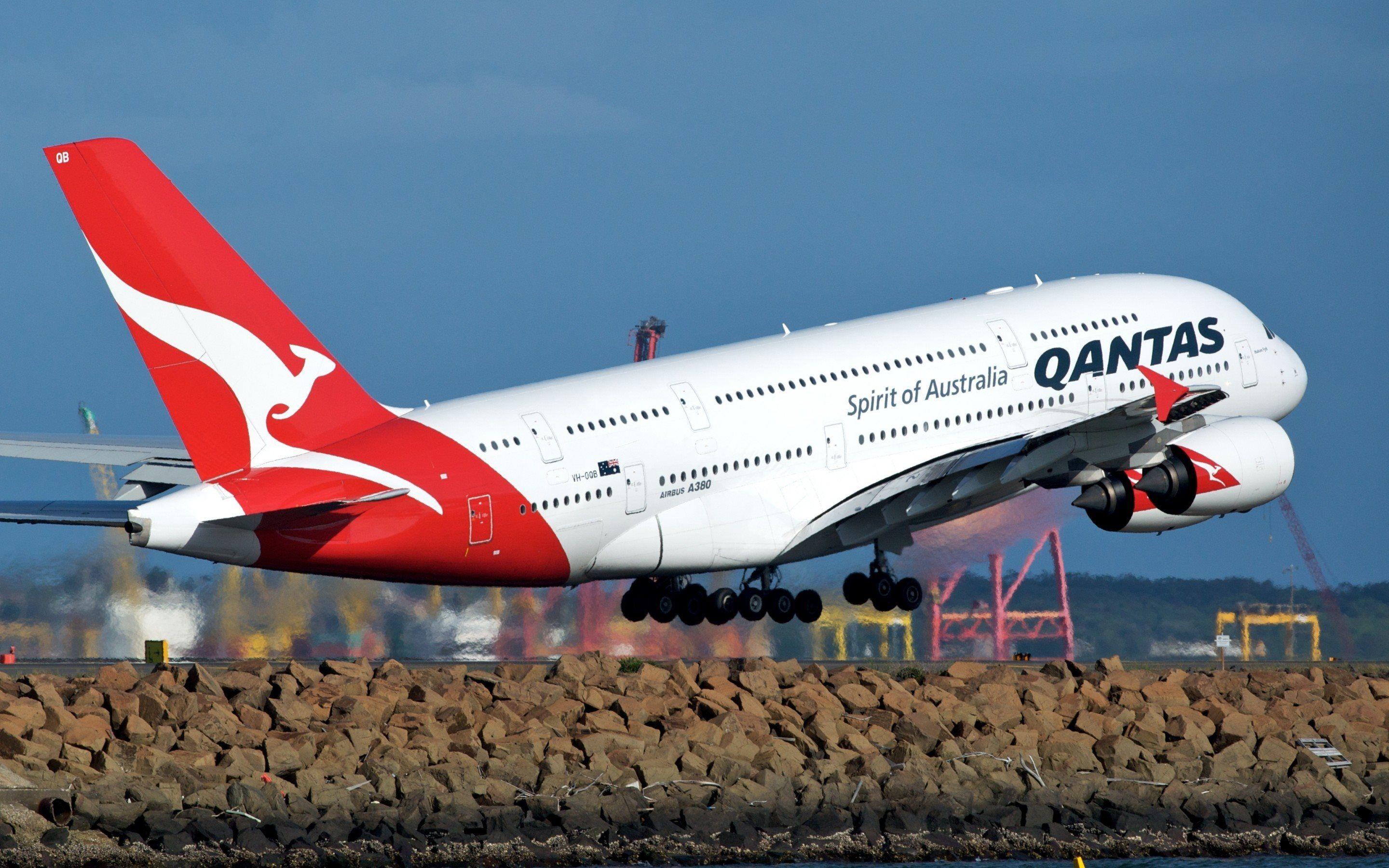
I don’t know about the military patches, but putting flags backwards on the right of planes is not uncommon. E.g. this Qantas plane
Aside: The flag of Thailand is completely symmetric. Legend has it that the King was visiting some small village, and a local farmer hung the flag to show his patriotism, but in his fervor, accidentally hung it the wrong way, causing serious loss of face. On hearing of this, the King ordered the flag to be re-designed so that it couldn’t be hung the wrong way, to save anyone else this embarassment.
It is left-right symmetric, but not up-down and thus not point symmetric.
I think the Spanish flag is made point symmetric for the purpose of this thread (arm patches and such) by not including the coat of arms. It would not look good on such a small scale anyway.
The German flag is left-right symmetric too.
The least symmetric flag, on the other hand, is probably Nepal with its weird shape consisting of two triangles -stitched together - the world’s only non-rectangular national flag:
Good point (heh). Hadn’t thought of that. Still, as a Canadian, I’ll state that it’s nice to see the Canadian flag flying from our embassies, High Commissions, and consulates, around the world. As long as it is right-side up, it looks good from the front or the back.
Sure, but so far as I know, Thailand is the only one where the symmetry was an actual design goal. Or at least, where it’s claimed to have been (I don’t know how much urban myth is in that origin story).
I’d say a square is not just technically a rectangle, but also in common parlance. The dedicated word for a rectangle that is not a square is, I believe, oblong (but I’m not a native speaker). Another square flag is that of the Vatican.
Not as far as I know, no. If you asked a little kid to put all the square block in one pile and all the rectangular blocks in another pile, they’d be able to do so without a problem, even though technically all the blocks are rectangles
That’s because when you formulate the task that way, you’re implying that rectangles are not squares. If instead you told the children to put all the rectangles on one pile and all the round shapes on another, they’d naturally put the squares with the other rectangles.