Is it a terrible idea to invest in this micromobility (hybrid electric tricycle) equity fundraiser?

So there’s this company that used to make these semi-enclosed electric hybrid tricycles called “ELFs”: https://wefunder.com/organic.transit
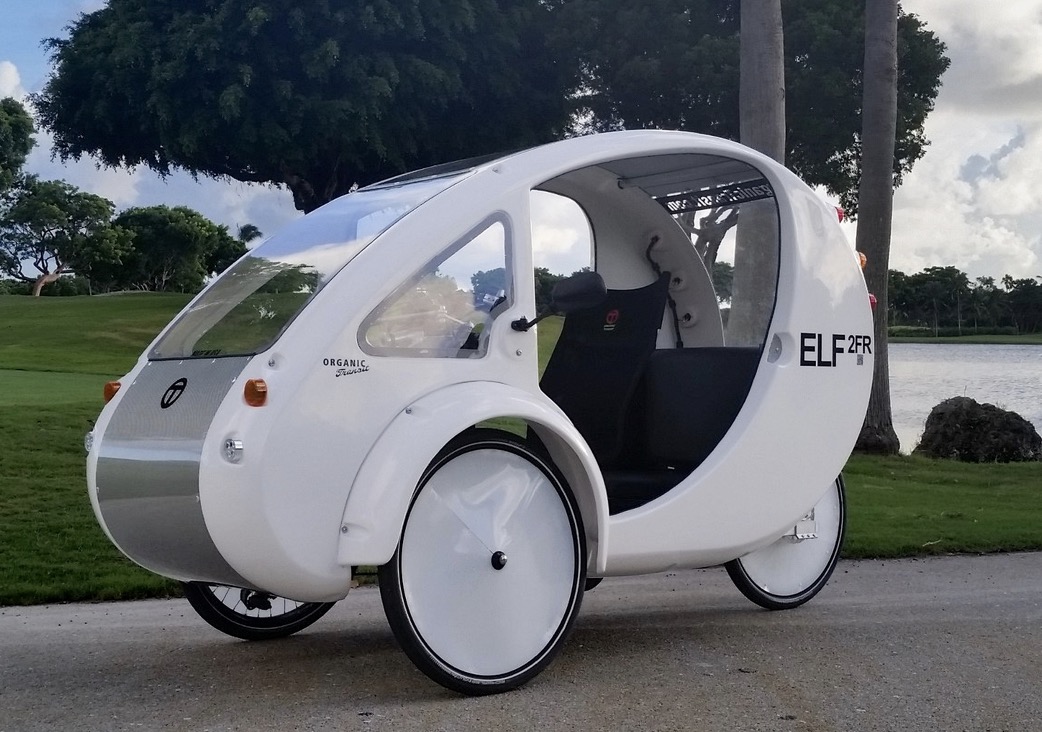
That original company made and sold 850 of these, then floundered after the company was sold and production shuttered around the time of Covid. A few years later, the original founders are restarting production, this time trying to crowdsource funding from private investors.

I like their vision and product. I’ve never been in one, but I’ve dreamed of owning one for the past few decades — I’d much rather have something like this than a proper car. They’ve sold about 850 units previously. The current target unit price is $7500.

I doubt it would ever even get as popular as the Segway (and that crashed and burned), but within its niche of “urban commuters in bike-friendly cities”, I can see how it does fill a void. It would certainly make my around-town trips a lot easier relative to a regular bike, with no room for cargo and no shelter from the elements, while not being as heavy and expensive as a real car.

But all of that is just me thinking about it as a daydreaming would-be owner, not a careful investor.

In this funding round, they’re selling 2% of the company ($200k out of a $9 million pre-money valuation… that’s what that means, right?), and I’m considering investing $1000, more to support the idea than out of any real expectation of a return.

The design of the thing is charming and eye-catching and immediately likable (lovable, in my case), but also not entirely practical. The width of the thing means it’d occupy most of a bike lane, making passing difficult. Parking it would be hard since it can’t really be chained to a normal bike rack, and leaving it on the sidewalk would probably be frowned upon given its size. It’d have to compete for parking with real cars, which would annoy drivers and possibly invite vandalism, especially in red or purple areas. They did previously make a two-seat version, but it’s unclear if that will make a return. The lack of full doors make them less useful in the winter, although it still provides more shelter and comfort than a regular bike.

All in all, given these design limitations, I think there is a pretty low limit to how much marketshare it could realistically address, even if we just limit it to the micromobility-curious niche. It feels like the kind of thing that would be right at home in Portland, OR… and not many other places. It requires a perfect combination of culture, climate, and urban planning/bike-friendliness that not many locales have.

I don’t have any investment experience at all, mostly because most of the big companies and index funds tied to them seem outright evil to me, even the so-called “ESG funds” (environmental, social, governance). I wanted to try dipping my toes into investment via individual companies whose products I can at least personally vet and get behind, but I realize this is an extremely high risk endeavor for a minimal probability of return. It would be more like a donation than a proper investment, which is probably not very financially sound… surely, there’s gotta be a better middle ground approach that’s not so “pie in the sky eco-utopian fantasy”?

Tell me how stupid an idea this is. Or correct me where I’m wrong…

The people who invest in these kinds of things professionally expect to lose 100% of their investment in 9 of 10, or 19 of 20, cases. But make it all back, and more, on that 10th or 20th big win.

This thing might be a winner, but it will never be a big winner. IMO no pro angel investor would touch this for that reason. The max upside doesn’t offset the high risk. The fact they’re doing a go fund me says they can’t get an angel (read “venture vulture”) investor. And that’s why.

Never confuse investing with morality. Investing is the coldest, most amoral form of business. If you’re investing for any reason other than return, return, return, and return, you’re just handing your money to people who are doing that.

I’d buy into it, but only with the attitude I’m buying a lottery ticket not investing. But it’s a lottery ticket where making 10x the ticket price is (probably) the best case. As such, I’d not invest what is to me material money. Fun money sure, but not money I care if I ever see again.

Only you can evaluate how $1,000 feels to you, but that’s how I’d make the decision were it me.

Sorry.

I’m not really seeing the upside of this over a conventional e-bike. It’s enclosed… but not enclosed enough to provide real protection against weather. It can carry hundreds of pounds of cargo… but with no place to put much more than you could put on a bike. The speeds, with or without pedaling, are comparable (though I suspect that with all that added weight and cross-section, pedaling adding an extra 10 MPH is very optimistic). And it’s enough larger to not fit in most of the places a bike would fit, and at 150 pounds, you’d have to lock it to a rack to not be a theft risk.

As far as an investment, this is a terrible thing to invest in. It is very likely that you will never see a penny back from your investment, and the product will probably never come to market. A huge challenge for a product like this is that it needs a ton of upfront money. The $200k will be gone in a blip with little to show for it. Best case is that they make a prototype that wows a major investor. But if that doesn’t happen, then it’s going to be a significant challenge to bring this to market. If you want a vehicle like this, you would be much better off saving your money and buying something that actually gets to market.

These things seem to come around from time to time. Like Sinclair’s

Or the ill-fated Segway.

They are often touted as a ‘revolution in personal transport’, but none of them have become more than a temporary niche fad. Investment? Good Lord, NO!

Hey, when are we going to get Heinlein’s rolling roads? :slight_smile: Another stupid idea that puts the moving parts in the wrong place…

Of the few that have been sold, is there independent testimony as to how well they worked? How street and freeway legal are they?

@Reply I think you’ve already outlined the reasons why this vehicle’s design is flawed. Too big to fit in a lot of places that bikes and e-bikes can go, probably difficult to secure when you park it, really expensive compared to other bicycle options, and not substantially more roadworthy or weather-protected than a traditional bike. It’s a niche product, which will likely only have a niche appeal.

Unless this is a particular passion project of yours, you absolutely want to be able to help them succeed, and you won’t miss the money that you give them (because the odds of you getting any of it back are slim to none), this is a really bad idea, from the standpoint of a neutral investment.

I would imagine that they aren’t “freeway legal” (i.e., can be taken on limited-access highways and Interstates) in the slightest.

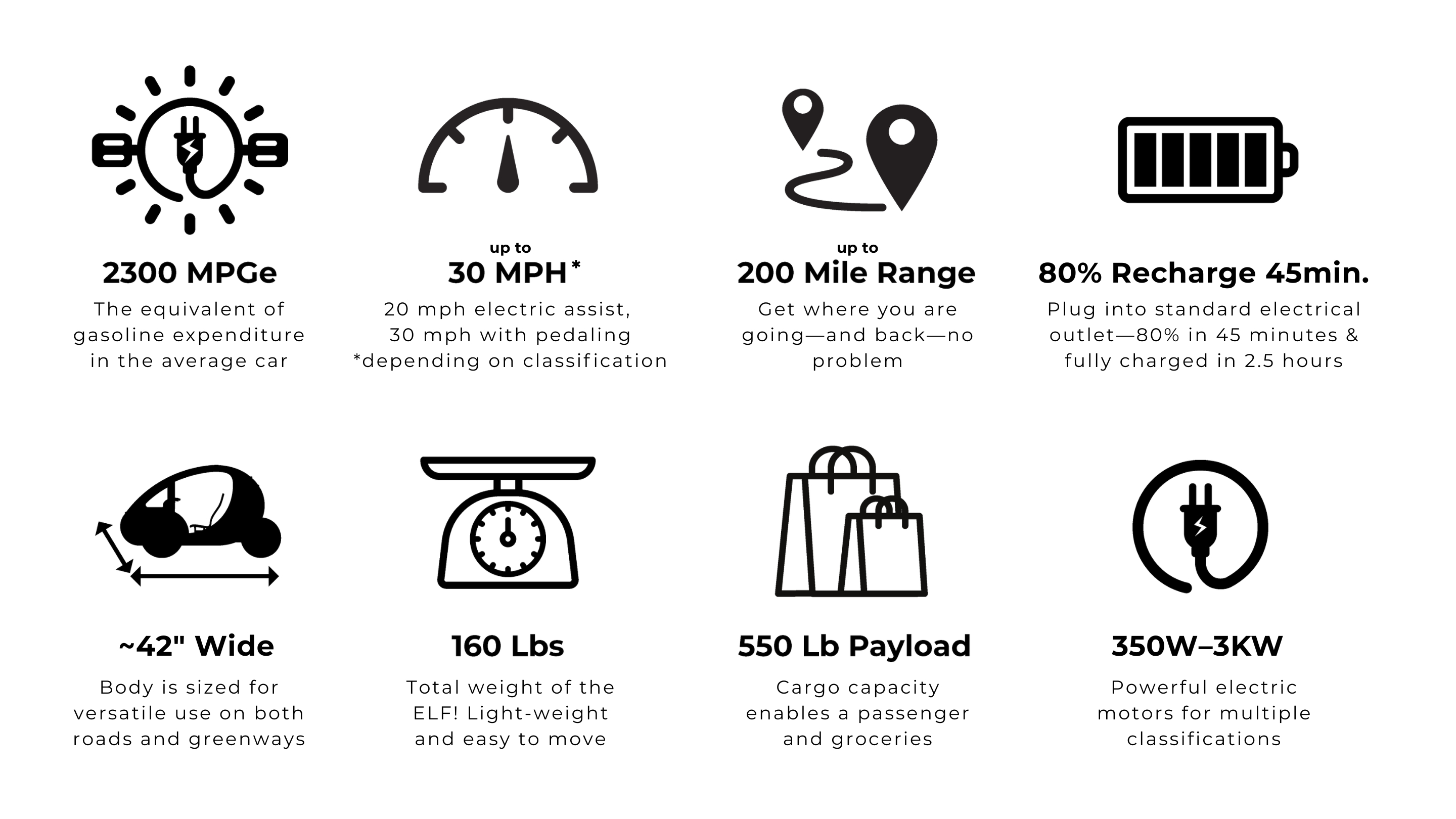
As the graphics in the OP note, it has a maximum speed of (maybe) 30 MPH, and that’s with both using the electric assist and pedaling. It can’t go nearly fast enough to be allowed on highways with higher speed limits; it’s a glorified, heavy e-bike, and those (like traditional bicycles) aren’t generally “freeway legal,” either.

As far as “street legal,” I imagine that it’s no less street legal than any bicycle or e-bike.

What was the name of that small vehicle that was supposed to come out a few years back that people here actually invested in?

Clearly they’d be designed with awareness of the legalities. They’d fit into some legal niche somehow.

Of course in the USA there’s lots of state-to-state variation, but somehow the Chinese e-bike manufacturers manage to build something that works everywhere. Modulo some settings in a computer menu to alter the available HP or max speed or …


Looking at the product and considering the merchandizing …
ISTM that for ~double the proposed price of this thing you can buy a much more crashworthy 4- or 6- person street legal golf car type vehicle from any one of a dozen manufacturers. They’re as fast, as sheltered, more visible, and able to carry a meaningful cargo load in terms of both volume and weight. In terms of ownership practicalities, golf carts are available for immediate delivery from a wide array of dealer networks, have an established service system for repairs and existing parts logistics, clear legal standing, etc.

Golf carts are also senior citizen compatible. Recumbent bikes with seating positions 6-12" off the ground are not. Geezers can’t climb down that far to get in, nor get back out if they did. Golf carts are designed around the biomechanics of geezers.

And most important of all for Americans: No possibility of pesky exertion being needed. Golf carts are not pedal assisted.

As to price, no real product ever sells for the price the start-up hopes it’ll be able to be sold for. Double or more is more typical, especially early in their learning curve with low production volumes = high labor fraction. So now this gizmo sells for the same price (or more) as a golf cart? Good luck with that.

My bottom line:
Golf carts have the low speed fair weather eco-mobility market sown up already. And have had for decades. There is no untapped market for this product beyond a few iconoclast eco-wackos in a few very granola-centric towns. And I say that as somebody who grew up as one of those guys in one of those towns.

That’s why it comes in multiple power levels.

And yet, you still see almost no golf carts on the road, suggesting that the market that they’ve sewn up is extremely small. For a newcomer trying to compete for a small slice of that already-small market? There’s no chance.

The better approach might be for this company to brand them as golf carts to begin with, and to try to sell them to golf courses.

I suggest you visit the areas in Florida that are dominated by seniors; they are everywhere. It’s a different niche. But, yes, they aren’t generally “roadworthy,” for anything other than residential streets with a speed limit of 25 or less.

And that’s where the investment advice above kicks back in. It’s a very limited (comparatively) market.

Retiree or other gated communities and other limited use (college campuses? golf courses?) and competing with existing companies in an already crowded market. Still money to be made but not tech IPO kind of money. But if the goal is other than the ROI, maybe there’s another argument to be made.

Around here local law enforcement is taking a hard look at golf carts. Drivers are alternately taking them on sidewalks and bike lanes or driving at 8 mph on major arterials. If this keeps up, I can see a legislative crackdown on these minimobiles.

If you love the idea, want to support the movement and can afford to lose your investment, then go for it. But consider it an act of love rather than anything that will ever make you money, particularly with a $1,000/$9,000,000 payout.

Just quoting this snip from the OP - I think it’s clear @Reply is looking at this as as a gesture of support than a practical profit-making investment.

Which is good, because I agree the majority is that it has little to no chance of releasing an actual product, or even finding a market if they succeed. It reminds me a bit of a coworker back around 2014 who LOVED the idea of the Elio. While looking back today on what they’ve done over the last decade, I consider it at best an overoptimistic dream that later involved into a vaporware scam. But at the beginning at least, I think they had a vaguely realistic, and even admirable goal, just one that overlooked so many engineering and regulatory requirements with an unthinking handwave of “it’ll totally work out!” Though all that had worked out, and the promised original price and fuel efficiency had panned out, I’d totally have bought one.

So, if this is where Reply wants to throw a grand towards a dream, I don’t object, as long as it’s not money they can comfortable afford to loose. Still, I’d say that there are a lot more directly beneficial or helpful investments that could stand some additional funding with similar or less risk. It’s your money though!

Some of our multiple threads on Elio for any who care.

Thank you all for the (rather unanimous) input! OK, that confirms my suspicions… this seems like a phenomenally bad idea :slight_smile: I think the best case I was hoping for was breaking even, making my $1000 back eventually, and also reserving a spot in line once production restarted. But it seems like the prospect of this particular deal is so bad even that might not be worth it / likely to ever pay itself back…

$1000 isn’t a life-and-death amount for me, but it’s also not something I want to just throw away willy-nilly. I think I’ll just wait and see if the product successfully relaunches again (and consider just buying one for personal use, vs investing in it). It’s still something I’m personally quite interested in, even if it doesn’t become a market success story. Hopefully they’ll add full doors this time around, though…

Thanks for talking me off that cliff.

Thanks for the wise, if disheartening, words. You don’t think it’s ever truly possible to balance investments with morals, e.g. ESG funds, triple-bottom-line businesses, worker-owned or member-owned cooperatives, etc.? (Not saying this particular company is any of those, but in a general sense)

Yeah, that’s a good point I didn’t consider… even if you could somehow lock it in place, a few determined people could easily lift the whole thing and throw it into the back of a pickup truck. Hmm. I don’t think there are many bike racks with space (even on the sides) that could accommodate a vehicle this big.

I do wish they went into a little more detail about stuff like this in their testimonials and FAQs.

Do you think it would be more difficult this time around…? (In case it wasn’t clear, this company previously existed for a few years, and sold some 850 units… which isn’t a lot, but also isn’t nothing).

What worries me, though, is the founder doesn’t really say anything about why they’re trying again, how they managed to secure the other $8.8 million in funding, and what they’re going to do differently this time around to prevent failure again.

I don’t doubt that they can produce the vehicles again, but I very much doubt their ability to stay in business sustainably the second time around if they don’t change anything.

I’ve only seen a few casual testimonials over the years, and knew friends-of-friends-of-friends-of-acquaintances-of-strangers who expressed joy at them… that’s about it. Never done any thorough research on this stuff. I do assume they’d be similar to golf carts and mainly limited to greenways, bike paths, and and residential roads. Definitely not highway-capable unless bumper-car ping-pong is your idea of a good commute.

Thank you. I started with “This is probably a bad idea”, and this thread convinced me “It’s definitely a terrible idea” :slight_smile:

I never thought of this as a “get rich quick” scheme or anything; at best, it would be nice to make back my investment (and that’s about it). It was more that this is a product I really want for myself, and I’d like the company to come back to life and hopefully run itself sustainably this time around. If they had a viable business plan (and was willing to share it), I’d be more tempted to help “donate” money to get it off the ground, even if I don’t see returns myself — similar to the Kiva microfinancing that was popular a few years back, I guess (which had its own set of shenanigans not worth getting into here).

I was definitely not expecting tech unicorn levels of success, more just them possibly becoming an indie small-biz success story like https://www.radpowerbikes.com/ that are quite popular in the Pacific Northwest (but those are just regular e-bikes and cargo-bikes, not a new semi-enclosed trike form factor… and even they are recently struggling with some battery recalls).

However, I don’t really have faith that this company would be able to stay in business again the second time around. Their funding page isn’t super clear (unless I missed something) about how they’re planning to do things differently this time to avoid the mistakes of their first iteration. All it says is they’ve reclaimed ownership from the previous external investor and are bringing it back. OK, but obviously this didn’t work the first time around, what are you gonna do differently this time…? No clue.

The barely-crowdfunded model is also really weird. Why even bother raising $200k if you think the company is worth $9M? Maybe I’m misunderstanding what “pre-money valuation” here means, but it seems like $200k is barely enough to hire a few people for a few months to build a few prototypes… where is the rest of the money going to come from? Is the $200k crowdfunding just a marketing tactic to build attention to lure in bigger VCs? It just doesn’t make much sense to me, but I was hoping I was interpreting it wrong. Doesn’t seem like it…?

If not for the company’s previous ability to actually build and sell these vehicles giving them a little street cred (i.e., it wasn’t just vaporware, at least not in the previous iteration), I wouldn’t have even considered it. It’s that awkward middle ground between “not quite a scam, just very unlikely to succeed” that made me doubt myself.

Thank you all for the input…

Speaking of impractical micromobility (for the US market, at least)… my absolute dream car is the Fiat Topolino:

A somehow even less practical car that fits in a “quadricycle” categorization that I don’t think we have here in the US. Its max speed of 27 mph is even less than the ELF’s 30 (and that can go in bike lanes, at least).

We saw quite a few of them when we visited Florence, Italy, but the car situation there is totally different. I wish US cities were better-designed to accommodate transportation like this instead of huge SUVs… alas.

Ain’t it cute, though?! And at $8000, it’s not much more than an ELF.

It sounds like a fancy Italian golf cart, frankly.

I don’t attempt to invest in start ups because I don’t have enough experience and I’m risk adversive, but my understanding is that pre-money valuations are based on other factors and don’t imply that the valuation comes from actual funding. IOW, they have simply declared that the company is worth $9 million, but that doesn’t mean they have sold that much stock.

You have good reason to be worried. There just isn’t enough information to make an informed decision. How much working capitial do they have now? What are their expenses? What’s their burn rate? How much money does it require to get the product completed?

Yup. I think you are right. There just isn’t anything to go by.

That absence of useful info is itself very valuable info. Showing that this is little more than a scam. Perhaps a well-intentioned scam, but a scam nontheless.

To explain the oxymoron “well-intentioned scam” …
Entrepreneurial founders are generally waay off-scale high in the “power of positive thinking” department. They can sincerely believe in their, and their nascent company’s, ability to produce the impossible. Their unwavering and fervent desire to make it so … will make it so.

Such that they can be honestly selling what amounts to a no-hope plan. Usually they enlist a couple of cynics who realize this business idea is impossible. Their jobs are write the business plans, “disclosure” documents and websites that disclose nothing, hire the sacrificial staff of wanna-believers, etc. Those folks know they’re collecting a paycheck working for a no-hope scam.

But the founder doesn’t realize until late; his (almost always his) plot armor is so thick reality just bounces off for a very long time. Once reality intrudes, whether they then switch to the Dark Side and go all-in on scamming or whether they shut down / bail out honorably varies.

Right now the OP’s company is probably in the “well-intentioned but no hope thereby amounting to a scam” stage.