Is it time for a hip replacement?

I am hoping for your wife’s experience, but I keep seeing videos by people with experiences like yours! :astonished_face: I hope both your gnarly hips get better!

Sadly, it appears that Hospital For Special Surgery is strictly an east-coast org. I’m about as far away as you can get.

Thank you for all the good advice. I’m still waiting for my PCP to get me referred.

My wife had a hip replacement (and two knee replacements) within the past 5 years. Not at the same time, of course. Best thing she ever did. It hurt all the time and it took her a long time to get up subway stairs. Now she walks as fast as I do.
I think it was robotic.
She recovered fairly quickly, but we know people who had it after she did that took a long time to recover, so it seems to depend.

I’d like to add some thoughts regarding Physical Therapy. (P.T.)

No matter where you have the work done, you’ll likely start with either in-home PT or virtual PT. We opted for virtual PT.

Went extremely well first time out 3 months ago. Similarly, this morning’s first PT on the 2nd hip went very well. I hold the iPad, my wife sits on a chair and the PT therapist can see and hear all.

Now for the in-person PT at another location. I don’t know what to say about reading reviews. Some may be well thought-out and even-handed. Some may be a chance for the patient to lash out at a less-than-great outcome even if the outcome had little or nothing to do with the PT services delivered. That’s human nature for you.

At your initial visit, make sure they ask you a LOT of pointed questions about your life, lifestyle, work, what you wish to return to, goals and so on. Orthopedic surgery is unlike other surgeries- you’re working on your mainframe. Even if you are fairly sedentary as an adult, you’d like to be able to walk to the market without pain, without fear of stumbling, etc. At the far other end of things you may be a professional athlete who is having surgery and is lase-focused on rehab and returning to a career. ( When I had cervical spine surgery, sitting in the pre-op areas with lots of us in curtained-off spots with beds, I heard a nurse say to a fellow, " Ahh- you’re our NHL player ! " )

I’ve had PT a bunch in my life. I happen to be not only comfortable with multiple-therapist sessions but actually appreciate it. Every therapist has their own spin on what works, what little cheats and tricks may help. Were I to walk into a place and work one-on-one with a sole provider, for better or ill I’d only get THEIR techniques.

I’ve used Spear in NYC for all of my PT situations. They do use multiple therapists for most visits. The initial session will be one-on-one and your therapist will be your main person moving forward. After that session, I would start with Jose, be passed off to Chelsea for an activity, then move to Ricardo for yet another. Meanwhile, Jose WOULD check in as I did each set of tasks. Note my form and make adjustments.

I’ve heard from people who demand a truly personal PT situation. They’re paying for it ( rather, insurance is, but still…) They want the service to focus solely on them. Great if you want that and can find it. I found this dynamic situation to be very useful.

Additionally, of course, there are anywhere from 3-10 other people doing THEIR PT at the same time. The locations I’ve worked out in had enough stations for various PT techniques that I never ever had to wait my turn. I’d move from one thing to the next. Never in the same order- which I found refreshing.

Before committing to a PT place, ask how they handle this kind of workflow. Because YOUR mindset and desire to succeed is really all that they should care about. And it should be all that you care about. Making yourself haul to PT 2-3 times a week feeling like it’s a waste and perhaps you’re failing at making many milestones is not only depressing, it’s doing a disservice to your body and your future.

The last time I went was after a cervical spine procedure. They assigned me to a young lady. Turns out she was still in training and not yet NYS Certified. One of the managers sat with us, outlined this very clearly and asked if I was comfortable with working with her. I said yep- likely she knew all of the newest techniques. It went very well. She was professional, guided me with focus and care. A superb experience. She missed a session late in my round of PT sessions so she could sit for her State Exam. Instead of feeling like I was getting a lesser professional, I thought I’d be having an experience with someone brimming with energy and new ideas. And I did just that.

My two cents regarding Physical Therapy.

At age 70 I had left hip replacement (anterior approach) due to osteoarthritis, persistent pain (not severe) not relieved by steroid injection. Surgery was 13 weeks ago.

Surgery at day clinic. Surgeon said only those >80 or with more risk factors have it in the hospital.

I had nerve block and some kind of non-total anesthesia. Actual OR time 1 hour. A few hours in PACU to recover from anesthesia. No restrictions on hip use after surgery. Stairs (with crutch) and walking (with walker) from day 0 was okay and not that difficult. Day zero had zero pain but that was because nerve block persists. Day 1 and 2 had the most stiffness and soreness but this was relieved by ice machine (recommended) and tylenol and or Ibuprofen 4x per day. Was prescribed but did not use Oxycodone.

Had 2 weeks of 2x/week PT at home, then 6 weeks of 2x per week outpatient. 3x daily exercises detailed in surgeon’s information booklet, those exercises were modified during outpatient PT to drop some easy ones and add a few new ones.

Suggestions for home equipment: If you can get a walker on every level of your house, that saves somebody needing to move the walker back up or down a level after you move (or in my case saves your wife the scare of watching me descend stairs carrying a walker while using a crutch). Ice machine was loaned to me, it was helpful for first 2 weeks and much more convenient that using ice packs. I was also loaned a device to help put on compression stockings and that was helpful for the 40 days I had to wear them. It is a plastic half circle with two ropes that you thread the stocking on and pull over your foot.

Overall, recovery was much easier than I expected. Nobody I talked to about hip replacement regretted having the surgery too soon. Most had a quick and easy recovery, exceptions were people who had trauma hip fracture (like being hit by a car while biking) where surgery was in hospital and recovery was slower.

I pretty much had the same experience that you did. The first few days are kinda miserable. The wife had to help me put on socks and underwear. You also have to keep the incision dry, so I started out using a garbage bag tied around my leg. Then I realized that Saran Wrap was the best thing for the job. A few wraps around the incision area and you’re good to go. That first shower was like having an orgasm.

I had some kind of waterproof zip tie bandage that allowed showers starting day 2. No need for covering. That dressing came off at 2 weeks.

Interesting. My wife and all our friends who have had hip or knee surgeries stayed in the hospital at least one day, and all were well under 80. The surgeon told my wife the magic words (something to do with pain) to stay in an extra day.
Two knees and a hip, and her first knee was a real mess and took much longer than an hour to do. But she recovered quickly, at least. Not all our friends were as quick to do so.

Oh lawdy, timing is indeed everything. My Dearly Beloved™ is in bed in the next room. Day 3 of the 2nd hip replacement in the last 3 months. Both needed doing. She and her Sturgeon decided which was #1 and which was #2.

Fortunately, or not, I can contribute here with first-person experience. After a 30-year career as a professional Steadicam Operator, I had increasing pain in my left hip. I’d always been a bit heavy and the career involved strapping anywhere from 45-90 pounds of camera and Steadicam onto my body depending on the camera build.

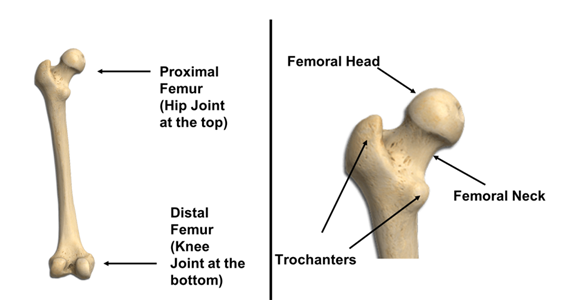
Long story short, I was born with a congenital defect on both Femoral heads. The head should be pretty much spherical to seat properly up into the hip socket. Both of mine are egg-shaped. Thus, the lubricating layer keeping humans from being bone-on-bone wore away much earlier on me than it should have.

I went to the Hospital for Special Surgery in New York City. Rated the # 1 Orthopedic place in America 17 years running. I’d been in there once before in my life. The surgeon was an older guy, a bit conservative in his approaches. ( His words ). He did the Posterior approach. I went with the implant that basically becomes part of the femur bone, with new bone growth slowly making its way through the implant. The other way they did 8 years ago involved cement. VERY rapid recovery period, but eventually, the cement will deteriorate and you’d be looking at the ugly idea of a removal/ replacement.

It went very very well. Good recovery, etc. I know I face the reality of having the left hip done at some point.

So, when my wife started to have hip pain, we went back to HSS. Her guy was younger, doing a new approach to where to cut in. Brilliant. Robotic-assist surgery. Mine was not. Instead of cutting any muscles, the muscle groups were just pushed aside to allow for the bone work. Much less pain, or so it seems. ( Pain’s so personal and objective, but still… ) She had the left hip done on March 5 and the right hip done this past Thursday, May 28th. Recovery from #1 has been so smooth. She’s a very compliant client- does her PT, obeys the rules, etc.

So. What to ask as you approach this? In no particular order:

Robotic-Assist surgery?
Cement or grow-in implant?
Timeline to full recovery?
What lifestyle issues may impact the recovery? ( If you smoke heavily, suddenly stopping 2 weeks before may be too much to take on, etc etc. Ditto alcohol or drug use. )

Conventional wisdom from those in my circles as well as chats with surgeons is that a hip is a walk in the park next to a knee. They’re more straightforward, have less difficult post-op issues, etc etc.

No matter where you live, try to find a hospital that does a LOT of these procedures. You want the Pros from Dover, not someone who attended a few seminars and workshops and has done a handful of these.

The biggest single issue at HSS? Infection Control. They pounded into our heads how vigilant we had to be post-op. It’s the factor my surgeon cannot control and it can wreak havoc on an implant and force emergency surgery. Don’t cut corners here !! Do exactly as told regarding bathing, cleaning, etc.

Some people are deeply upset by both the idea of surgery AND having to undergo the prep and procedure and what things feel like, look like, etc post-op. It’s quite natural. If you have a partner who lives with you and/ or a close friend or family member to assist you for the first few days, things will go much better at home.

Even if you do not have General Anesthesia and have what I and my wife had- Twilight Sleep meds coupled with a spinal block- it takes days to get those drugs out of your system completely. Additionally, you will get some serious narcotics cocktails in the OR and the first day or so post-op, especially if you are in the hospital overnight.

I leaned on Oxycontin for about a week. Tapered down VERY diligently and eventually was on 1 pill only on overnights. By day 9 I stopped. Went through a very VERY expected period of withdrawl and that was that. My wife? On the first hip as well as this second one this week, zero narcotics once she left the hospital Her call totally- we have now a second bottle of Oxycontin sitting untouched. ( For both surgeries upon discharge they provided us with a small pouch of a powder chemical. We can mix it into the pills and the opiates are nullified. Or we can take it all to the local NYPD precinct, etc, for safe disposal. ) Your mileage may vary re: pain management but I’d urge you to have a partner in managing ALL of your meds, not just the narcotics.

My wife’s a pretty in-charge person. For her meds, both times now, I’m doing them. I’ve set the pill box, do the evening meds, note every time she does a round of PT work on her own. She’ sstill exhausted and dopey and the surgery was 1pm Thursday. It is now 9am EST Sunday. So, find someone to help you keep things straight. Meds. Hydration. Food.

You’ll be living on a walker for a few weeks. Time varies per patient, but expect that walker to be by your side for a few weeks. Practice before the surgery if at all possible- it takes a bit to get smooth at it and being dopey from surgery AND in pain AND sleep deprived ( hospitals are not the place for a good night’s sleep ) AND stressed…that isn’t the time to figure out how to navigate your home with a walker. Again, you may have no choice but to use one they send you home with. Another good reason to have someone spotting you.

Oh. The whole Narcotics thing. It is a universal given that using nacotics - ANY type- will result in being constipated. You’ve just had major surgery RIGHT at the hip. Sitting on a toilet seat riser to ease the pain and possible damage by bending the new hip joint more than 90º is hard enough. Constipation will occur. They will give you Senna or some other laxative in the hospital. Be ready for this to be a painful side-effect. I had a little bottle of Miralax at home. Took some the moment I got home. Really helped on that end, scatalogical pun intended.

NOT bending past 90º as well as other no-goes will be gone over at Discharge. Good to have various Hip-related home products ready. Frankly, if you are heading to surgery, I am guessing you already have something like the Sock-Aid ( Incredibly smart. Wish I had this Patent. Will slowly crack open after about 6 months of use. A bargain, however, and essential protection. ) You’ll also likely already have very long Shoe Horns. Don’t go for the 16 inch ones-- the whole reason for using these is to allow you to NOT bend over too far. Go big. I got a few that were around 30". Did the trick, still do for me.

These are some of the practical and physical things you will face. Much harder is the psychological stress of having surgery. In my case, the hip was the second surgical issue. I also have some medical background (retired EMT, etc. ) and it was still quite stressful ON the day. Do whatever works that isn’t injurious to your body to prepare. If you live with someone, lean on them. Do meal prep beforehand and freeze a few easy meals. It really makes life easier in those first few days back home.

At the risk of getting smacked down a bit here, try to detox a bit before your surgery. I’m good for a shot or two of Tequila a week. I stopped that a few weeks before. I also stopped using the THC oils I was placing under my tongue a few weeks before. ( Helped with pain, sleeping better, etc. ). I’ve NO clue if there are any interactive issues between outside substances but I wanted to be free of alla that. Your mileage may vary. Depending on what state you live in, you can or cannot have an open conversation with your surgeon about recreational drug use. But ask about smoking cigarettes and alcohol use.

More as things arise in my memory.

Keep asking questions !!!

[quote=“bobsmom101”] I tried to convince myself that it was just bursitis, and 3 years ago I had a cortisone shot that helped considerably, but then things got gradually worse and another shot last month didn’t help at all.
[/quote]

I don’t know how to snip a quote without using the Quotes bar. Hope I don’t get in trouble here.

So— the Cortisone shot. This is a biggie. For my first hip, I started out with another guy at HSS. A Physiatrist. He suggested a shot. I tried it. It did nothing. Here’s the problem: Once he referred me to the surgeon, I COULD have had the surgery 90 days earlier than we scheduled it.

But-- if you have had any kind of Cortisone or any other treatment shot, they cannot do surgery without waiting a certain amount of time. Those extra three months really pissed me off. That first guy? He should have told me that this could be an issue, so I could make an informed decision. Instead, he wanted to do the shot and see. I had no idea; I lost 90 days of waiting time.

Ask. Ask before you get a shot. Let that delay be a part of your decision process.

ETA: In reading more posts in the thread:

Having the right accessories at home is a must. In some cases, depending upon your health insurance coverage, ALL of the bits and pieces will be covered. Or, at least the pricey ones. Walker, toilet seat riser, etc. Ask your insurer or ask your in-hospital Social Worker to check. They’ll know- it is what they do all day.

I provided some links to accessories in my post up there for folks who won’t be covered by insurance, and just for information. In no way am I promoting or pimping any one item…

I imagine Medicare plus gap coverage is funding quite a few of these operations. For those in that situation, how was the insurance coverage for you?

My Sturgeon told me I’d be in deep twilight sleep with a spinal block.

Indeed, I had one moment of awareness. When my guy started pounding the implant into my femur, I felt my entire body jolt with each whack of the mallet. No panic, no pain. Just a kind of detached reaction: " Gee…he’s hammering it home… "

Fascinating.

That’d be the masturbation.

Pretty common.

:grin:

Thank you @Cartooniverse for the detailed & helpful info!

Oh, Ouch!

Sadly (maybe), I’m in CA and have to use the providers my insurance accepts. I’m still waiting for my referral to come through. My PPO network (Sutter Orthopedic) is supposed to be pretty good, but there is a long wait for any medical services.

I’m not too worried about taking opioids. I’m not sure how typical this is, but I don’t seem to be easily addicted. I had heart surgery 30 years ago & was on morphine/codeine (? can’t remember) for two weeks and it just made me groggy. I was happy to stop the pills.

:rofl::joy:, oh not a problem. When Sutter finally gets around to processing my referral, it will probably be 6 -8 weeks until I get an appointment, then godonlyknows how long until the actual surgery. You are lucky that your med establishment seems to operate more efficiently!

There is a huge assortment of used exercise equipment on FB Marketplace and I am thinking about investing in a combo elliptical and recumbent bike to use before and after surgery. Did you and your wife find any equipment particularly helpful (or not)?

It’s very heartening to hear that your experience has been so positive.

Agreed re: equipment. We live in an astonishingly small NYC apartment: 325 sq. ft. No joke. So, no fancy gear for us !!! From my hip adventure we had the walker, toilet seat riser, etc etc. Craigslist or Facebook Marketplace are great places for this.

Recumbent bike sounds good- but think hard about how one gets in and out of a recumbent bike, even a stationary one. Might not get use for the first month or two, but may be aces for building and maintaining good muscle and core strength.

Similarly- I love an Elliptical and once you are cleared to bear body weight on the new hip side, a non-impact device might be great for you ! Also, and I can speak from proud personal experience, many models of Elliptical training machines perform admirably as clothing racks.

No, not all …

FTR, my son had a pretty rapid recovery and is doing great.

Oops! Missed it. It’s always good to read about positive experiences. The videos of the procedure are :face_with_peeking_eye: .

Our Medigap covers 100%, so the only out of pocket costs was for a few drugs from CVS, well under $100. So, probably under $200 for all three of her operations.

I want to hear more about that. There are several good choices around here, but I have a lot of Sutter doctors in other fields.

Well, yuck. I had my appointment with the Sutter surgeon referred by my PCP, but he only does posterior approach hip replacements and is adamant that the results are just as good as with the anterior approach. From what I see on line, while that’s true in the long run, the anterior approach is supposed to be less invasive, is less painful, and requires less time to get back to normal activities. The chief advantage to posterior approach seems to be that it is a shorter operation that is easier for the surgeon to perform.

The surgeon I saw today has done a huge number of posterior hip replacements and has straight 5 star reviews. I’ve asked my PCP for a referral to a UC Davis surgeon who does anterior replacements, with mostly positive reviews (has some bad reviews w.r.t. knee replacements from a couple of years ago).

I tend to overthink these things – and either approach is probably OK as long as I get someone good. Luckily I have time to make up my mind!

My wife got a hip replacement a couple of years ago at a relatively young age (53). Frankly, I would be highly suspicious of any doctor that recommended posterior over anterior today. I’m guessing the posterior approach may be expected to have just as good an outcome as far as surgeons are concerned, but anterior is so much better for the patient when feasible. Any recommendation for posterior should come with a very good reason why.