Fair enough. In addition to speed, accuracy, forms and letters, we did “art” largely consisting of typed letters making shapes and patterns. Still did not take that long - I think perhaps we spent a morning once a week for five weeks?
But without those environments, we wouldn’t have things like this.
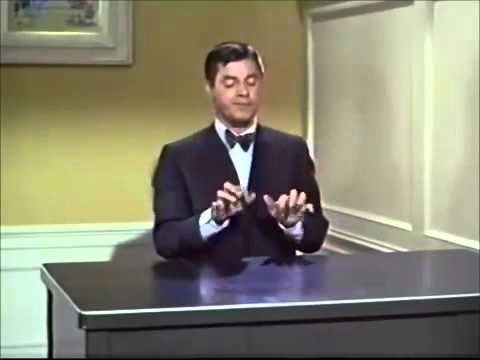

In the late 1970s, when I went through AIT at Fort Harrison, the majority of my class were male. That’s because combat arms battalions needed 75B just as much as non-combat arms battalions.
IIRC it was the early 2000’s the typing pool (AKA Word Processing Group) went away. Everyone wrote (typed their own emails, and secretaries were only for the really big big-wigs. It was about mid-to-late 90’s before the typical supervisory worker started to lose their personal secretary and was expected to do their own keyboard work. It was notable when the president of the division who was a old fart computer-phone was replaced by a fellow who had been an engineer originally and was proficient with spreadsheets and typing - late 90’s. In the early 90’s, most people were still hunt-and-peck types. By them being in computers, I’d learned to use all four typing fingers, two per hand, plus thumbs for the spacebar.
So 1993, Army types - yeah, typing would probably be rare.
It once occurred to me that thanks to the internet, literacy became a much more important skill. Then along came Tik-Tok.
That’s gotta be one of the funnier typo/auto correct fails I’ve seen in a while.
I took typing in high school ~ 1978. Was one of the most useful classes I took.
My old boss from just a few years ago was a hunt and peck typist. He was the assistant director of an Information Systems department.
I’d say virtually nobody in our office can type now (except one person, who types away prodigiously) It’s not really necessary anymore as its so easy to make corrections on the screen, and few people even print their message on paper now.
You can tell the ones who don’t type well; the monitors are covered in Whiteout.
(From an old joke about [insert college rival here]).
That’s about when I took a typing class. Agree, one of the most useful classes that I took.
My father was in the military in the 1950s, and he was given a clerk job because he could type. I think he was stationed in Japan or Korea.
Back in early spring of '90 at Ft. Hood, I was due for rotation to another MOS/unit in late August, and due to our upcoming Training Schedule (Gunneries, ARTEPs, etc), it was decided to pull me off a tank and put me in the Orderly Room as Training NCO, basically the Company-level administrative specialist.
Typing would’ve been a useful skill to speed things up a bit, but at the Company level, the work demand wasn’t high enough to really make it that big of an issue. So I muddled along with hunt-and-peck typing and got the job done.
Now at Battalion-level and higher the dedicated admin specialists (an actual MOS) are certainly versed in typing and probably had training on it in AIT.
In BHD, the character of “Grimes” (played by Ewan McGregor) is based on real-life SPC John Stebbins (I won’t go into his personal life, conviction, and incarceration), who was at one point a commissioned officer who resigned his commission, went into the civilian world, and then came back in as an enlisted. I can’t find any info on what his actual MOS was at the time. He could have been an Infantry/Ranger, but was an “extra body” (meaning there were no open slots in the Line Platoons, and he got sent to fill an open admin role, like our Armor Company’s Unit Armorer at Ft. Hood). Or he could have been an actual Administrative Specialist who decided to “get into the fight” (even clerks qualify on an M-16) when things went pear-shaped in Mogadishu.
The context I took from the exchange between “Grimes” and “PFC Blackburn” (Orlando Bloom) is that Grimes was a Ranger Infantryman, but serving as the unit’s admin clerk, and was quite happy to do so to my ears (the way he bitched about it), as a way of avoiding the rigorous training and Hoo-Rah discipline in the Line Platoons. YMMV.
So knowing how to type back in the day bettered your chances of getting a position in the rear with the gear, interesting.
You can learn the basics in a few hours , as I did in sixth or seventh grade. But I never really learned to type faster than 35 or so words a minute until my job started using Windows based computers around 2005-ish. ( Before that, any memos, letters, reports were typed by typists) On the other hand, my high school friends who took the commercial/business curriculum and had to take at least one semester of typing had a speed of about 60-70 words per minute. Of course, for the most part they couldn’t practice at home as it wasn’t common to have an electric typewriter at home.
Sure. If you use a skill more it becomes better, maybe second nature. If you use it less, nothing wrong with the basics. More of these should be taught.
I didn’t take keyboarding in high school. But I would design the curriculum quite differently - where instead of just taking long courses, all students have short exposure to a variety of skills. Teaching languages, math and science require longer hours and years of exposure and homework.
But how many high school students graduate knowing the basics of law, personal finance, intermediate cooking, first aid and CPR, how to incorporate exercise and healthful practices into your busy life, using basic tools, how cars and plumbing work, making consumer decisions or simply how to be content? These need not be long courses, but there is harm caused by not addressing them to any significant degree, assuming this knowledge is obvious or unnecessary or will always be learned later. How many teaching hours are there before university?
We were allowed to borrow our schools manual Royal typewriters for practice and typing up (what seemed important at the time) our end of the year English essay. What a drag that was and an exercise in use Pica and double spacing and cheating on margins to fluff up the length of the report.
In the 90s my kids took Language Arts, which included traditional English (reading, grammar, sentence construction, etc.), spelling, writing. . .and keyboarding. So the minicourses are there, they just aren’t broken out on report cards.
That’s fine, they need not be. I grant done of the things are occasionally taught but unless things have changed I am not sure most are. The question of whether most students learn these other things remains but is not relevant to this thread, so will not be discussed here further.
One can say, of course, mothers can and should teach cooking and nutrition, fathers can teach home basics, they can learn CPR if they want to on their own… but not teaching all students these less academic but essential things, even in brief, hardly makes students better prepared, nor better citizens, nor more likely to prosper. Commonly it does not happen - perhaps families are more busy, less traditional, maybe lack the knowledge, will, resources or time. I think schools could do more. No doubt some more experienced and informed teachers might disagree.
I joined the USAF in 1980 and went into the clerical field, so I learned typing at tech school. When I got out in ’88 I was typing 120 wpm. Can’t do that anymore since my stroke but can still do around 70.
Pretty much, yeah. When my wife’s grandfather got into the Army in WWII, the fighting was over in Europe, but was still going strong in the Pacific. He claimed that since he could type, he was sent to Europe to guard prisoners instead of being sent to the Pacific to fight.
My dad drafted during the Korean War, but taught himself typing during lunch breaks and such and wound up staying Stateside as a clerk. Very few soldiers could type then.
I’ve found that when you know how to type, you learn how to spell; typing is a pretty useless skill if you can’t spell.
In the military, spelling is a rare skill.
I once had to transcibe field notes into a big ledger for the unit’s recruiter, and sometimes I just could not figure out what people were trying to sound out. One of the most common mistakes I saw, though, was in recording a soldier’s religion (you don’t have to answer that question, but if you do, it’ll be printed on your dogtags). An awful lot of people were “Babtist.”