Movies, television etc. and, yeah, I know there were a couple of threads on this topic way back at the turn of the century.
You think you got it all figured out and you can’t wait to see how they resolve the complicated mess they presented to you then…the picture gets wavy, the picture fades away, the scene changes and they announce that all the whole time you have invested your time and imagination on was just a freakin’ dream!
For instance, a movie I saw in the theater way back in my youth, a stupidfunny titled “Under The Rainbow”, turned out in the end to be Just A Dream. It was just an uncomplicated little film involving the people playing Munchkins staying at a hotel along with an evil midget Nazi and his evil plot and the FBI agent played by Chevy Chase and his girlfriend played by Carrie Fisher all staying at the same hotel during the making of “The Wizard Of Oz”, then…O.K., maybe that one was a bad example, but still, it annoys me when pulls that cheap trick.
Have y’all got any examples of this happening, good or bad?
Who shot J.R., rings a bell.
And maybe Gilligan’s Island.
The Wizard of Oz has a very good reputation.
I guess a bit more ambiguous was Total Recall (1990) starring Arnold Schwarzenegger who plays Quade. In the movie, Quade is a construction worker who can’t really afford to go to Mars, so he goes to a company called Rekall that specialized in planting false memories in their clients so they can remember an experience without actually having experienced it. Quade selects Mars and the adventure package but something goes wrong and he goes on an adventure to Mars. Or did he? Maybe the adventure he went on was just a false memory implanted by Rekall.
We can definitely file that under ‘good’. I’ve watched that so many times.
Despite the tacked-on dream ending, which definitely wasn’t in the books.
The Simpsons did this to expert effect in the “Nightmare Cafeteria” segment from the episode “Treehouse of Horror V.”
Newhart had one of the best uses of the “it was all a dream” trope ever. And who can forget Bobby Ewing’s shower?
Given the extreme sureality of at least my dreams, I think a more interesting question is whether a movie that accurately portrayed all the slippery non-reality of real dreams would be watchable, much less enjoyable?
IOW, when Hollywood pulls the “it was all a dream” cheap trick, they really cheap out and not only don’t deliver a good story, they don’t even deliver a good dream.
The Nightmare on Elm Street series of movies played a lot with slipping in and out of dreamy and all-too-real victim dreams, but I don’t think anything ever got wrapped up as ‘it was all a dream’ to resolve a finale, as that was fatal. Clever as it was, I could not be arsed with them after a while.
The thing on the television program Dallas that had something just be a dream had nothing to do with the shooting of J. R. It was the entire ninth season of the program. The first episode of the tenth season has Pam waking up and discovering that Bobby was alive. She realizes that what she thinks was the last year was just a dream. This and the final episode of Newhart were the weirdest examples of changing the whole television series by having something be just a dream.
The episode “Restless” from Buffy the Vampire Slayer (Season 4 Episode 22) does a pretty good job. Here’s an example:
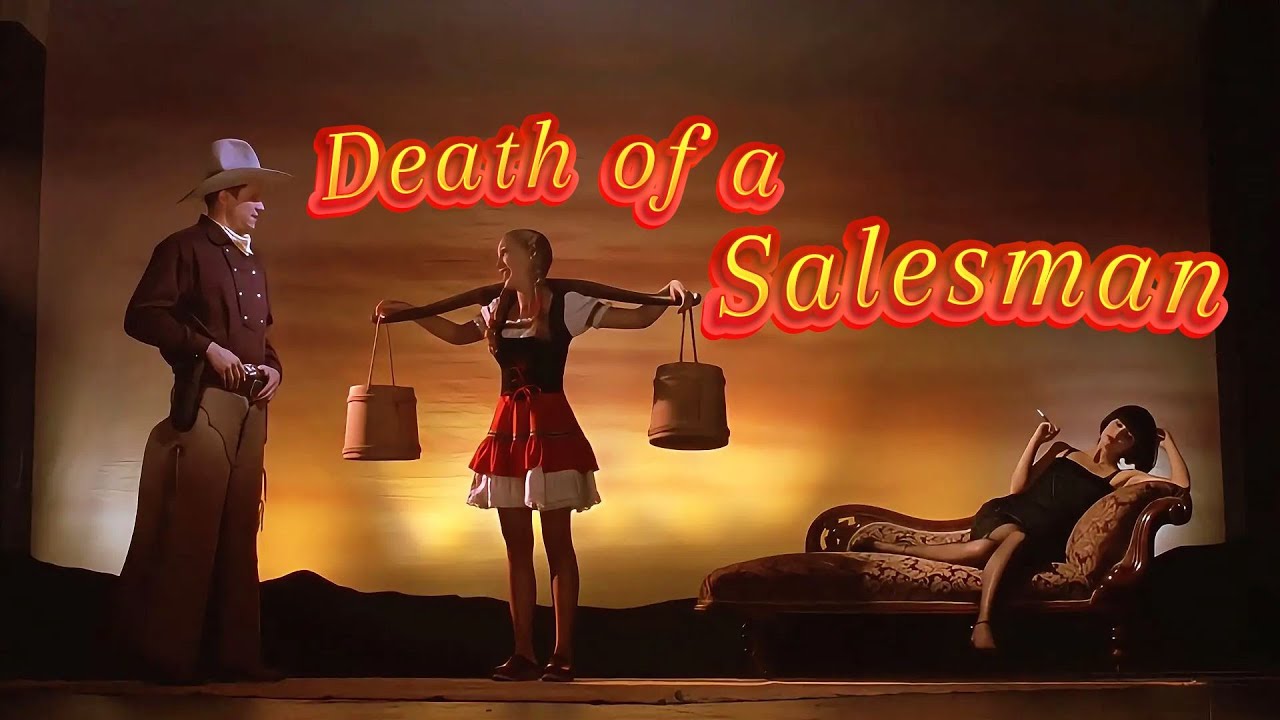
I HATE “it was all a dream” episodes, but reading this I don’t know why I forgive Wizard of Oz. Maybe because I was like 7 the first time I saw it, and it gets grandfathered in?
Total Recall and Buffy “Normal Again” are a different type of episode. In an “It was all a dream!” episode, reality comes back at the end, and all is well. For both of these examples, depending on how you interpret them, of course, reality is rejected by the character for the false reality. And at the end they remain in “the dream” world.
Back to the OP. Magnum PI had two dream based episodes, but they worked because we know it was a dream, and Magnum was just solving the case using his subconscious. It wasn’t really bad, just kind of “too cute for its own good”. But its timeslot-following show, the otherwise normal, reality-based PI show Simon and Simon, they had an episode where, as well as I can remember, the entire dream case didn’t happen. We the viewers are all involved in the case, and it looks like the brothers are going to burn to death, and then…oh IWAAD! Whew! Except, not. I still haven’t forgiven them.  If it is the one I think it was, they did this old trope in season 2! Lazy.
A strange example: Back in my University days (late 80s), I saw an animated short about a society in which the scientists discover that they only exist in the dreams of a sleeping person. They have to try to figure out how to affect the real world, to keep the sleeper asleep, so as to preserve their whole civilization.
Now that is an interesting take on the hoary idea we’re all living in a sim.
I haven’t seen it since back in my youth and don’t remember the ending, but could it have been a nod to the just-a-dream ending of the Wizard of Oz movie?
Alice in Wonderland—the book and at least some film adaptations—has a just-a-dream ending, and I think it works just fine.
Isn’t Robot Monster a dream thru-and-thru? I never make it to the end — I’ve passed out laughing way before then!
The end of St. Elsewhere implies the whole show took place in the imagination of Tommy Westphall.
There’s several examples of movies with fake out endings by dying protagonists who imagine their own happy ending in their last moments. Brazil comes to mind but there are lots of others. Do these count?
Bad: Lost.
It was, yes, and I think Czarcasm may have forgotten the beginning as well, where the protagonist Rollo (played by Cork Hubbert) goes up to the roof of the flophouse where he’s staying to fix an antenna, only to be knocked out in a fall whence begins the main story.
So it was a direct takeoff from The Wizard of Oz. In both movies there is ample (though ambiguous) evidence that the main character is dreaming given via the framing at the beginning, and the ending calls back to that beginning.
I’d put these kinds of movies in a different class from the blatant audience-cheating retcon of Dallas season nine, and of course in Newhart the whole point of it was played for laughs.