And “Make 'Em Laugh” was new lyrics for an old tune, and variations of “Moses Supposes” date back to the 1880s.
Just like the British Airways theme (a.k.a. the Flower Duet from Leo Delibes’ opera Lakmé).
Delibes also wrote the “Pizzicato” movement for his ballet Sylvia, which became a popular animation cue for surreptitious tiptoeing.
Not a success? Even your link says it was released to immediate success. It was #2 on the charts and nominated for a Grammy. Hell, it was even inducted into the Grammy Hall of Fame in 1998. That sounds pretty successful.
I think that he was referring to “not a success for the bank,” for which the song was originally written. As Cal’s quote from Wikipedia notes:
Ah. Make Em Laugh is a stupid song that is mainly effective because of the dancer performance during it.
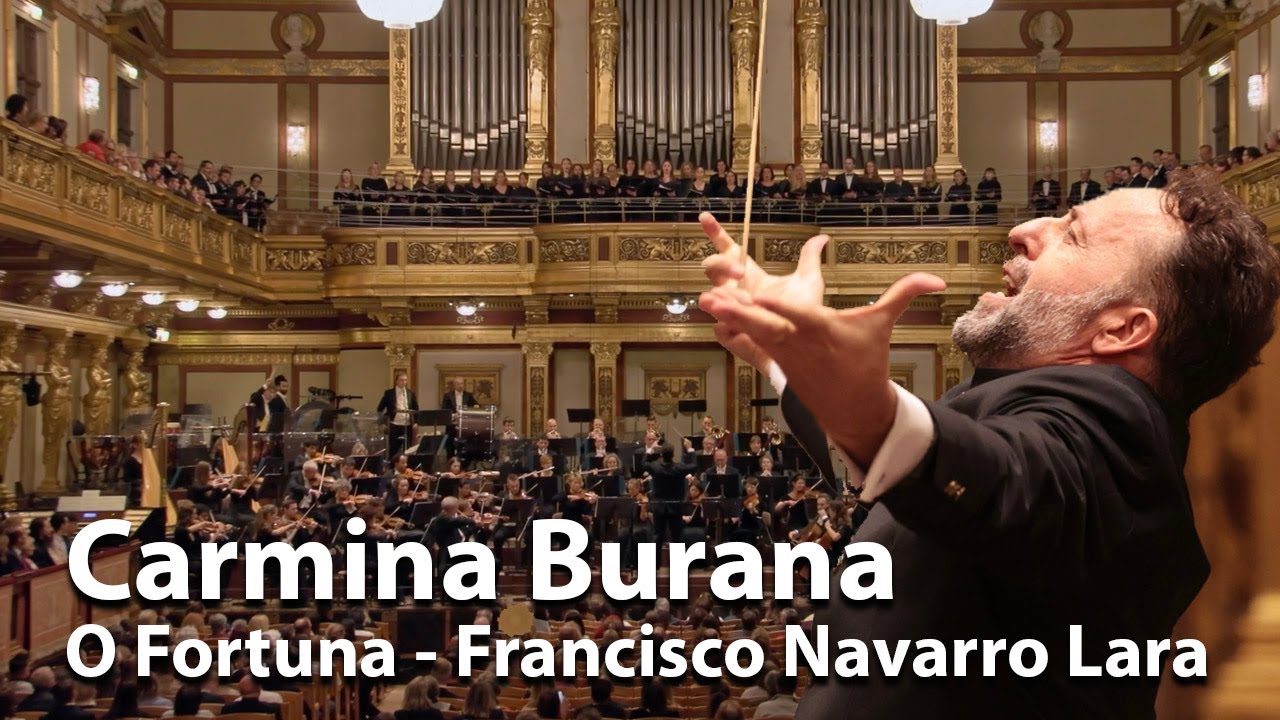
Does anyone care that O Fortuna was part of a cantata written by Carl Orff in the 1930s to set a bunch of medieval poems to music. Or is it enough that it’s simply awesome?
Another couple of instances:
“Say Brothers Will You Meet Us” was a piece of folk music used at camp meetings in colonial and early America. It’s tune became used for the Union marching song “John Brown’s Body” and then soon after that was the setting for Julia Ward Howe’s “Battle Hymn of the Republic.”
Similarly, “The Anacreontic Song / To Anacreon in Heaven” was the eponymous official song of an 18th century London gentleman’s club, which was later used as a setting for “The Defense of Fort McHenry” by Francis Scott Key, later titled “The Star Spangled Banner”.
I actually went to watch the entire cantata once, but we were mostly there for the O Fortuna segment.
Yeah occasionally I’ve seen that the cantata is being put on in my area, but I thought that not only would it not be a good use of my time considering the driving and parking time, but also that I wouldn’t be able to elegantly conceal the fact I’d also only be there for O Fortuna.
Speaking of Wagner, although I don’t think we can really say that his opera Lohengrin has been “outlived” (nor for that matter his opera Die Walkurie), the “Bridal Chorus” from Lohengrin has long been far more familiar as “the Here Comes the Bride music”.
[ETA: nevermind, ninja’d]
This is an intriguing alternative interpretation and I’d be happy to see a thread about it! (My nominee: every song with a reference to a newspaper.)
I dunno, all of Carmina Burana is pretty awesome.
The Nokia cell phone default ringtone comes from a 1902 composition for solo guitar by Spanish guitarist Francisco Tarrega called Gran Vals.
I think you’re right. I also think I shouldn’t post when I’m sleep deprived. 
“Rule, Britannia!” first appeared in Thomas Arne’s opera Alfred.
The Adagio from Aram Khachaturian’s opera Spartacus became the theme for the TV series The Onedin Line, and the theme for Reilly, Ace of Spies was taken from Dmitri Shostakovich’s The Gadfly Suite. There must be other such classical works used as TV themes besides the ones listed above.
And The Hudsucker Proxy.
This sent me down a little bit of a rabbit hole just now-- I listened to the ‘Amen break’ at the link you provided, and it reminded me of a speeded-up version of the drum break on the James Brown song ‘Funky Drummer’ (break starts about 5:20).
I had gone through a James Brown phase maybe 10 years ago, listening to all his music, and when I listened to the song ‘Funky Drummer’ I said hey, that’s the backing drum beat on Sinéad O’Connor’s rendition of the song ‘I am Stretched on your Grave’! I had always loved the contrast of the funky, modern drum track backing Sinéad’s version of the ancient song.
So I clicked on the Amen break wiki link you provided to see if there was any connection to the ‘Amen’ and ‘Funky Drummer’ breaks, whether one influenced the other. In the article, under ‘See also’ there was a link to ‘Funky Drummer’.
Anyway, after a little more googling, it turns out that neither drummer was influenced by the other, apparently; both beats were independently created in 1969, both beats have been heavily sampled over the years, and both beats were featured on a compilation album called Ultimate Breaks and Beats. But that’s where the similarities end.
According to Google’s AI, the beats aren’t even that similar; I guess they just sound like it to my untrained ear:
Musical Differences
- The Amen Break is a fast, rolling, four-bar loop featuring a rapid-fire syncopated snare and double kick-drum hit pattern.
- The Funky Drummer Break relies heavily on a loose, dancing pocket with intricate ghost notes and open hi-hat phrasing.
- Shared Legacy: They only became intertwined later in music history when both were anthologized on the 1980s sample compilation series Ultimate Breaks and Beats, leading hip-hop and electronic producers to frequently pair them together.
There’s a host of music from the minstrel shows that has survived the death of that entertainment form, a lot of it making its way into “children’s songs”, but tat’s a pretty broad category, so I won’t go into it fuerther.
Yankee Doodle Boy, usually called Yankee Doodle Dandy was written by George M. Cohan for the Broadway musical Little Johnny Jones, which opened in 1904. It was used, of course, in the biopic of Cohan that was titled Yankee Doodle Dandy in 1942, but the song’s use is widespread. I certainly didn’t know the name of the original musical.
The same musical Little Johnny Jones also gave us Give my Regards to Broadway.