The truly weird thing is when things are created independently and yet have resemblances. For instance, there are two comic strips called Dennis the Menace, one that was released in the U.S. and one that was released in the U.K. They were both released on the same day. There’s no way that this could be anything except a bizarre coincidence, unless the two cartoonists were (unknown to themselves) communicating telepathically in their subconsciouses.
Irving Berlin wrote “God Bless America” for a musical revue titled Yip Yip Yaphank, to be performed at an army base on Long Island where he was stationed during World War I. It was cut from the show and went unused until the 1943 film This Is the Army.
According to Hank Ketcham, creator of the American strip, the idea came to him when his wife Alice, exasperated by their boy’s antics, said “Our son Dennis is a menace!”
John Philip Sousa’s “The Liberty Bell” military march composed in 1893 is probably more famous for its use as The Monty Python’s Flying Circus theme
This happens with movies all the time-- it even has a name: ‘Twin Films’. Though it can probably often be explained by either studios getting wind of other studios’ projects and rushing to put out a competing product, or a topic that’s in the general public zeitgeist. So maybe not so much bizarre coincidence as parallel development. The classic example probably being the twin ‘oh noes, we have to save Earth from a planet-killing celestial object hurtling toward us!’ movies both released in 1998: Armaggedon and Deep Impact.
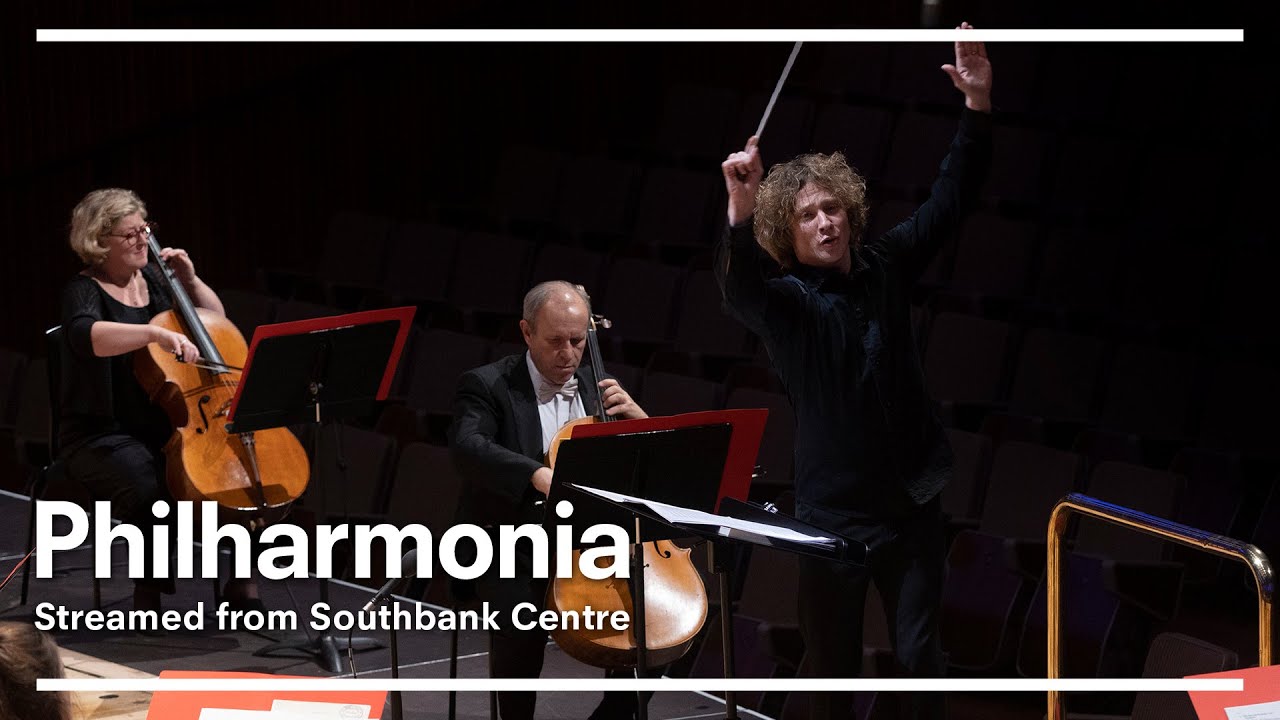
Wow, what a dynamic conductor!
I don’t think the frequently-used wedding music pieces are really forgotten, but most people probably aren’t aware of the sources.
The Wedding March (you’ll know it if you hear it. It’s the one that’s not “Here Comes the Bride”) is by Felix Mendelssohn, who wrote it as incidental music for Shakespeare’s A Midsummer Night’s Dream in 1842.
The Bridal Chorus (This is the one that’s “Here Comes the Bride”) was written by Richard Wagner for his opera Lohegrin in 1850, just eight years later. It was popularized by the marriage of Queen Victoria of England to Prince Frederick William of Prussia in 1858. Ironically, it isn’t used in the opera as a processional or recessional to the wedding ceremony itself, but is sung by the women in the wedding party when Elsa goes to the Bridal Chamber. (One of the lyrics translates as “Flee now the splendor of the wedding feast!”) It’s sort of celebrating the Consummation.
Likewise, the stock funeral march everyone knows (“Pray for the dead, and the dead will pray for you”) comes from Chopin’s Piano Sonata No. 2.
The Anacreontic Song was the anthem of the Anacreontic Society of London, which was supposed to have been founded about 1766, and had disbanded by 1792. The music was composed by William Stafford Smith, with lyrics by Ralph Tomlinson. The music would certainly have been forgotten by now, had not Francis Scott Key used to to turn his poem The Defense of Fort McHenry into the song now called The Star-Spangled Banner. As Robert Ripley’s “Believe it or Not” feature was fond of pointing out, the official anthem of the USA was based on a bawdy British drinking song. Evidently, though, there had been several cases of the music being used for American patriotic songs before Francis Scott Key’s “took.”
For years, Beethoven’s Ninth Symphony, Second Movement, was used as the closing theme music for “The Huntley-Brinkley Report.” I’ve heard fragments of it on MSNBC.
“Morning Has Broken” lives on as the classic Cat Stevens song, right?
Nope! It was originally written in 1931, as a hymn in church.
“Mack the Knife” doesn’t exactly fit the premise of this thread, given that it hasn’t outlived its source–The Threepenny Opera is still being performed (I saw productions in 2010 and 2017). It is something that’s much better-known than its source material, of course.
Correction: “Kiss from a Rose” was actually used in the next sequel, Batman Forever, and given the minimal legacy of Batman Forever pretty much does count for this thread.
The TV show “Makin’ It” was canceled after 9 episodes. Its theme song was on the Billboard Hot 100 for 16 weeks.
(reiterated by @CalMeacham)
This fact was used to nice effect in the John Adams miniseries about 12 years ago. In a scene I think from around 1774, “Anacreon in Heaven” is sung over beers in a bar somewhere in the New York area.
I think it fits the OP definition just fine. The depth of your knowledge and patronage of the theater and musical arts is admirable, but I’m willing to bet that very few people who know the song ‘Mack the Knife’ have even heard of The Threepenny Opera; fewer than that of people who know the Peter Gunn theme music but do not know it came from a show called ‘Peter Gunn’.
I sang in a church choir for years. We’d do “Morning Has Broken,” usually every spring.
We did the Cat Stevens version, because it was the one the congregation would be most familiar with. The actual music as printed in the hymnbook, was different.
The Amen Break is like the Wilhelm Scream.
A lot of creaters like to use it/sneak it in;
A few people delight in recognizing it;
A few people groan in displeasure in recognizing it;
Most people don’t notice it at all.
And the song made it into 1999’s Detroit Rock City, the film about kids trying to get to a Kiss concert. For a disco tune to manage that—phew!
At least, what the Wilhelm Scream was ten or fifteen years ago. It gets talked about a lot now (thanks to social media), and I suspect that a fair number of movie fans/the general public now know what it is, and recognize it when they hear it.
There are only three remaining members of the Shaker community left in the U.S., and none anywhere else, but their hymn Simple Gifts lives on as the final part of Aaron Copeland’s Appalachian Spring.