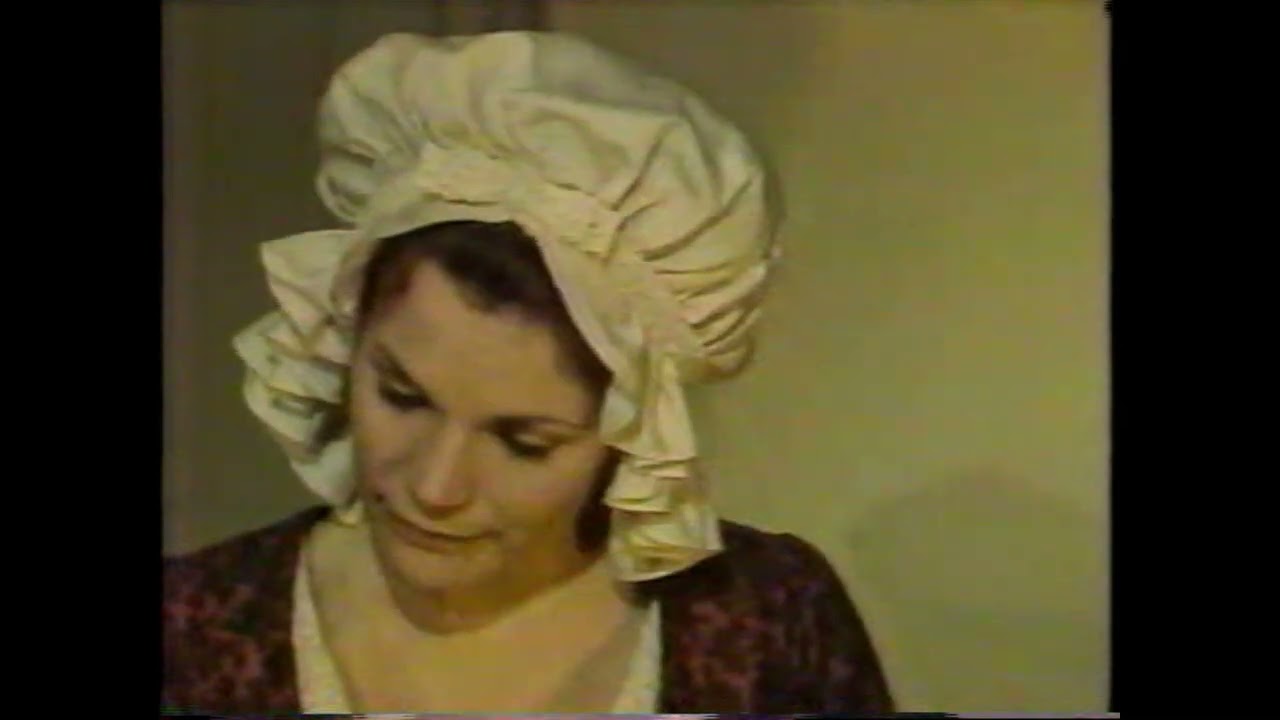
Heart of Oak, the anthem of Britain’s Royal Navy, was given new lyrics during the American Revolution to become The Liberty Song, which was heard in the Bicentennial TV series The Adams Chronicles.
Heart of Oak was memorably sung by the doppelganger of Jean-Luc Picard (a Frenchman!) in the third-season ST:TNG episode “Allegiance.”
IIRC “Thunder and Blazes” is the name given to the wind band arrangement that circuses use, as opposed to original composer Julius Fucik’s (note spelling) version for orchestra.
Having seen it, it’s best forgotten. RIP Gene Wilder, but this was not one of his better efforts.
See also “The M.T.A. Song”, written in 1949 for the Boston Mayoral election and later recorded by the Kingston Trio.
It was actually a party piece Frank Loesser and his wife Lynn used to perform at gatherings. Lynn was majorly pissed that he let it be used in the film, money be damned.
The whole work is awesome, and I have gotten into fearsome arguments with musicologists over this opinion. Orff’s personal issues with potential Nazism are not excused by it, but it’s a damn good work.
There are a couple of other songs which, while lesser known, have escaped their original stage contexts. “I Dreamt I Dwelled in Marble Halls” is a beautiful aria (and I recommend Joan Sutherland’s recording) but no one stages the full operetta The Bohemian Girl anymore.
“Coffee in a Cardboard Cup” occasionally gets an outing as a peppy song and dance number, but who even remembers the musical 70, Girls, 70?
And while Sondheim’s A Little Night Music does get revived from time to time, I don’t know how many people know that “Send In The Clowns” came from it.
Written references to the Shaker hymn date back to the 1840s. In 1963 Sydney Carter adapted the melody, wrote new lyrics and copyrighted Lord of the Dance.
He didn’t credit the Shakers, but then again, neither did Aaron Copeland.
Copland didn’t have to. His composition was a combination of American folk music, all taken in homage and understood as such. He wasn’t claiming it as an independent creation of his.
Irving Berlin wrote a song called The Near Future for the revue The Ziegfeld Follies of 1919 (although he apparently stole the melody from elsewhere). The “near future” it referred to was Prohibition, which was set to begin on January 17, 1920. This lead to the following lyrics, by which the song is much better known
How dry I am, how dry I am
It’s plain to see just why I am
No alcohol in my highball
And that is why so dry I am
Waiter, Waiter
The music was used in a LOT of Warner Brothers cartoons and elsewhere, which lead to its becoming very familiar. Nobody ever seemed to cite the title, so it became known to generations of cartoon viewers simply as “How Dry I Am.”
“Rock and Roll Part 2” is an instrumental song (except for the "Hey!"s), by English vocalist Gary Glitter. In the '80s and '90s, the song became ubiquitous at U.S. sporting events, as well as in movies and TV.
American fans likely didn’t know, or remember, that it was an instrumental version of Glitter’s “Rock and Roll Part 1,” which had been a top 10 hit in the U.S. and numerous other countries.
Of course, “Part 2” has also faded away now, due to Glitter being repeatedly charged of, and thrice convicted for, child sexual abuse.
The overture from Ruslan and Lyudmila by Mikhail Glinka was used as the theme music for the American television sitcom Mom (starring Allison Janney) and the British radio sitcom Cabin Pressure.
The Theme to Peter Gunn showed up in “Courageous Cat and Minute Mouse” cartoon, which is almost certainly where I first heard it (in the 1970s in rerun).
Yeah, given the order of magnitude in fame between the song (which I heard at mini-golf just today!) and the play it fits the spirit of this thread, which is really “music that eclipsed what it was originally associated with”.
If we broaden the subject to audio that outlived what it was originally associated, I’ve got one: podcasts, which have continued after the end of the iPod in 2022.
It was a staple of my high school pep band through out the 70’s. The trombones (I had 3 brothers who played that instrument) in particular loved the opening bass line.