A key driver was Portugal’s Henry the Navigator who had the political and economic vision to finance expeditions to explore south along the coast of Africa. They were looking for trading opportunities and valuable stuff they could carry back to Portugal as well as route to India and China.
This went on for decades. These expeditions were the moonshots of their time.
As they went south into the tropics the came across kingdoms that had gold. They also came across sugar cane and established slave markets required by plantations. They transplanted this practice to the island of Madeira which had a suitable climate. Sugar was extremely valuable, white gold, in a Europe that had few sweet things. It became the template for a huge slave powered sugar processing business that was soon copied by the Spanish, Dutch, French and English. Mankind remains thoroughly addicted to sugar.
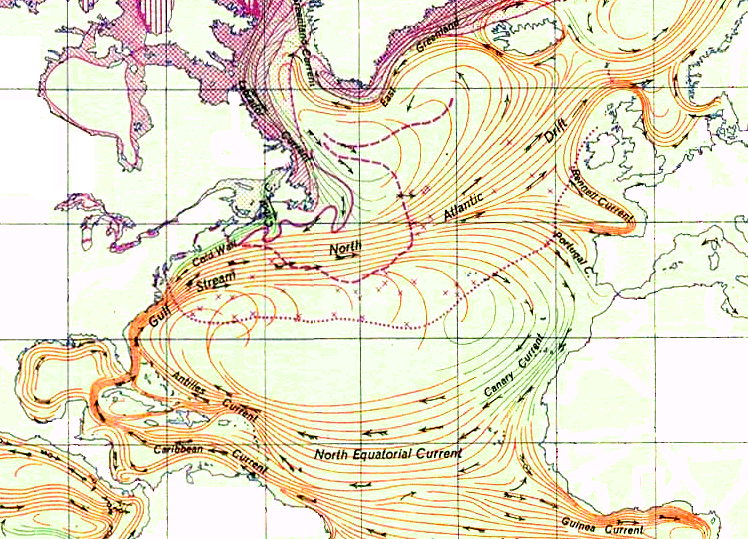
The Altantic coast of Africa was very hazardous until they worked out how to use the prevailing winds and currents and improve their technique which involved long detours into the Atlantic to pick up the trade winds.
There is an interesting parallel with the 20th century space race.
In the Cold War we had American and the Soviet Empires rattling sabres and racing to develop rocketry and an orbital launch capability.
In the 15th century we had the Western European states with Atlantic coasts cut off from the trade with Asia by the expanding Ottoman Empire that controlled the Eastern Mediterranean.
The states most affected by this were in the Iberian peninsular where they had been directly at war with Muslims in Spain and in 1492 managed to finally defeat the Caliphate of Cordoba and consolidate Spain from kingdoms into a unified Christian state.
Portugal had the advantage of being a unified state for much longer and under Henry had developed a response to the isolation from Asiatic trade routes. He used the most capable talent he could find and this developed into the worlds first global maritime trading empire.
He developed an oceanic thallocracy. An extension of the same concept that operated across the Mediterranean at different times by the Greeks, Phoneticians, Venetians, Genoese and others. His empire would be copied by the Spanish, Dutch, French and British.
No great invention, just a set of political and economic developments that drove innovation on the high seas to open up new trading networks.
What if there had been no block on trade by the expanding Ottomans and profiteering by the Italian city states. What if there had been some reconciliation between Spain and the Muslim states of Africa?
Who would venture into the wild Atlantic?