I wasn’t suggesting that solid state batteries in general are a scam, just that the Donut Labs offering probably is. The SSBs the various majors have been working on have been coming soon for a long time, and there’s no particular reason to think that they’re sufficiently imminent to delay a purchase decision.
Or, since the technology is advancing fairly rapidly, then lease one instead of buying. That’s what I might do, for my wife’s car.
It’s possible for a small start-up to make an industry-redefining breakthrough advance. And if they do it, they’ll welcome third-party tests and open demonstrations, because they’ll want all the help they can get to get the word out. If a small start-up company claims to have made such a revolutionary breakthrough, and just says “Take our word on it”, then they’re a scam. Not “we’ll know soon enough”, but “we know right now”.
It’s an obvious scam because their actions are nonsensical if it’s true. If the battery works half as well as they claim, they’ve made every other battery manufacturer in the world obsolete overnight. What do they do with this revolutionary new technology? Sell an electric motorcycle?That’s ludicrous! It’s like finding a cure for cancer and using it as an additive in an energy drink- or using a portal generator to replace shower curtains.
The good news is that it won’t cost much for interested parties to buy the motorcycle to investigate the technology.
Edited to add, or is there something that makes this suitable for a motorcycle but not an automobile?
Donut/Verge is not even going to be the first to demonstrate a solid state battery on a motorcycle, though they may be the first to market.
Quantumscape, a solid state battery company from California, has already demonstrated a Ducati motorcycle with one of their batteries. VW is a major investor in Quantumscape, and Ducati is owned by the VW Group.
I completely understand your skepticism. My reaction to any new battery or energy announcement is “tell me when I can buy it.”
Lol.
Hrm…it only transports matter?
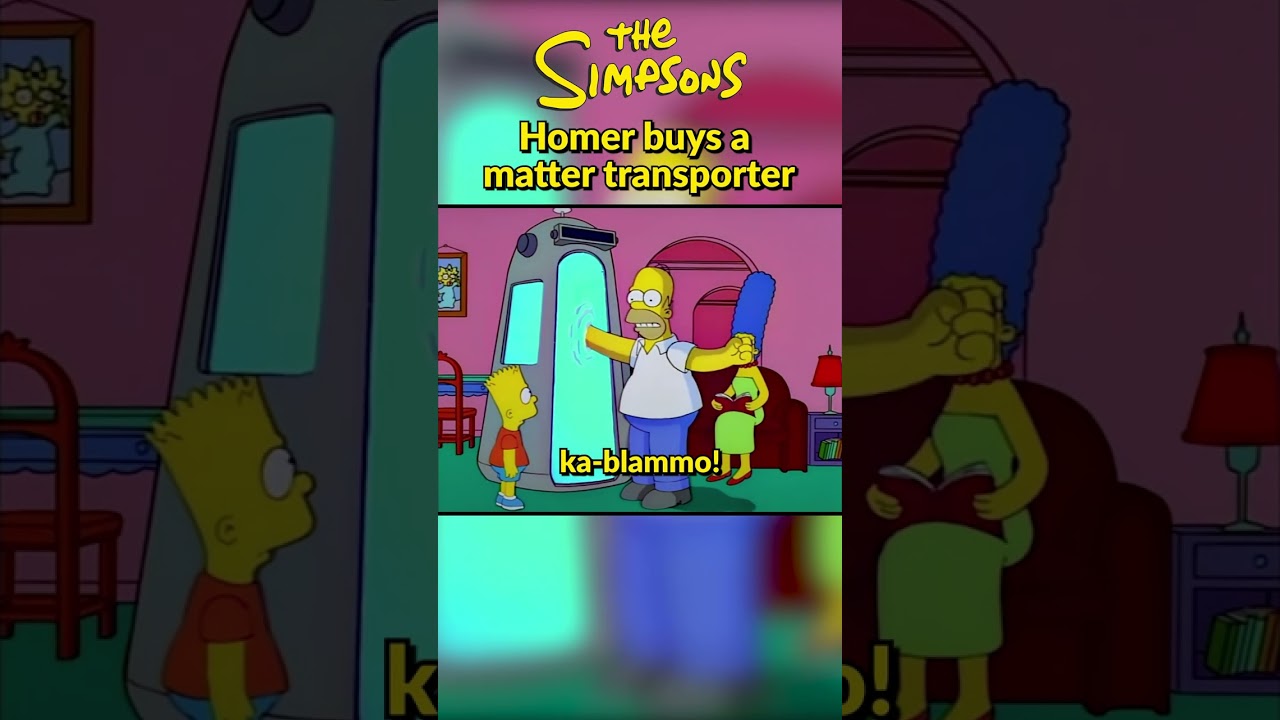
Verge Motorcycle’s CEO is the same person as Donut Lab’s CEO. That’s what makes it suitable to launch in a motorcycle rather than an automobile.
If they are a small enough company with a small enough lab-turned factory, they may be unable at this stage of funding to make enough big enough batteries to produce a demo car.
IF they’re real and have a real breakthrough, their end game is selling the baby company with it’s patents for a bazillion dollars and retiring. Manufacturing a a few dozen to a few hundred motorcycles that get bought by real people, and by competitors and media folks will accomplish that very quickly & surely. Meanwhile they’re trying to play the hype-o-phone at just the right rate so the hype crests just as the reality starts to become incontrovertible.
If they’re scammers, or (less likely) just honest folks overprojecting from too small a data set, that too will out very quickly when the motorcycles don’t happen or don’t perform.
Not a lot of reason to speculate now; just wait and watch.
I would not avoid buying a 2026 or 2027 EV for any SSD hype from any source. Even if they’re as magically better as the info in the OP suggests, the ramp up of SSD EV production would come around 2030. A new 2027 Li-ion EV is still a darn good car that will serve you well for 20 years. Or for 5 years then be sold as basic transportation to the next owner.
I think you are assuming SSB vs LiIon are the only choices. That is not the case.
CATL, the world’s largest battery maker, has introduced their new NAXTRA sodium ion battery. It maintains full recharge speed and longevity (90%+) to 40 degrees below zero (Fahrenheit or Celcius). It’s also environmentally friendly (no lithium, no lead, no cobalt
So you are contending that buying an expensive car with LiOnbatteries that cost $100+ per KW with now dated technology is a smart move?
https://www.youtube.com/watch?v=81XuuGwsu7Q &1
CATL has now confirmed that sodium-ion electric vehicles are not a distant concept — they are arriving within months.
In this video, we break down what CATL has actually confirmed, what “within months” really means in manufacturing terms, and which parts of the EV market sodium-ion batteries are likely to hit first. We’ll look at why CATL is moving now, what problems sodium-ion solves compared to lithium-ion, and why this technology is being positioned differently from solid-state batteries.
We also explore the trade-offs: lower energy density versus lower cost, improved cold-weather performance, faster charging characteristics, and how sodium-ion could reshape entry-level EVs, city cars, and fleet vehicles. This isn’t hype — it’s a practical shift in battery strategy that could change EV pricing and supply chains much sooner than many people expect.
CATL is the world’s largest battery manufacturer, supplying Tesla, BMW, Volkswagen, Ford, and many others. When they say sodium-ion EVs are coming within months, it’s worth paying attention.
I don’t.
In a fast developing technology, it’s always better to wait for the next generation. Except when you need something now.
Here’s what MIT Technology Review (January 12) has to say
Sodium-ion cells’ energy density is still lower than that of high-end lithium-ion ones, but it continues to improve each year—and it’s already sufficient for small passenger cars and logistics vehicles.
If this product follows the usual timeline for introduction of battery improvements (that are both cost and performance competitive), the availability of cost competitive Sodium ion batteries with energy densities better than Li-ion for long distance passenger cars is most likely in the early 2030’s, at best.
My understanding is that most of those are LFP (LIthium Iron Phosphate) batteries. Those have lithium, as the name says, but not a couple other expensive elements (cobalt and nickel).
Pretty much this.
Scaling up any new battery tech to mass vehicle production is the work of a couple years, at best, by which point there’ll be some other advancement that will require another couple years to scale up. This can continue ad infinitum or, you can buy a car on your own schedule based on what is currently on the market.
It’s already scaled up in China. Gradual changes are expected ….this is NOT a gradual change in cost.
EVs are already too expensive with battery the main cost. If the SodiOn battery is now 10% of the cost of a LiOn how would you expect LiOn based vehicles to compete except via trade restrictions….
Fortunately Canada and Australia my home countries are not burdened by that and CATL has already been at it for “a couple of years”. Europe and India are also up for the benefit.
It also still has a lower energy density, which is the most important thing for a vehicle battery. When they become available, they might be cheaper, but they won’t have the range.
And it’s important to realize how important energy density is to vehicular applications. Not only do you need more mass to store the same amount of energy for a given range, you need even more batteries to account for the extra battery mass.
That said, the market will become big enough to have low-range cars with cheap batteries and long-range cars expensive batteries. One of the problems of the current EV model selection is that it greatly favors high-end cars only. The wider variety of price points will speed adoption of electric vehicles.
I was making a similar point upthread; there is always something new on the horizon, so you have to decide when the current technology is good enough that you decide to buy or lease. (For example, my car dates from 2010, so I have no backup camera, no Apple CarPlay or Android Auto and no adaptive headlights. All three of those are things I look forward to getting in my next car, whether it’s gasoline-powered, PHEV or fully EV.)
I don’t know the installed percentage but for new storage, yes LFP is something like 85%. They have longer cycle life and better temperature range.
I’d assumed sodium would start filling that niche ~now but lithium prices cratered 90%, making it hard for anything to compete.
Might be very interesting for stationary batteries and facilitate a more modal energy mix.