I don’t think anybody has a particular lead in solid-state batteries. There is still a lot of good materials-science coming out of many European and Asian countries. BYD has an edge in production, but so far many countries have been able to maintain automobile production by one means or another.
Sodium batteries are probably a solved problem, eclipsed by Lithium for light-weight applications, and limited by lack of compatibility with Lead-Acid and with Lithium. For home storage, there are small players available, but many people don’t want to make a massive investment in unknown technology for their home.
Ford in LatAm and middle-east is (IMHO) stupid enough to do this… here is an about $19k inexpensive Ford SUV, that is really a rebadged JMC Yusheng S330
(earned itself quite fast a reputation of a “turd / hard-pass” vehicle in the local markets - for its CVT-gearbox blowing up often as early as 2.000km.)
… but I am sure the powerpoint-deck of the Ford-MBA, promoting the idea was great …
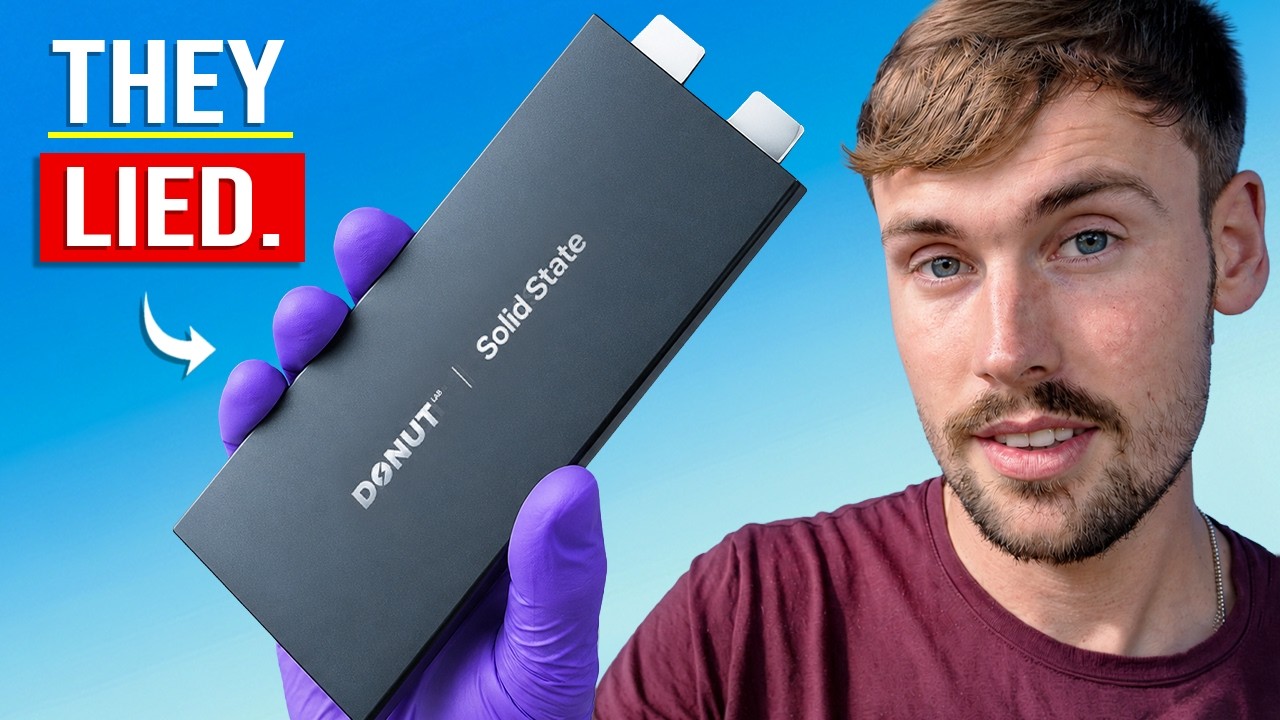
Surprise! Donut Lab’s battery is a scam. Too bad, I’d been hoping for electric motorcycles that can do more than replace 125cc scooters and dirt bikes.
The summary seems to be that when the batteries were closely analyzed they showed voltage characteristics of high-nickel lithium-ion cells, which is different than what a solid-state battery would show. There was also expansion during different states of charge which matched a cell using a graphite anode, which is not possible with a sodium based solid-state battery.
I guess the takeaway is once again, “Extraordinary claims require extraordinary evidence”. When an individual, or especially a company that’s selling a product is slow to provide such it’s grounds for considerable skepticism.
Though I do want to add a reminder for all, taken from the last major paragraph (and a big thank you to @echoreply for linking it!) -
My biggest concern now is that this damages public trust in solid-state battery technology more broadly. I hope it doesn’t cool people on the technology, because solid-state batteries do appear to be genuinely, finally coming. Toyota has invested over $15 billion and targets production vehicles by 2027-2028. Samsung SDI has the world’s largest pilot solid-state production line and plans mass production by 2027. These are real programs from companies with real technical credibility. Solid-state is coming — just not from Donut Lab, and not with the impossible combination of specs they promised.
I agree w your cautionary quote, but I’ll offer the gentle counterpoint that every significant tech breakthrough is preceded by a hype / con artist with no real product trying to cash in and then cash out.
Then come the legit but not-quite-there products (Palm Pilot?) then finally the early adopter products (Blackberry?), and then the mainstream product (smartphone mobile computer) that every one of us is carrying everywhere today.
Donut’s con will put some few commentators and consumers off the idea of solid state batteries for a bit. But the people who matter at that stage, the scientists, engineers, and investors, will remain all in.
And people should also realize that, when real solid-state batteries really do hit the market, or even when the technology is fully mature, they probably won’t be as good as Donut was claiming. They’ll be better than current batteries in a number of ways, but not that good.
I don’t think Electrek considers themselves unbiased (as if we couldn’t guess from the title of the article), but at least this is theoretically a 3rd party test, with some decent results. However, there were a couple of details there.
The result is also a best case. The earlier VTT capacity test discharged at 1C down to 2.7V. This one discharges 10 times slower and 0.4V deeper — both choices that maximize the extractable energy and inflate the density figure.
And it’s a different cell again. VTT’s own report describes the DL6 as “an energy-optimised variant of the V1 cell.” So the record now includes at least three cells: the V1 that was independently pegged as lithium-ion, the V1.5 that hit 409 Wh/kg, and a separate “next-generation” cell examined by Intertek.
So lots of games trying to make individual (and verifiably different!) cells match individual parts of the earlier claims. And even then, it and other prior tests were generally best case in sealed lab scenarios.
The article is much more critical, spelling out the difference in the extreme claims and promises of road-ready batteries in retail vehicles by Q1 2026, while I personally am more interested in proving out their claims and the eventually possibility of a working technology.
But the passing around of tests to decidedly different battery configurations with no end in sight makes be believe they’re selling the sizzle, with no clear vision on if they’ll ever get to the promised steak.
And/or, they got wound up and believing in the hype and dream and still trying to sell it, or will it into existence. Doesn’t seem likely at this point with the limited testing and reporting we’re seeing.
[ again, this is specifically for Donut’s claims, not slamming on next-gen batteries or the industry ]