“Pedantry” does its job just fine - it doesn’t need “pedantic” to submit itself to the back-formation of a spurious noun, or we’ll end up on the slippery slope to abominations like “pedanticisionation” and there’ll be nothing for it but Aslan roaring “Time!” and the stars falling from the heavens.
Isn’t it nice that people can post things that fit the general theme of the OP without being bound by hyper-restrictive ops? What a boring board this would be if hyper-restrictive OPs were allowed to strangle discussion.
the Tudors - not a movie, but a TV show, but deviates enough from established history in so many ways that it could give a whole ampitheater of historians a collective stroke.
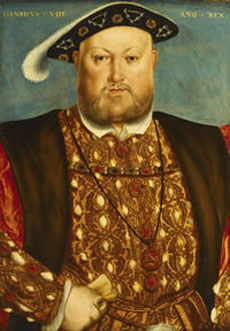
To start with, Henry VIII looked like this, not this.
To be fair to the TV show, Henry VIII did not get fat until after his leg injury. Before that time he was very athletic and considered attractive. That said, you are correct that the TV show plays very fast and loose with history, but then have you ever seen a historical drama that didn’t?
Sticking to movies that mixed real historical figures with fictional ones…
In ***The Untouchables, ***we see Eliot Ness kill mobster Frank Nitti by throwing him off a roof. In reality, Ness didn’t kill any major mobster, and the real Frank Nitti controlled the rackets in Chicago for many years. Nitti didn’t die until 1943, long after Prohibition ended.
In Gladiator, Maximus kills the Emperor Commodus in the Colosseum, after which the Roman Republic is re-established and the Senate rules Rome again. In reality, Commodus was murdered, and followed by a rapid succession of new emperors.