Einstein never said that, acceleration doesn’t work like that, and objects don’t experience their own mass increasing as they accelerate. It’s a common misconception, but it’s not true, and FTL travel introduces a huge host of problems even if you do it without acceleration.
Very good short documentary on the subject here:
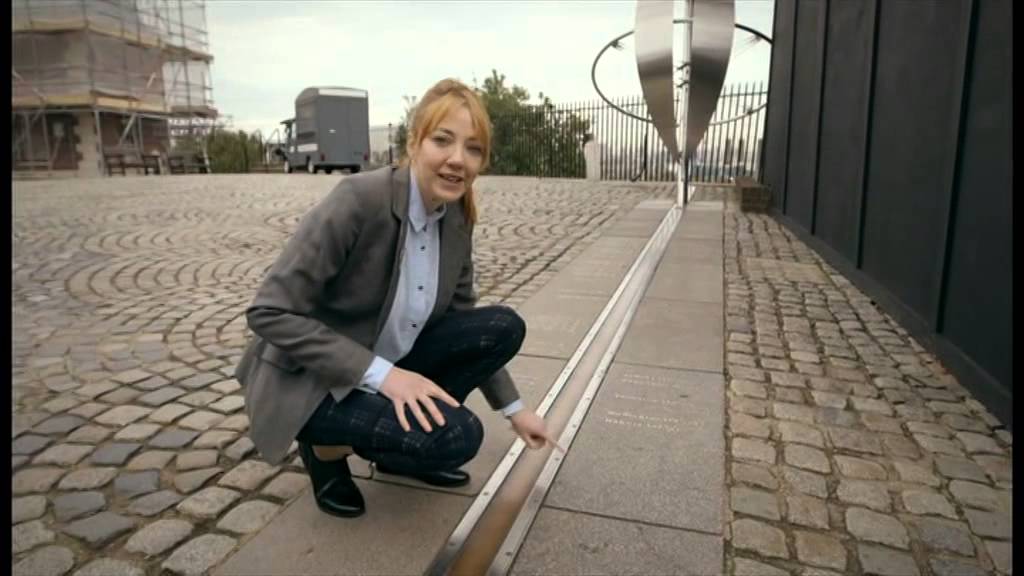
Especially the contribution from Dr Stuart Clark of the Royal Astronomical Society starting at around 2:20. A few interesting points raised before that though, so worth watching from the beginning.
I thought physicists defined time as the dimension of spacetime along which entropy increases?
It seems to me that saying “time is what clocks measure” is essentially equivalent to saying “distance is what a meter measures”. It’s technically true, but it’s not really unlike using a word to define itself. I think the question you’re getting at is more WHY do we even care to measure it?
For the second, I think that’s more to the point. The way I would describe time is that it’s an ordering and distance of events, where space is an ordering and distance of positions. So, obviously if two entities are nearby in space and time they can interact.
No, there’s no single universal time that every frame of reference can agree on, but the same is true of space itself. You and I may disagree on whether event A or even B happened first, depending on our frame of reference, but we can only disagree on that because of the concept of time that insists that there is an ordering at all. Unless A depends upon B (or another event that depends upon B) or B depends upon A (or another event that depends upon A) there isn’t an absolute ordering of those two events across all frames of reference.
But it seems to me that arguing that we can’t agree on the ordering meaning that it makes that definition wrong seems… odd. As an analogy, let’s say that two people are looking at a pair of objects in space from different angles, so they have different frames of reference. One person might say that object M is on the left of object N, or object N is above object M, and the other might say the opposite. They may also disagree on how far apart the objects are. The point is, they’re both correct, from their frame of reference, and that they disagree on that doesn’t mean that somehow the concept of left and right or above and below are now invalid. These are descriptors of positions in space from a given frame of reference.
As others pointed out, this is where relativity comes into play. If we’re going to agree to be at a specific place and time, then we need to specify that frame of reference. Even without invoking relativity, we can have this same sort of issue. I’m in DC, and if I’m going to call someone in LA, it’s not good enough to just say “I’ll call you at 3:00”, we need to agree on whether that’s 3:00 EST or PST.
Other than being more complicated calculations, if we’re going to meet at a particular place and time, presumably we’d use that place as the frame of reference, and then we can independently calculate any relativistic adjustments to meet there at that time and place in that frame.
And based on the follow up post the OP made, it really seems like the biggest issue is that he is having trouble understanding the idea that there is no universal frame of reference. He says that every events has two (x,y,z,t) coordinates, one by our understanding of the universe and one by when we become aware of it. Ultimately, there are as many different values for (x,y,z,t) as there are frames of reference, and the universe has no preferred frame, so they’re all equally valid.
Thanks very much Rob. I just love those kinds of documentaries.
For historical purposes we don’t need to know the absolute time when an interaction occurred. (If such a thing as “absolute time” were even possible.) We only need to know their ordering. For example, George Washington was born BEFORE he became President of the United States.
Time is what we use to synchronize events. It’s a social construct. “I’ll meet you at the mall at two o’clock.” Neither of us can define what time is, but we both know what “two o’clock” is.
Also: measurement of time depends on the assumption that repeated events are similar. We measure time by days, only by assuming that one day is “as long” as another. The same for pendulum-swings of a clock, or vibrations of atoms. It’s a postulate that these events are similar to each other, such that ten vibrations of the cesium atom take up ten times the length of time of one individual vibration.
This cannot be proven. It’s one of those assumptions (like “there is a reality” and “other people have minds” and “no, it isn’t just a dream”) that science has to make in order to function at all.
There is a very important distinction between the concepts of space and time, even though the two are often linked as related. Events in space can move in any direction, even toward each other to eventually l meet. But that is not true of time. Two events at different times can never approach each other in time. So it would seem to be a fallacy to think of space and time as being interrelated dimensions.
Time is very different from the 3 spatial dimensions. Aside from being relative (to different frames of reference), it may also change in a given frame of reference (P.A.M. Dirac suggested that this may be a manifestation of the Gravitational Constant (g) changing in what we call time). in turn, this suggests that what we call “time” is actually a second derivative of something else, and not the first derivative of position.
Over the line for this forum. Please don’t do this again.
Once you define time, maybe you could define now.
I count at least a half-dozen different incorrect statements, there. Probably best to start over from scratch.
The speed of light is both constant and invariant: It doesn’t change across time or space, and it also does not depend on reference frame. Gravity can do some weird things to light, but changing its speed is not one of them.
No. Scientist can’t even agree on what time is, if it even is anything at all. The difficulty is most assuredly scientific.
Time is money. Scientists and historians don’t always have a firm grasp of that concept.