What has happened because of this documentation? Any firings or at least severe reprimands and/or official apologies?
Police Unions have negotiated some of the toughest anti-firing rules in the USA. And they can because what are you going to do, go without police?
I remember the extensive, exhaustive and incredibly long fight to get Portland Police to wear bodycams.
No, none of that. They never admit fault or apologize. We haven’t ever even succeeded in getting spurious overcharges removed from an invoice once it’s been submitted. And if we refuse to pay, they won’t fill any of our projects, and the municipality won’t allow us to work.
The police liaison (a retired police lieutenant) we hired has had some luck in requesting that some of the more egregious offenders not be assigned to our projects in the future.
What a racket. Corruption at its finest.
Wow! If that’s the case, then I don’t blame them for prioritizing their own lives. Did it occur to you that the “waving around gun” might discharge and kill an innocent bystander?
This is a prime example of how we have gone overboard in putting a criminal’s rights before the rights of the victims and of the people who are supposed to stop them.
In my experience (dozens of construction projects with police details), the response will be “Are you going to send someone who works in this town to testify that Officer Friendly [actual words they used] is lying and then get in their car and drive back to work?”
We have had dozens of union projects in New York and New Jersey and the only ghost employees we have had are police.
I agree with robby because you have to consider the effects of a “shoot first, assess later” culture on officer safety. Cops will ultimately benefit from turning down the heat.
So because an innocent bystander might get injured (even though in many, if not the majority, of cases there is nobody else in the vicinity), the police should go ahead and summarily execute them?
Which is essentially the standard practice. Even though officially their training says they are supposed to be using less-lethal options if at all possible.
Here’s an alternative, as noted in this thread.
A shoplifting suspect actually pulled a gun on a police officer. But the loss-prevention officer and the armed police officer managed to immediately disarm and subdue the suspect without shooting him to death.
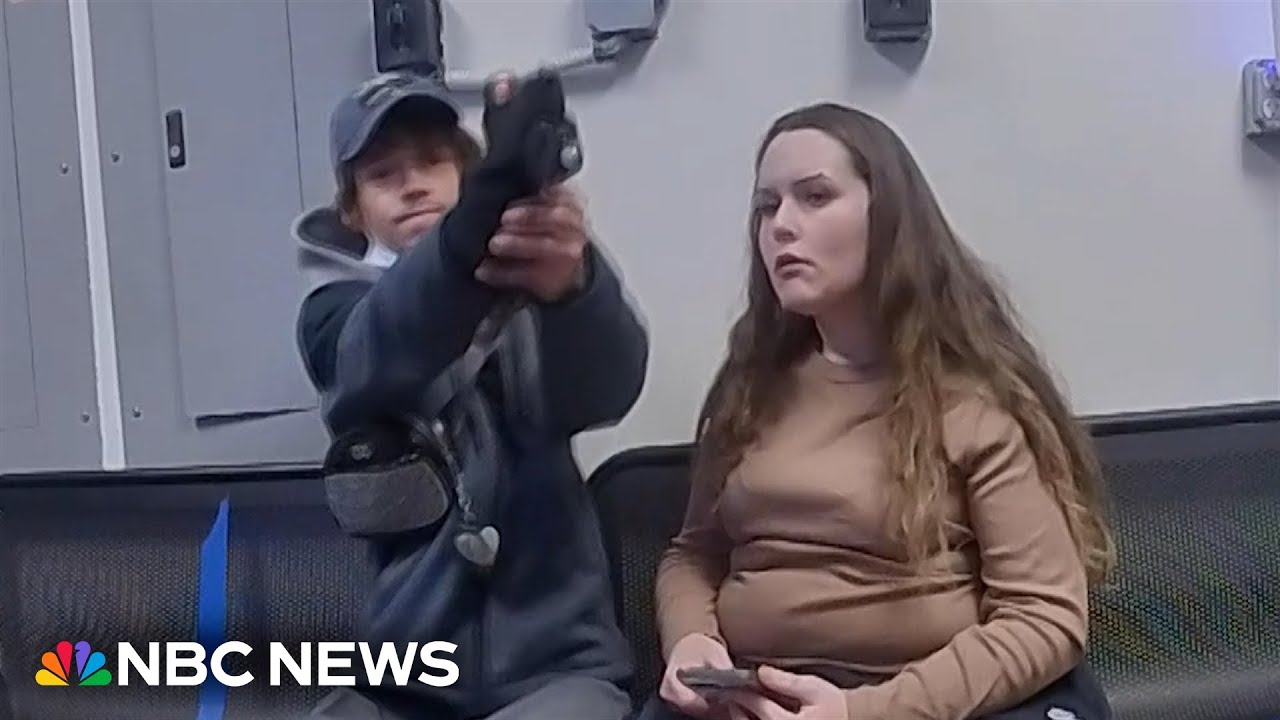
As I wrote in that thread:
Well, if you pulled out a gun and pointed at me, I would shoot you before you shot me. They call that “self-defense”. Calling that an “execution” is grossly inaccurate at best.
And you’d bet your life on that gut feel? That seems like an incredibly bad idea to me.
In the specific incident caught on video? I doubt it - there was a guy tackling the gunman before the cop even reacted to the gun at all, and he had his hands on the gunman’s hands, so at that point joining in the tackle would actually be easier than getting a clear shot.
But in the general case, if you point a gun at a police officer, I expect that you will be shot, and I don’t think that’s a huge issue or something. Expecting police officers to let someone point a gun at them just on the off chance that they are bluffing is a ludicrous standard.
I think what they’re trying to say is the same thing I was saying upthread, and that’s that police shouldn’t be reacting first and primarily with deadly force.
I mean, it’s absolutely ridiculous that the law enforcement officer (Texas DPS trooper) who pulled me over for speeding has his hand on his gun as he approaches my vehicle. It’s a late model Honda driven by a fat, middle aged, short haired white guy in a Boy Scout uniform with two actual Boy Scouts in the car with me. I mean, it literally doesn’t get any less threatening unless we’re talking about elderly women here.
But nope, Trooper Do-Right has to have his hand on his pistol as he walks up to my truck in rural Red River County, as if I’m actually a threat.
It’s that sort of thinking that primes them to shoot first and ask questions later. Which is wrong any way you slice it. It’s better for a few cops to get shot not putting their hands on their guns and being ready to shoot, than it is for them to be primed and ready and shoot innocents.
Which is not true, that the standard you quoted said that it was justified, or that you said it was not?
And if “he had a gun” is justification, then Castile would also have been justified in shooting the officer.
Great that you have reflexes faster than those of any mere human. But what about the rest of us? For most of us, if a person pulls out a gun and points it at us, they’re going to shoot us, not the other way around.
In my opinion, this isn’t actually the best response. If a person pulls out a gun and points it at you, the best response is to immediately take cover and retreat if possible. Why? Because a smaller, moving target is much harder to hit. Standing there while you pull out your gun to supposedly shoot first just leaves you exposed.
And if the person was going to shoot you, they already would have fired.
The vast majority of people (other than cops) who pull out a gun, IMHO, are simply threatening.
That’s true, but then if they dramatically cock the gun you know that they are serious. And if they turn the guy sideways, THAT’S A KILLSHOT!
These are good rules of thumb for predicting what will happen next in movies, but I wouldn’t rely on them in real life.
Which is precisely why if you get in a verbal altercation with a police officer and then suddenly reach into your coat or glove box to pull something out, they’re probably going to shoot you before you get it out and show them that it’s a pack of cigarettes or your driver’s license. Or, more likely, scream at you to get your hands on the steering wheel and stop moving as soon as you start.
This thread just took a dark and ironic turn for me. While composing my last post, my former wife called me with the news that one of her co-workers was shot to death by police at his home Friday night.
He worked at the VA and was a veteran himself. He served in Iraq and reportedly suffered from PTSD.
From what is known right now, two friends requested that a wellness check be conducted on him this past Friday night—which resulted in him being shot several times in his yard by police.
He had several registered firearms in his name, so they sent four armed officers to his home along with a drone for the “wellness check” (which as a term doesn’t get much more Orwellian).
Details here (subscription likely required).
No subscription should be required for this:
So because the victim was armed and did not immediately comply, the police officer had no choice but to shoot him to death.  Of course the shooting will be deemed “justified.”
I’ll note that he had no criminal history that I am aware of. It appears that he was despondent and possibly suicidal. He was sitting down when he was shot to death in his own yard. God forbid the police could simply back off and talk to him instead.
Even if the last thing they said before that was “Show me your driver’s license”.
Small detail you seem to have accidentally left out:
So it sounds like even his friends were concerned that he would potentially get violent…
And another missing crucial detail:
True, which is why when I’ve been pulled over and a cop asked for my registration, I tell them “It’s in my glove box, you mind if I get it?”.
There’s a massive gulf between “I thought I saw what might be a gun in the glove box” and “said gun was pointing directly at me.”
The problem is that we’ve slid way down this slope. A gun pointed at you is an imminent threat. A gun resting between someone’s legs is a concern. Cops shouldn’t get a pass to “shoot first” over a concern. That is, I believe, the debate here.
If you show up to do a wellness check on someone, and they’re sitting there with a gun between their legs, you can just back off. You can back off for days. Unless the vet above had a hostage, there was no reason to end the situation right there.
Guns are terrible for self-defense. That’s why cops are trained to aim for center mass and keep pulling the trigger until the threat stops. And even then, I’m sure you’ve heard about cops emptying magazines and hitting nothing. It’s an option of last resort that is all-to-often being used instead of much more effective de-escalation techniques.
Would the world be different if I didn’t have to announce to police that I was reaching for my registration in my glove box? Would the world be different if a cop wasn’t standing 2 feet behind my b-pillar so I could actually see them and not have to crane my neck around and squint through blinding lights? Everything about the modern traffic stop, implemented in the name of officer safety, makes each and every stop antagonistic towards the driver. We need to dial down these interactions from the outset. Traffic cops shouldn’t carry guns, for instance. They’d probably get shot less.