I think we all just “heard” it. 
I accidentally “discovered” it when I was learning to play guitar. Strumming a chord, I’m like, hey! Added the next chord, and “Listen, everybody! I can play Lola!” (ok play the rest! Umm, look over there![runs away])
It was a lot easier than Smoke on the Water.
Same. And learning to play it in open was a nice exercise in learning how to move to basic chords.
They were totally consistent about that policy, even banning Paul Simon’s single “Kodachrome” because it used a real product’s name.
I just saw that there is an “official video” of Lola, done as a comic book. Lola, of the dark brown voice, is portrayed as a white-skinned blonde bombshell. I’m not the world’s most racist guy, so my eyebrows raised over my forehead to cover my bald spot upon seeing this. See for yourselves.
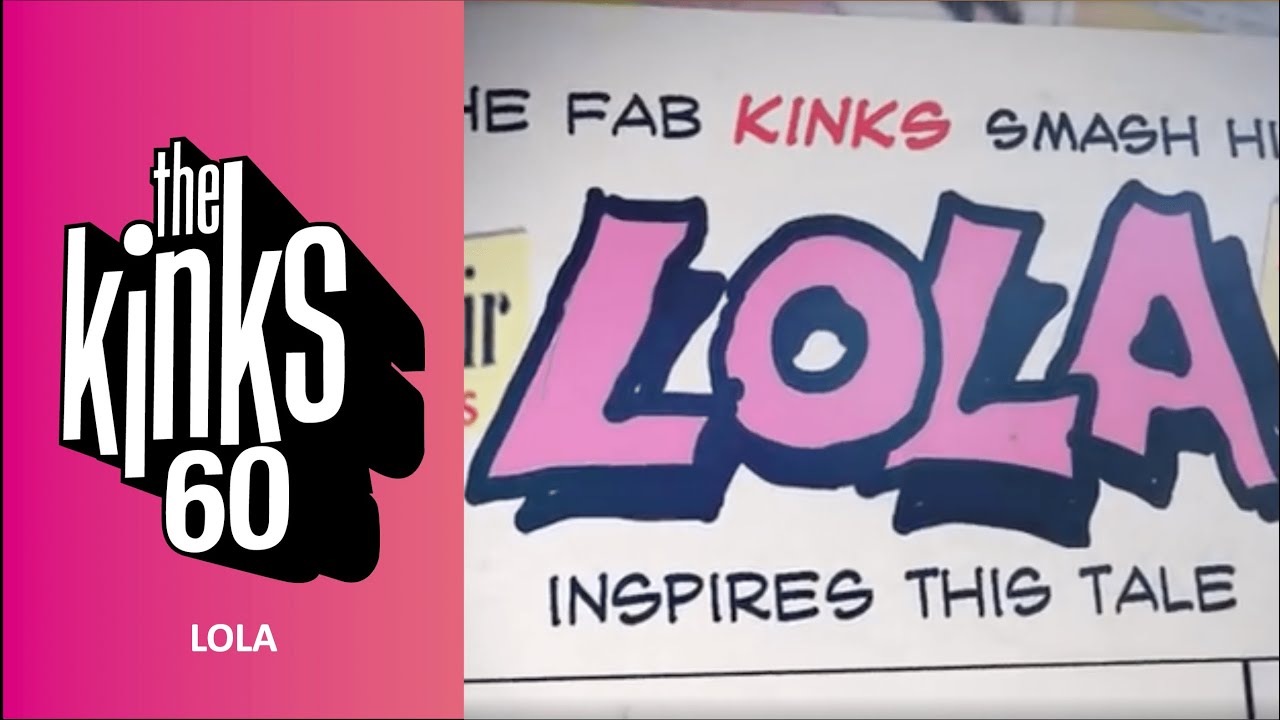
I don’t guess I’ve ever interpreted “dark brown voice” as belonging to a Black person. I just thought Lola’s voice was lower than you would expect from a woman.
Yes, I thought she sounded like Kathleen Turner. Or Elizabeth Holmes in low voice power mode. Not Betty Boop.
Now I picture Lola as Black, (which increases the exoticness for a naive kid in 1970) but back in 1966 1970s, I can’t remember what I thought. Probably David Bowie in glam mode.
That video was released in 2020, which means they had 50 years to consider what it might look like/represent.
I also did not picture Lola as black, but it works for me.
I saw some clips of the writer talking about the origin of the song. He said it was inspired by a one night stand the band manager had with a blonde bombshell. The next morning he noticed that that the woman had stubble on her face.
All my trans friends are 100% united in their love for the song. I confess to mixed feelings about it, because I’m sensitive about getting clocked, and that’s why I’ve been avoiding listening to it. For me, being a trans woman is not about being trans, it’s about being a woman. Now that I know of all the other trans women that love it, I feel inhibited from speaking against it, so I’m just keeping this to myself.
Although I do enjoy watching cis people vie for who is the best toward trans people. Please keep that up.
Trans person here. My gender experience is very current. This is also the first time I can recall hearing this song. I looked up the lyrics and listened to it, and thought my perspective might be interesting.
First off, I can see why it would feel uncomfortable and possibly transphobic. It’s primarily these lines: “But I know what I am and I’m glad I’m a man/And so is Lola.” On first reading, I also interpreted this as the speaker calling Lola a man. So you can see this as misgendering her, which could sour your entire experience of the song.
Personally, I was all ready to accept that this character (and possibly the writer) doesn’t know the language because he is naive about all of this (as mentioned in the first chorus). But looking closer, he otherwise always treats Lola as a “she”. And he specifically says “I’d never kissed a woman before.” So he clearly considers Lola a woman. It seems unlikely he’d slip up in this one spot. So it’s more likely he means Lola is glad he’s a man now.
Combining that line and the line about Lola taking his hand and saying she’ll make him a man, and I think they did eventually have sex. Sure, he initially turns down her advances, and heads for the door. But before he gets there, he winds up falling on his knees. And the lines about kissing and Lola taking him by the hand and making him a man come afterwards.
Sure, you could think he just fell because he was drunk, and got on his knees to get up, and Lola helped him up and they kissed. But Lola says she’ll make him a man, and then he says both he and Lola are glad his is a man.
And I’ve never heard that phrased used for simply kissing.
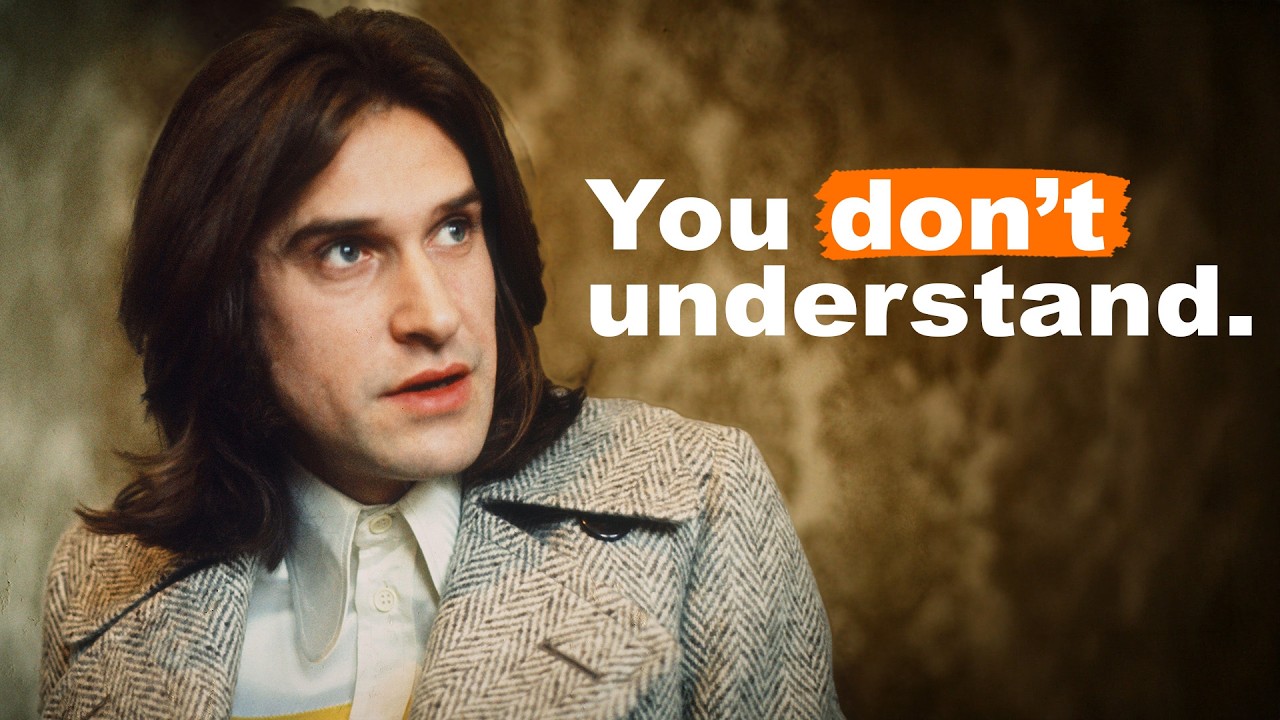
About 4 minutes into this YouTube video, the narrator claims that Ray Davies was reported to have said this in a 2020 NYT article. (Eta “This” is that the woman the song was about was “a beautiful blonde”.)


I’m no expert but in 1960s Britain I’m pretty sure black people being sexually transgressive in public would not have been tolerated. White people being gay/trans in public was barely tolerated and only and the most extreme fringes of society (e.g. seedy old soho bars). Black people were not given even that level of toleration.
I always took the “dark-brown voice” to be a reference to Coca-Cola (a dark-brown beverage), since there’s the cola thing going on the song anyway. Like, a poetic thing saying that he thinks her voice would taste like cola, if it (her voice) had a taste.
Try this one on, for comparison.

He’s the guy who borrowed a bunch of early 20th-century African-American recordings and wove it into his own dance/synth album in 1999, made millions of bucks off it, and is now apparently an elder statement of political correctness.
To be clear, I like a lot of his stuff (you probably recognize Porcelain), but he’s kind of a lawn-sprinkler throwing rocks inside the proverbial glass house at this point.
May I add this is something to bear in mind, this is not really a shared cultural referent for that many people beyond, well, the Classic Rock audience, so in 2026 I dare say a majority of the general public will NOT be familiar with the song or the associated lore or the creators. That means there is the added factor in every community segment, of first hearing it with “new ears” as it were, and maybe differing from others in other generations of the same communities as to how they receive it.
And as she put it,
Ray has said a lot of things over the years, including this.
Ray Davies has claimed that he was inspired to write “Lola” after Kinks manager Robert Wace spent a night in Paris dancing with a cross-dresser.[10] Davies said of the incident, “In his apartment, Robert had been dancing with this black woman, and he said, ‘I’m really onto a thing here.’ And it was okay until we left at six in the morning and then I said, ‘Have you seen the stubble?’ He said ‘Yeah’, but he was too pissed [intoxicated] to care, I think”.[11]
The claim that Lola was a blond is new to me. The above is the story that’s been around for decades. It’s always involved someone who was black.
But here’s the New York Times article (gift link) from Dec. 1, 2020.
Davies said it came from an encounter at a nightspot in Paris the group frequented called the Castille Club: “One of our crew at the time met this beautiful blonde and he took her back to the hotel. In the morning, he saw the stubble growing on her chin. So, he got a surprise!”
Almost exactly the same story, except that it doesn’t name Wace but does include Castille Club as the place.
As for the times, band member Mick Avory said this:
[Michael McGrath] used to invite me to all these drag queen acts and transsexual pubs. They were like secret clubs. And that’s where Ray [Davies] got the idea for ‘Lola’. When he was invited too, he wrote it while I was getting drunk.[9]
Lots of problems here. Avory seems to place the original in Britain, not France. France had long before legalized homosexuality although it was more tolerated than open. Britain finally legalized homosexuality in 1970 following a 1967 bill. Even before then many in the community found ways to gather together in what was a huge subculture with plenty of clubs and meeting places that the hip youngsters would get invitations to.
People in and around the Kinks probably spent time in those clubs in both countries. That Ray wrote the song at a club seems doubtful, no matter which version you choose. In Ray’s black version he saw the stubble as he was leaving; in the blond version he needed to wait until Wace had woken up to the truth the next morning and then tell the rest of the guys the tale.
Which is right? Unknown. Lola could have been either blond or black (somebody black with a blond wig or dyed hair is possible, but leaving that detail out of the story is not). My understanding has always been that a “dark brown” voice was code for somebody from Jamaica or a similar British West Indies island so I continue to lean toward black.
Avory also blurs the history by using both the terms drag queens (transvestites) and transsexuals; pinning Lola into one of these categories is impossible. The best that can be said is that the transsexual community in either Britain or France was probably not far over 100 in 1970, and that transvestites probably numbered at least two orders of magnitude more, so the odds greatly favor an experience with a transvestite. The closer you read Avory’s quote the less convincing it gets.
If somebody wants to dig into the subject, I’d believe 1970s reports over 50-year-old memories, even if the writer himself spoke the words. My experience in researching dozens of such examples leads me to doubt almost every specific that first appears long after the event.
I think the most significant part, which seems to be part of both early and late reflections, is that all of them frequented drag and trans clubs. Lola was probably inspired by more than one experience.