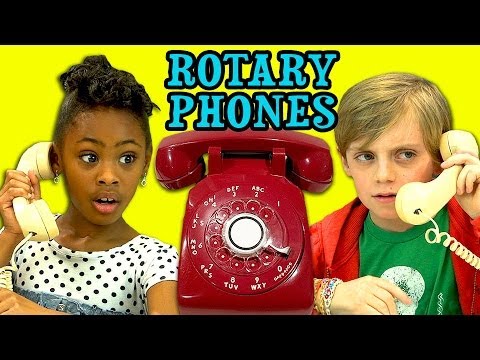
I hear that 27 of them actually work.
In my new office building there are phone booth sized rooms for making cell calls in privacy, just enough space to sit down and place your laptop down in.
Same-same Australia, 1968. Confusing to a stupid Yankee who didn’t know how this worked and had to try several nickels. (Yes, a phone call cost 5 cents back then, and Aussies didn’t call them nickels, either.)
As to whether dial around still exists, is there even still such a thing as a “long distance” call?
As recently as 3 years ago (which may be too long ago to be relevant) I had a dedicated landline I used for fax purposes only. Since most faxes were local, I didn’t have an unlimited, nationwide calling feature like other landlines for this one, and if I dialed a long distance number, paid an outrageous fee per minute. So yes, long distance was a thing back then.
I don’t know of any cell phone plans in the US that charge for long distance calls within the US, but most still charge for international long distance.
I remember using prepaid cards and 10-10 services in the early 2000s, but I’ve never heard of the term “dial around”. Just reading the thread title, I thought it referred to the annoyingly long time it took to dial “9” on a phone compared to “1”.
A friend of mine owned a gas station. Ten years or so ago a guy approached him, discussing this deal where they’d install a pay phone at his station and he’d make BIG BUCKS. (A similar “scam” happened with ATM machines)
They installed the phone and for some reason it got a ton of use. What my friend hadn’t considered were the problems caused by the phone users’ cars. It was a daily headache. A few months went by and he got a check in the mail for seventeen cents. At that point he started fighting with the company, finally demanding the phone be removed, but the contract locked him in for a long stretch.
He was fuming about the situation one night at a bar. We all drove to the gas station and he hooked some chains up to the phone, attaching them to a few of our trucks. The phone was effectively uninstalled and he feigned ignorance “It was fine when I closed up” to the salesman.
I doubt things have changed since-
When we still had a land line with AT&T we had local call only service and another deal with a separate company for long distance. Card-like thing. But we used Google Voice for most long distance calls The pre-programmed frequently called numbers helped. And most one-off numbers were 800 numbers which didn’t count as long distance.
Anywho … AT&T got tired of people doing this so they started adding a “you don’t have a long distance plan” charge. What the what? The want money for something we don’t have?
So we switched to VoIP and never looked back.
Same here. I’ve never heard the term “dial-around,” but I remember the 10-10- numbers (and the commercials with John Lithgow!).
I can remember having something that we referred to as a “calling card.” It wasn’t a prepaid card–there was no value stored on it–but it had a code number printed on it. When you were travelling, if you input this code before you dialed, it would charge the call to your home phone number. I used to use it to call home when I was at conferences and such. It was much cheaper than paying the hotel’s long distance rates. Nowadays, of course, I just use my cell phone.
I still remember cheating the phone company with collect calls. If I needed to be picked up, I’d call my house collect and instead of my name, I’d say “MomI’mDoneWithPracticeComeGetMe.” They’d deny the collect call, but get the message that I was done.
I also have not heard the term “dial-around” until now but was familiar with the concept. When I read the thread title I thought it was going to be about schemes such as Serenata’s.
The “you don’t have a long distance carrier charge” was a brainchild of the FCC. It was known as the Presubscribed Inter-Exchange Carrier Charge or PICC (pronounced “pixie”).
You see, in the olden days when AT&T Long Lines was (almost) the only national long distance company, its rates were regulated by the FCC. Its rates were set much higher than they needed to be so that AT&T LL could subsidize local telephone service and everyone could afford to have a phone in their home.
When MCI and Sprint and others came along to challenge the AT&T monopoly, they had an advantage: They did not have to subsidize local phone service. And the local phone companies were also losing some of their subsidies. After years of wrangling and lawsuits, the FCC came up with a brilliant idea. Make the presubscribed long distance carrier for each phone line pay a monthly fee to the local phone company called the “PICC.” It was only 3 or 4 bucks and the long distance companies would just look at it as a small nuisance and happily absorb the cost, in the FCC’s theory. Well, the long distance companies said “screw this” and immediately added a monthly fee to each of their customers’ bills.
But what about customers who didn’t have a long distance company? There was no long distance company to bill, so the FCC said the local phone companies could bill the customer directly instead of indirectly passing the fee through their long distance company.
So this was a charge from your local phone company to pay for the cost of local phone service. Most people (who had a long distance carrier on their phone line) paid this fee through their long distance company. Those who didn’t have one, paid through their local phone company.
Most companies put this fee in the “Taxes and Fees” section of their phone bills. So most people just thought this was some kind of tax. Later, regulations were enacted to end this deceptive practice.
The FCC finally came to its senses and this fee no longer exists.
When I was growing up in the 80’s, pay phones didn’t use coins, they used tokens - nickel-sized coins with a hole in the middle. The hole was useful, because as a kid, your parents could thread a token into your shoelaces for emergencies.
They weren’t. I still have one in my house and I used it to dial a year or so ago. Of course, those buildings full of relays are long gone, so I assume they have electronic devices that can interpret the pulses. In fact, I refused to pay the $2.50 a month the phone company charged for pulse service until I had to to get a DSL line in 2000. They even had some device added to my line that blocked touch tones. So they spent money to give me poorer service. And they still want me to return to them. I gave up on Bell after they took a week to repair a squirrel chewed line.
I don’t recall ever hearing the term “dial-around”. I remember phone cards and advertisements for phone services that I guess were considered dial-around (like 10-10-321, which I’d forgotten about but remembered when I searched for dial around.) Just not that term.
Last night Stephen Colbert attempted to teach a millennial how to use a pay phone.
My mother has a rotary-dial phone in the basement, mostly used for answering calls when she’s at the washing machine down there. I remember when my brother’s kids were little (perhaps 15-20 years ago), she entertained them for a bit by showing it to them. Much of the old technology we grew up with is a novelty to the kids of today. (“What’s that thing?” “It’s a typewriter. It’s like a printer, but everything you write prints immediately.”)
But do they have phone books?
Kids React to Rotary Phones: