I think most people under 40 that are at least somewhat active could do 100m in 17s.
Now, that pace is a 4:35 mile. That’s reasonable for D1 athletes in soccer and probably other non-track sports. I’m not and never was very athletic, but when I was in high school and playing varsity soccer I think I could have kept up that pace for maybe like 200m; doing it for 2 hours straight is at least as incomprehensible as powerlifters doing 1000lb deadlifts or whatever.
Is it likely that Kejelcha had a good run, because Sawe did? In the sense that a pacer can help with times? Or likely that they both had good times partly because they were pushing each other?
Or is it more likely it was just a good day; good weather?
Here’s a good article on super shoes and the reasons the record has dropped so much lately.
In a nutshell:
shoes
fueling technology
longer and more intense training that’s possible as a result of the first 2
better mindset as a result of the first 3
It says Sawe was regularly running 120 miles/week and topped out at 150 miles. That blows my mind. A typical marathon training plan for a strong amateur might top out at 50 or 55 miles.
I think it’s mostly these two. Marathoners in the 70’s were known to do 140 or more a week. Derek Clayton especially was known for hammering his training runs.
The super shoes allow faster training without the stress of the accumulation of impact forces which in turn allows more total aerobic and threshold work.
Fueling tech not only allows faster overall training (and racing) pace but also better recovery.
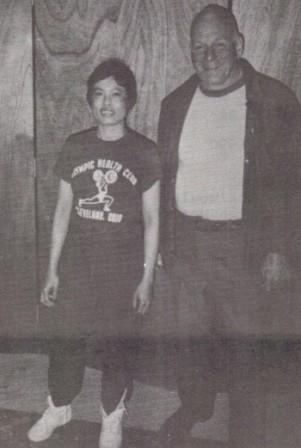
Howard Prechtel (an acquaintance and my wife’s lifting coach), at age 57, set an endurance lifting record by lifting 1,111 pounds 5,460 times in 3 hours and nine minutes. That’s a lift every 3 1/2 seconds for 3 hours.He had that bar with the weights still on it displayed in his gym. Fucking amazing.
As a senior lifter in her 40’s, my wife (120lbs) set a word record for the hip lift at over 800 lbs. Her older sister then broke that record.
Looks like an esoteric lift where it’s been documented people can lift over 5,000 lbs? Range of motion is like <1"? Looks like what strongmen would do in a circus in cartoons.
Basically, it’s lifting a bar by getting under nearly upright and standing up just enough to lift it off the supports. Paul Anderson claimed to have lifted 6,270 lbs in 1957, but the record has been removed from Guinness due to lack of documentation.
Yeah, I looked up some videos, never would have guessed multiple thousands of lbs was possible, regardless of the contraints. People backlifting bulls or bands; wild stuff.
I suspect that lifts of that sort are limited more by bone strength than by muscle-- You can get a ridiculous amount of mechanical advantage from knees that are almost straight.