No, I specifically spelled the words out to avoid ambiguity. All my figures were explicitly megaBTYES, meaning that 125 MB/s download was a gigabit.
That’s awesome, if so! Far above their FCC typical speeds. I’ve definitely not seen that on Fi. Max was maybe about 500-600 megabits.
That’s a one-off when I happened to be downloading near a university in a major city. At my rural home I don’t think I have ever got far past 30 megabytes/240 megabits per second. Still that can eat a GB in less than a minute.
BTW, this app is what gave me the chart of daily use, and puts a live speed meter in the status bar.
Out of curiosity, why don’t you have home internet? You never use a computer for data, just do everything on your phone?
On my home internet, I’ve used about 6 terabytes last month downloading games and such. We have gigabit-ish cable at home, but it’s crap compared to gigabit fiber. It’s semi-rural here so that’s as good as it gets unless I want to pay someone to pull a business fiber line out to our house…
I almost never even turn on my desktop computer any more. Everything I do is on the phone. (And that includes “watching television”.)
Well I get both my Internet and my landline from British Telecom (so that looks like a good idea.)
Here’s some information from the UK Government:
The exact migration process will depend on your communications provider and the equipment they use. If you already have an internet connection, the change may be as simple as plugging your phone into your broadband router rather than the socket on the wall.
Since I already have both Internet and landline:
- it sounds straightforward to convert, correct?
- will I keep my old phone number?
I’m so sorry, I didn’t realize you were in the UK. Everything I said applies to the US only  I don’t know if the Jitterbug is available in the UK, either.
For using a VOIP line, I can tell you that here at least, the changeover is usually trivial… call up the provider, tell them that you want to do it, and they’ll guide you through it. You keep your same number. I think a lot of our telcos have forced this to happen already.
But I don’t know how much of that (if any) is applicable to UK households… sorry!
Might be worth starting a new topic thread about that, since it’s different enough from cell phones? (And specify that it’s about the UK so other Dopers there can chime in)
Or just call them up and ask.
I would imagine that you’re not at any risk of suddenly losing your landline anyhow. If they were to force a transition, surely you’d get some notice from the provider and/or government…?
It looks like there’s a similar UK company called Doro making dumbphones for seniors: Doro phones - Doro products, most popular phones for seniors
The Leva seems pretty cool:
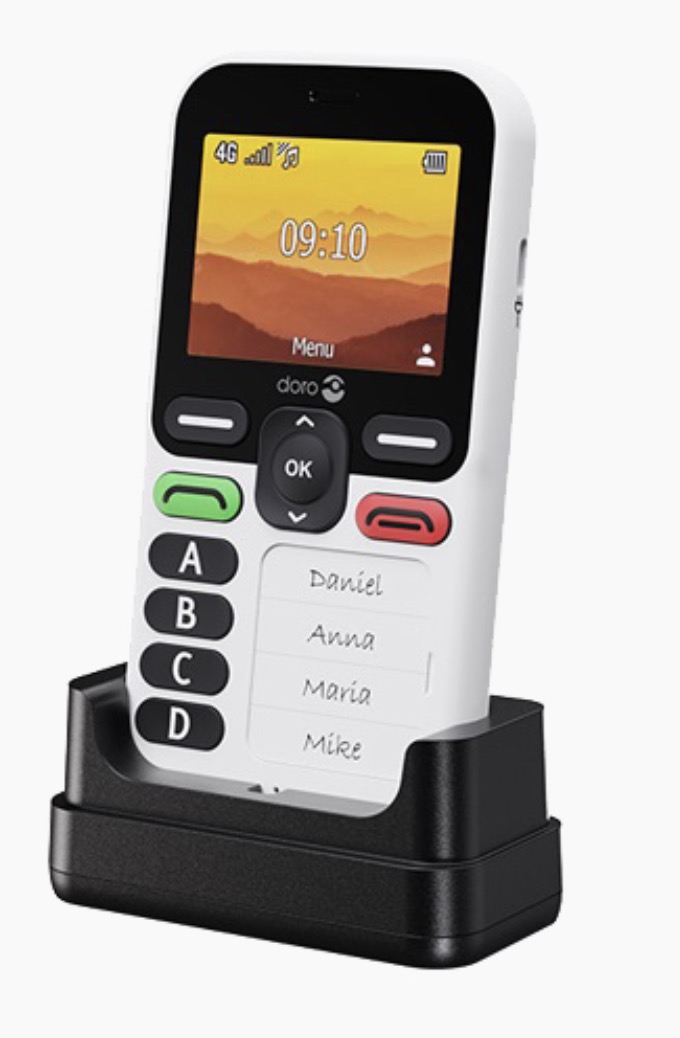
(They also have more traditional flip phones and smartphones)
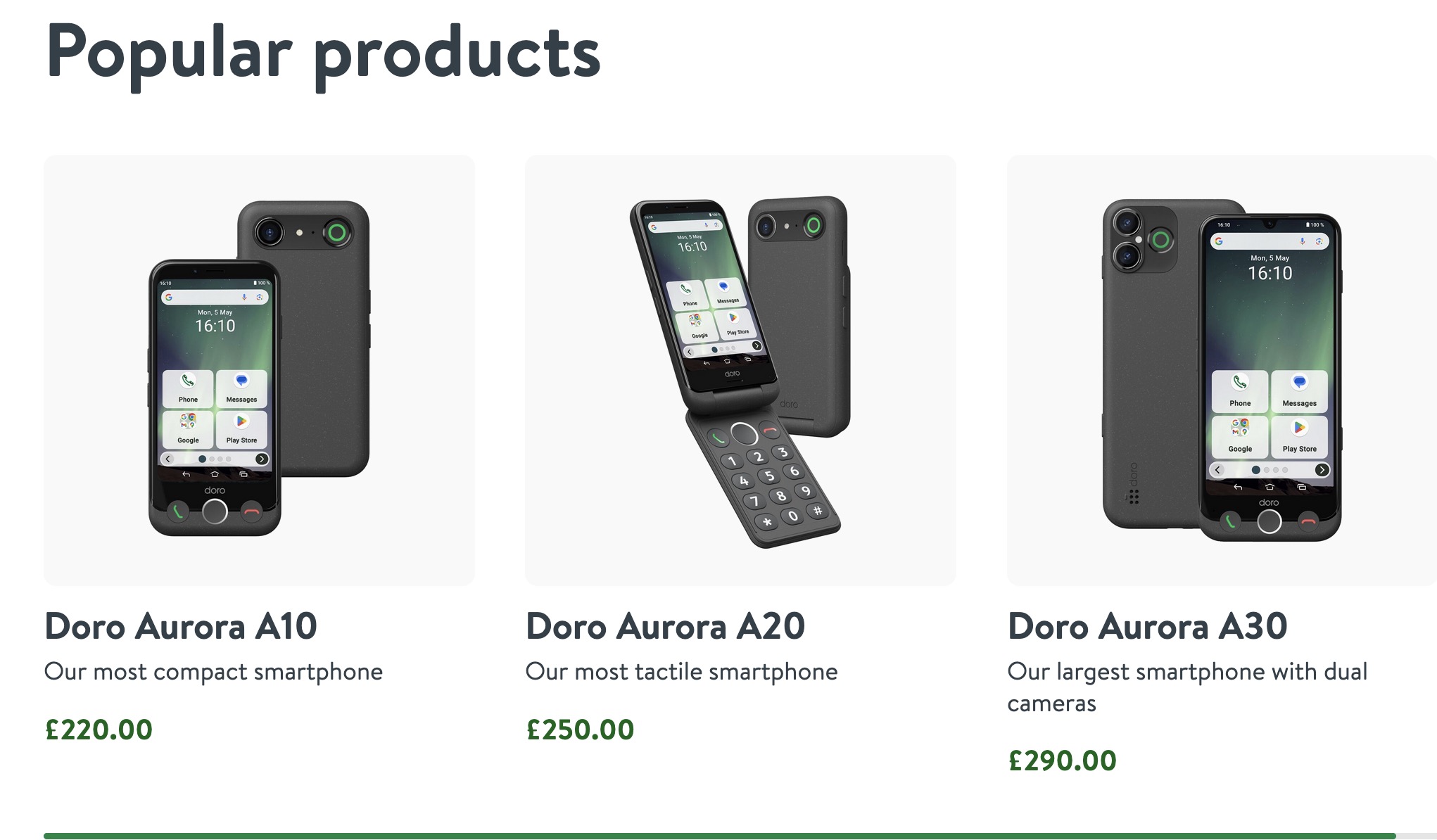
I have no experience with them, but there are good reviews on TrustPilot and positive anecdotes on reddit.
I would disrecommend the jitterbug. We got it for my mom. Other than having large font, it had no useful features. It wasn’t much simpler than an ordinary smart phone. None of us knew how to use it, so it was harder for us to support than a “standard” phone. It was limited, in some way i don’t remember, that was mildly annoying but not critical.
But the big thing was that it wasn’t simple enough for my mom to ever be comfortable using it.
If you don’t want to deal with a smart phone, get a dumb phone. Or get the same brand of smart phone as a family member who likes their phone and is willing to help you.
A couple of questions from this noob who’s looking for a new phone but knows almost nothing about the technology. And thank you for your suggestion of Pixel or iPhone – for my basic needs, I’ll probably go for a low-end Pixel.
I’m having a hard time figuring out exactly what Google Fi is, and Google itself isn’t much help. You’re describing it as if it was a cellular carrier, but to my understanding it’s just a mysterious system that connects you to various different actual carriers, and according to Google, preferentially to T-Mobile.
I wouldn’t mind paying $35 a month for a cellular service with unlimited data, even if it was slow, but T-Mobile is a US service so I don’t even know if any of this Fi stuff is available in Canada or how this would all work.
My other question for the experts is, tell me again why it may be a better idea to buy a new cell phone from an independent source like Best Buy instead of from my current carrier. With a two-year contract commitment – which is hardly a burden as I’ve already been with them for over 25 years – they offer phones, including many Pixel models, at prices that are deeply discounted or entirely free. What’s the downside to this?
I’ve been a happy GoogleFi customer since the program was in beta. I’ve never been able to find a major carrier that was cheaper. And I’ve enjoyed every Pixel phone. Right now I have the Pixel 8 Pro. I just save up a little money every month to afford the next phone when it’s released (I tend to update every two releases, so I guess I’m due, but this one is still working just fine, so I’ll probably wait.)
Most of the services that aren’t AT&T, Verizon or T-Mobile are like that. I think those three companies are the only ones in the United States with their own cellular coverage. Everyone else is a “mobile virtual network operator.” Here’s a Wikipedia list of them.
Thanks for that info. I also looked up whether Google Fi is available in Canada, and the answer is no – it’s only for US residents. I suspect this is a regulatory issue rather than Google’s choice, with historically mercenary and carnivorous Canadian service providers protecting their turf.
So I guess I’m left looking for the best deal with either my current carrier or some competitor. I really like my current carrier but I detest the fact that they offer a $10/month “discount” if you allow them to directly debit your bank account rather than a credit card. IOW, a $10 surcharge if you bill to a credit card. That has to be an order of magnitude more than they would actually pay in CC fees in the average case, so a total ripoff.
Right now I’m on an old grandfathered plan billed to my CC that works just fine with my current obsolete Samsung J6, which also works just fine, but cannot summon an Uber should I ever need one. Maybe I’ll just leave it that way for now.
I cannot believe that getting a new cell phone could be so fucking complicated. It’s a strong incentive to just do nothing.
Well, apart from Google Fi, Pixels are perfectly good phones. I’ve never had a problem with the many I have had over the years. I use it for pretty much anything you would expect, from messaging to YouTube to yes, phone calls. All works fine.
Nothing significant, really. If you’re happy with their service and pricing and are willing to commit to another two years, you should go ahead and get their free phones.
Switching providers only makes sense if 1) you’re unhappy with your current one’s service or pricing and/or 2) you want to take advantage of another carrier’s “new customer” promotion.
Buying from a retail store like Best Buy or Costco, or an independent kiosk/franchise/affiliate, is basically the same deal: You usually do that to take advantage of a promotion.
The minor risk to doing this is just that sometimes the carrier-supplied phone will have some small bloatware pre-installed. They just take up some small amount of space and usually aren’t too bothersome. The phones themselves may also be locked for some time (as in, you can’t transfer them to another carrier for a few months/years) — which won’t matter if you’re sticking with that carrier anyway.
TLDR you can just shop for data plans at any carrier; it doesn’t matter if they’re a MVNO or not.
Google Fi and similar services are basically “virtual carriers” — the technical term for them is “MVNO”, but that’s just jargon. All it means is that they rent capacity from one of the “real” carriers. Instead of paying for their own cell towers, they resell capacity from one of the big national telcos.
But for you as a consumer, the end result is mostly the same. They are still just a carrier, usually with these pros and cons:
Pros: Almost always cheaper than a “real” carrier, especially when it comes to data rates and roaming. Usually more flexible terms (or no contract). Some (only a few) multi-carrier MVNOs can roam between different parent carriers, giving you better coverage than any one individual carrier would have.
Cons: Sometimes slower data, depending on their particular arrangement with their parent carrier (Fi has better terms than most MVNOs, for example). Usually no physical storefronts, so everything is done online or by phone. May support only a subset of phones. You cannot go to the parent carrier for help, in-store or otherwise; you only ever deal with the MVNO.
Canada has some too, but I have no experience with any of them, sorry: What is an MVNO? List and Status in Canada | Cansumer or Search Results | WhistleOut
I think Canada has four “real” carriers: Rogers, Telus, Bell, and Freedom. The other “carriers” are all MVNOs renting capacity from one of those.
Thanks for that link, it’s very useful, although all the options make my head hurt. I also note that both Rogers and Bell (my current carrier is Telus) also offer a “direct-pay discount”, and by “direct-pay” I assume these fuckers want direct access to your bank account, not just a credit card. I hate that! The whole cellular system in Canada is essentially a non-competitive money-grabbing oligopoly.
The price of the Pixel 10 fold is about double ($1700 vs $900) that of the “normal” Pixel 10. I wasn’t willing to spend that much on brand new technology.
I played with one on the shop. They are really big. I guess if you want a tablet you can drop into a purse, and use as a phone, it might be a good option. I’m always looking for a smaller phone these days. I have the Pixel 9, any miss the smaller Pixel 5 i used to have. And the even smaller Moto X that fit so nicely in my palm.
Arrrrggggh! @Reply I was having so much fun playing with my Pixel 10 Pro UNTIL this week, when it lost all Bluetooth connectivity. I seems to stem from a recent update according to The Internet. All the solutions blithely recommended by Google/Reddit/AI DO NOT WORK. Google said I should start a “Bluetooth Diagnostics” procedure that isn’t even listed on my phone’s menus.
Are you having this issue? Do you have any way of getting through to a real human at Google?
As crappy as my Consumer Cellular mobile data was, at least live people answered the phone!