I’ve never been a firefighter. I have no idea how it works.
Take a volunteer fire department in a small town. Is there always at least one person on duty? Or are there times when the station is empty?
There’s a fire in a building. Somebody calls 911. How is the information relayed to the individual firefighters?
Who decides how much response to send to a fire? What do they base this decision on?
What happens if a second fire is reported while the first in still in progress? Do firefighters and equipment at the first fire leave to go to the new fire? If so, who decides who leaves and who stays? Who decides what equipment goes? Or is there some group kept on standby that didn’t go to the first fire?
Who decides when a fire is big enough that the firefighters need backup from other towns? Is there some central firefighting authority that has command over all of the fire departments? Or is it something they work out between them on a one-on-one basis? Is it always the same towns that respond for backup or is there some system of rotation? If supplies get used up fighting a fire in another town, does the town that had the fire pay for them or the town where the backup fire company is based?
What happens during parades? Do all the fire department in the parade keep part of their staff on standby back in their hometown? If there’s a big fire, do firefighters and vehicles leave the parade respond? Are the vehicles in a parade ready to be sent directly to a fire or do they have to swing by the station to pick some stuff up?
Let me preface this with my lack of qualifications:
My father and grandfather were both career firefighters. I spent 8 years in EMS, which had me working alongside both paid and volunteer firefighters.
I’m using the situation that would occur on an EMS call, and it’s been my experience that fire departments work similarly.
If there was a call that came in for, say, a car accident, the ambulance that covers that area responds (I’m assuming here that that squad isn’t doing another call at the time. When that happens, the dispatcher would move other squads around to cover the area.
Hypothetically, let’s say that my squad was moved to cover an area where a squad has responded to a call already. My squad would then extend our coverage radius to include both my normal area, and a portion of the area that would have been covered by the squad that has currently responding to that car accident. For instance, I may have to cover my area and the top half of theirs, and another squad would cover their region and the southern half.
For fire departments, there’s a lot more equipment and machinery to move, so they may not redistribute all their resources, but those neighboring districts would expand their coverage area to include the one that has been affected.
Does that make sense? I worry I’m not explaining myself very well.
Okay, so if I’m understanding it, there’s a dispatcher who presumably gets notified by a 911 call. The dispatcher then contacts the fire department that covers the location of the fire. The dispatcher is also aware that that town’s fire department is busy and has an existing plan of which other nearby towns’ fire departments will cover in case there’s a second fire in that town.
So the dispatcher effectively acts as a central authority who knows what fire departments are currently busy and which are available.
That’s a good way of looking at it. Central dispatch coordinates everything, and the various departments are generally aware when a fire department is dispatched, and kind of know ahead of time that they have to increase their coverage area until things settle down.
I don’t have direct experience, but my father was a volunteer fireman in a small mid-west rural town during the 1950’s and 60’s. For a small town of 2,500 the fire department was well equipped with three relatively new firetrucks, a tanker truck, and an old unused truck mostly used for display and parades. Dad took care of maintenance and it was my job to sweep the station and dust off the trucks every week.
The station was unmanned and vacant except for Sunday mornings when many of the volunteers would skip church to play cards. The volunteer group was very much a social organization as it was civic.
When there was a fire, everyone’s home phone would ring continuously instead of the intermittent ringing of the normal party line calls. When the receiver was lifted the operator would state the nature and location of the fire. The fireman would rush to the station and leave with a truck whenever enough people had come to man the truck. Late arrivals would drive to the fire themselves.
There was a fire chief who made all the decisions about how to fight the fire, when and who to call for help, etc. I doubt there were ever two fires to fight at once but I imaging they would have figure it out on the fly.
You even answered one of the questions I thought of but forgot to include. (What happens when a member of the crew doesn’t show up? How long do they wait before leaving without him?)
This site says that 70% of US firefighters are volunteers. I was surprised that the number was that high and in fact I’ve seen higher numbers in other sources that I can’t find right now.
A relative was a paid NYC firefighter who lived over an hour from the city. He said that a number of the volunteer firefighters in his hometown were NYC firefighters.
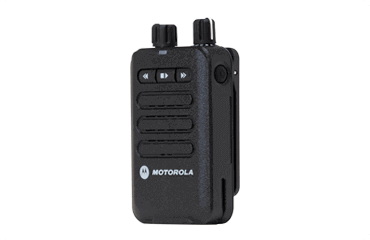
One point that I’d like to make here, thinking about this later, is that each truck/station has what we called a “knockout pager,” which looked something like this:
When a call would come in via 911, the dispatcher activates an alarm that broadcasts to each of those, and allows the squad to hear the emergency situation and respond immediately. For instance, firefighters will often go to the supermarket to get food and other necessities, like you would at home.
This way, if a particular squad is not at the actual station when the call comes in, they have the ability to leave from wherever they happen to be. At least in my area, other squads could hear the radio chatter, so if a squad was tied up (for instance, I personally was caught by a train quite a few times while on the ambulance), a squad from another district would start responding to avoid anymore loss of life or property.
So, for instance, if I was responding to a call and got caught by a train, I’d say something like, “Central [Dispatch], Squad 7…response delayed due to train.” Dispatch would acknowledge, and send the closest squad that was on the other side of the tracks. And the other squads could hear that exchange, so they knew to be getting ready to respond to the call.
Central Dispatch is kind of like an Air Traffic Controller. They’re tasked with knowing where everyone is, and how to best utilize the resources as needed.
I used to be a volunteer firefighter in a town of ~5000 people in rural SD.
We all had a radio. If dispatch put out the call, all firefighters got the alert on the radio system (the radio played a loud, obnoxious alarm) and we drove to the station, suited up, and were out the door. We had magnetic blue lights for our personal vehicles just to let people know we were on our way to the fire station responding to a call; most would pull over to clear the way for us. My general response time from being awakened from a dead sleep to being suited up and pulling out of the station in the fire engine was 6-8 minutes.
There was no “how much gets sent”; we ALL respond, and the fire chief on duty can then decide to send some of us home if the situation is in hand or doesn’t warrant the whole department. Same if a second call comes during an active response; chief will make the call of which crews stay and which go, and if necessary we can get an assist from the next town/county over if we don’t have enough to handle it all.
Note that volunteer != unpaid. At least with my sister, she was paid per call. (Not sure if it was a fixed amount or hourly or a combination) She lived very close to the fire station and was usually the first one there. IIRC she had a pager. If it was a structural fire neighboring units would be called as it was often too big for any of the small departments to handle alone.
Brian
They had a box labeled “when all else fails” — it contained some marshmallows
Yes, that’s correct. He said that it was expected that the paid firefighters in NYC would also be volunteers in their hometown. When he was going through issues with his wife and kids, he stepped down from volunteering, and got some flak for it.
FWIW, at least until the late 1980s, our small town in NY where some of our neighbors were volunteer firemen, a siren ran signalling “manpower needed”. It was a big traditional motor driven air siren about the size of a 55 gallon drum mounted atop the firehouse roof. It would blow continuously, that is, running up to peak pitch, then back down, over and over. It would also blow one loud run at 5PM each day, and at 8PM on fridays.
When it blew in the still of the night it had a grave, melancholy sound. Followed by the sound of our neighbor’s cars high-tailing it down to the firehouse.
I can tell you how things are in the town I worked in. Around 50,000 residents and 4 separate fire districts, all volunteer.
The fire stations were not manned. However sometimes several firefighters might be hanging out there.
Calls came into central dispatch. Who and what to send was a matter of SOP. If it was a confirmed structure fire more than one district would be sent. If it was just an alarm fewer would be sent.
Police would be sent to all fire calls and would be the first on the scene to give updates, control traffic and start evacuating if needed.
The district fire chief would usually be the first fire unit on the scene since they had take home vehicles and could respond directly. The chief would take control of the scene and ask for additional units if needed. Fire trucks would respond as soon as enough firefighters arrived to man them.
Mutual aid with surrounding towns was a common thing. A fully involved structure fire would need a lot of help.
Some of the towns and cities nearby had a combination of paid and volunteer. Generally there would be enough professional firefighters on duty 24/7 to have at least one truck respond immediately with volunteers arriving as they became available.
Reports are that, during the great depression, hundreds of young men would turn up for the try-outs for the big-city volunteer fire service in Melbourne. Like football, if selected for the team, they got match-payments for call-outs.
My co-worker reports that a favorite background activity of his rural fire-brigade is “drinking”. They wanted him to be squad leader, as the only adult in the room…
Just remembered: up until recently, services still partly funded by insurance levy. So there was money for the city service, even when the members were “volunteer” rather than “professional”.
This is a question from absotute ignorance, but how does the hierarchy of “fire chiefs” work?
Let’s say you have a massive fire. Multiple stations supply engines. Someone needs to be in control of all the engines and the tactics of approaching the fire. Is it first on scene,or some other rule of precedent?
There are very few volunteer fire stations left in the UK. Of course, we are a small country, and fire engines can usually reach even remote villages fairly quickly.
With major incidents, where all three emergency services will attend, the fire brigade will send a senior person to take charge of the firefighting, while the police control everything else.
Something I only learned recently is the “ripple effect”. If most or all the appliances at an individual station are in use, neighbouring stations will dispatch equipment and crews to the station to support them. Stations further away may do the same to the relieving station.
Some fires take a long time to deal with, and that brings more organisation problems. Mobile toilets and catering will be sent (they can’t work without tea), and the first responders will need to be relieved.