Back when I lived in Europe in the late 90s/early 00s, Coke Light was Ace K + aspartame. To my memory, Diet Coke did not have Ace K.
That’s likely it; Diet Coke has traditionally only used aspartame as a sweetener in the U.S. On the other hand, Coke Zero, which was introduced in the U.S. 20+ years later, does use the aspartame+Ace-K sweetener combo (which seems to now be the default sweetener system in most of the newer “zero calorie” sodas, at least in the U.S.).
If you drank a half bottle and were still thirsty, I’m not sure if it’s really that terrific as a thirst quencher.
I am still haunted by these two old commercials.

Most soda have a different recipe in different countries even if they use the same name, many of the ingredients used in the US are banned in Europe and European sodas tend to have less sugar. While Ace K is not banned in Europe the EU does have an acceptable daily intake of 0.15mg/kg body weight/day (recently raised from 0.09). I do not know how much in in US soft drinks but this could be a reason for the difference.
Coke Zero ingredients (UK version)
Carbonated Water, Colour (E150d), Acid (Phosphoric Acid), Sweeteners (Aspartame, Acesulfame-K, Enzymatically Produced Steviol Glycosides), Natural Flavourings, Caffeine Flavouring, Acidity Regulator (Sodium Citrates).
Coke Zero ingredients (US version)
CARBONATED WATER, CARAMEL COLOR, PHOSPHORIC ACID, ASPARTAME, POTASSIUM BENZOATE (TO PROTECT TASTE), NATURAL FLAVORS, POTASSIUM CITRATE, ACESULFAME POTASSIUM, CAFFEINE, STEVIA EXTRACT.
Rather depends on the size of the bottle! 
This was a 500 ml bottle. For comparison, the Coke Zero bottles I usually buy are 300 ml, and cans are 355 ml.
Incidentally, since I didn’t see any of the sugar-free type when I bought a case of Sprite recently, I checked the calorie count. Sprite contains slightly less sugar than Coke Classic (very slightly) but much less than some other sodas like Fanta.
Interesting, the inference there is that Coke Zero is caffeine free, because it doesn’t state that its in there… I’d avoid it now.
So far as I can tell, this is some labeling quirk and regulatory thing and it does have caffeine.
The caffeine flavouring is… caffeine. What did you think it was?
It is the Sprite that has no caffeine in it.
7-Up almost failed completely according to Victor Borge (go to 9:27):

Interesting things about 7-Up and lemon-lime sodas:
1.) When first introduced in 1929, 7-Up was advertised as “the lithiated soda”. It contained lithium citrate (they removed it in 1948-50). Nobody was thinking about its modern drug use – it was implied that it was a hangover cure. (most soft drinks were initially sold as a sort of low-grade patent medicine. Coca Cola contained both Coca leaf and Cola nuts - a source of caffeine – and was a pick-me-up. Pepsi contained pepsin. Moxie contained, they claimed, some sort of tropical plant extract. Root beer contained roots and extracts, including sassafras, which is now held to be a carcinogen and liver toxin (they took i out).
2.) Lots of local bottling companies made their own inexpensive lemon-lime soda. Two of them near my home town in New Jersey did. These local bottlers have mostly disappeared, but you can still get generic lemon-lime soda at most supermarket chains.
3.) There used to be lots of relatively large competitors that are mostly gone now – usually regional. “Bubble up” has already been mentioned. In my area e had Veep. Nobody associated that name with the Vice President at the time. Veep was a Coca Cola brand, which they stopped making so that they could make the similar but differenyly named “Sprite”. Myb they figured just changing the name wasn’t enough
https://the-soda.fandom.com/wiki/Veep
Wikipedia lists a BUNCH of lemon-lime sodas, current and discontinued, from around the world here:
I also find 7-Up to be more sickly sweet than Sprite, but I would prefer Canada Dry ginger ale to either. (Of course ginger isn’t the same as citrus, but I lump them all in the same category of “clear sodas”.)
No, I don’t think so.
I’ve been drinking lemon lime sodas all my life, and I couldn’t tell you which of the 7-Up/Sprite options I prefer. That would require a blind taste test.
I liked Slice when it was available; I think it had a (probably microscopic) amount of real juice as an ingredient?
Anyone else remember Rondo? Their tagline was “Slam It Down!”.
mmm
I love Canada Dry ginger ale, and I understand what you mean about grouping it with the others even though it’s different.
I note that a popular brand of lemon-lime soda in Russia is called “Dobry”.
I must say the Russians certainly have a flair for naming things. I can picture the typical Russian sipping his Dobry (which means “good”) while reading the news in his copy of Pravda (which means “truth”). Nothing like sipping a “good” beverage while reading “true news”. Or maybe the Russians lack subtlety in product labeling.
When I was in Mexico on vacation, they had “Coca Light” (that’s what they called it), and it was literally the best soft drink I’ve ever had in my life. The thing I miss most about that entire vacation was that soda.
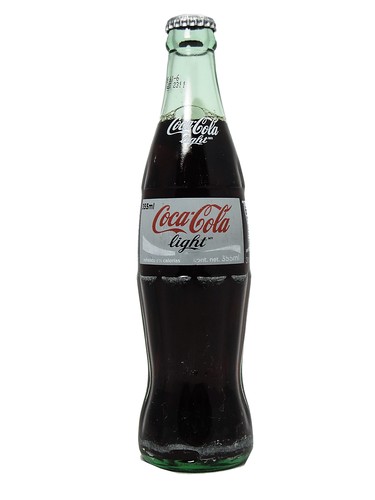
Did that contain cane sweetner?
F-L-A-V-O-U-R-I-N-G. Which is not the thing. Strawberry, Cheese, Smoke, none of them contain the actual item.
Ever hear of a “7 and 7”? That’s a mix of Seagram’s Seven Crown whiskey and 7 Up. I don’t know how popular it is these days, but that cocktail was HUGE at one time. When I first turned 21, I felt oh-so sophisticated ordering it while my fraternity brothers were just having beer.
My wife recently bought a 12-pack of Sprite “Tropical Mix,” which apparently has flavors of pineapple and strawberry as well as the lemon-lime. From what I can tell, this is one of those variations that’s only available occasionally for limited periods. I didn’t sample it (I’m not crazy about pineapple), but she seemed to enjoy it.
Coke has a separate zero sugar zero caffeine product on the UK market, which suggests the regular product contains caffeine. When caffeine is less than 150mg per liter and is said to be being used for its bitterness and not stimulant properties, it apparently can be listed as “flavouring”: