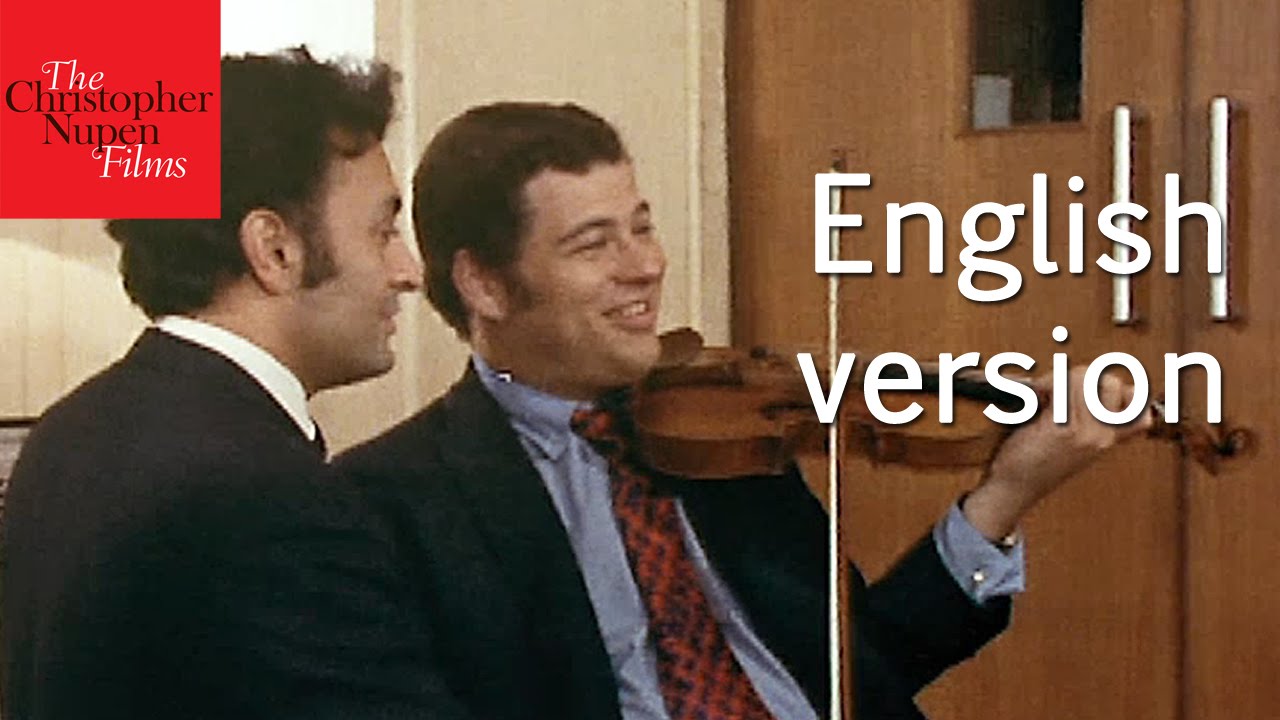
A wonderful documentary about Itzhak Perlman, Daniel Barenboim, Jacqueline Du Pre, Pinchas Zuckerman and Zubin Mehta getting together to play Schubert’s Trout Quintet in 1969
Are you not looking to go deeper into Mozart? I just wonder at seeing Haydn and then Beethoven listed without Mozart in between.
And how about Mendelssohn? I grew up hearing his violin concerto played on our family’s stereo and was delighted as an adult to discover the Italian Symphony and Midsummer Night’s Dream.
I actually prefer his St John Passion to the St Matthew Passion; apart from the dramatic opening number there are a lot of small and emotionally-fraught arias scattered throughout. Try the Gabrieli Consort version.
I’ll also recommend the sacred cantata “Ich habe genug” (BWV 82) - I prefer the version for bass singer and obbligato oboe rather than the soprano/flute version. Absolutely sublime.
Speaking as an amateur cellist the Bach cello suites are among the best works ever written for the instrument (or for any other, for that matter). They are simple to play but incredibly hard to play well, and the interpretation is a virtual Rorschach test for the cellist, reflecting so much of the performer’s state of mind. I’ve listened to dozens of recordings including the well-known ones by Casals and Ma before settling on Phoebe Carrai’s version; this is not to say that Carrai’s version is best but rather that it’s the closest I’ve found to how I’d play the suites if I were remotely competent on the instrument. It’s worth exploring a few different renditions to see what trips your trigger.
If you want Elgar, let me recommend The Dream of Gerontius (particularly the recent Sir Andrew Davis recording) which is Elgar’s best choral writing by far. If that really appeals to you you can move on to The Apostles and (meh) The Kingdom but definitely check out Gerontius.
In a similar vein you might like William Walton’s Belshazzar’s Feast (which is only half an hour long but always worth hearing) and/or Herbert Howell’s Hymnus Paradisi which is lush and sweeping to the extreme.
Since I’m on choral music, at the weirder (but still quite listenable) end of the scale is the wild and wonderful Alfred Schnittke’s Faust Cantata (also called “Seid Nuchtern und Wachet”). Spoiler alert: it does not end well for Faust. As in “brains splattered on the walls” not well. But it’s all done to a catchy tango (“Es geschah”), so that’s alright.
I don’t think anyone’s mentioned Rachmaninoff’s Third Piano Concerto. We’ve all heard the Second Concerto umpteen times, but I actually prefer the Third… especially the last movement.
I would listen to the Pervertimento for Bagpipes, Bicycle, and Balloons, S. 66, by Bach. Also recommended is the Concerto for Horn and Hardart, S. 27 by Bach, as well as his less well-known oratorio, “The Seasonings”, S. 1½ tsp. (though I must admit I prefer the better-known “Iphegenia in Brooklyn”, S. 53,162).
No, not THAT Bach. His well-known son: P. D. Q. Bach.
Grin! Wonderful, wonderful stuff! I’ve watched the opera, “The Abduction of Figaro” with several different groups of friends, and it’s great! It always happens that, at some point, one guy laughs, without anyone else knowing why. So we pause, and he’ll explain.
“That’s a parody of an aria from The Flying Dutchman,” or “That’s a parody of a Harry Bellafonte song.” The “inside jokes” are there in great plenitude!
While we’re on Debussy, how could I forget Syrinxfor solo flute ? It’s one of my favourite piece of his : very short, “exotic” and evocative.
I remember hearing it for the first time in the mid-90s. At the time, almost all of the classical music I knew was Classico-Romantic, with just a touch of Baroque. I sat in stunned silence listening to this beautiful, weird work. It took me almost ten years to track it down as I had forgotten to write down what it was when I heard it. It’s been a favourite of mine ever since.
A few years later, I had a similar experience when I discovered his Préludes for solo piano, especially the second one, Voiles.
My favorite Ravel work is his* Pavane For a Dead Princess.
*
Bizet is best known for Carmen, but his symphony in C and his music for L’Arlésienne are also excellent.
Does Leopold Mozart (Wolfgang’s papa) count as famous?
He wrote the piece that was for yours known as “Haydn’s Toy Symphony.” He wrote a lovely “Peasant Wedding” piece, and a really joyous “Musical Sleigh-Ride.” And to get really, really weird, he wrote a sinfonia for Alpenhorn!
It's basically his only non-vocal work, and it's a masterpiece.
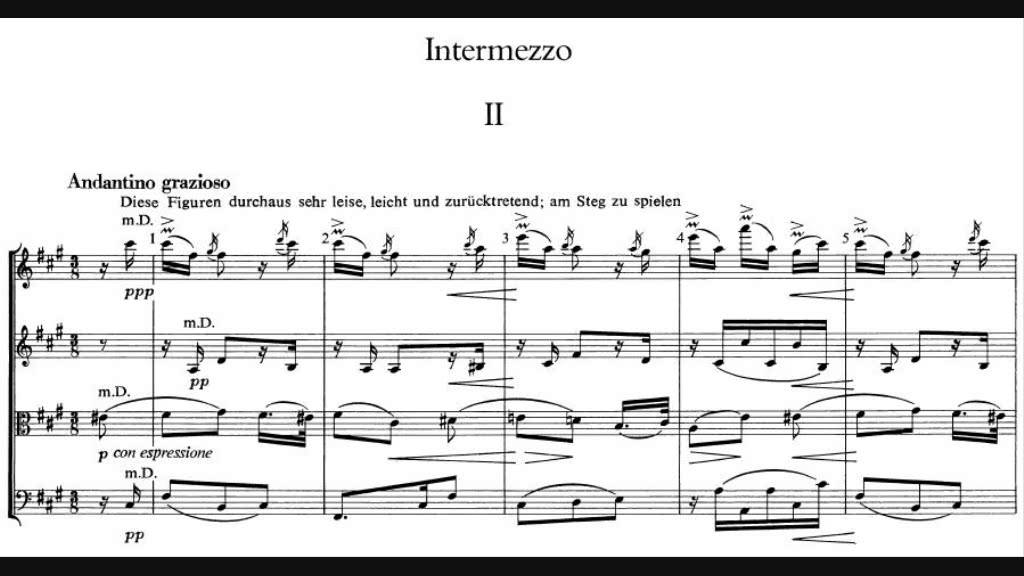
Schoenberg is famous for his atonal pieces, but he wrote while young a tonal string quartet that is quite memorable and charming. And it’s even happy instead of dark!
Thanks for all the wonderful suggestions. I’ll be listening to many of these works over the next few months. My next question concerns Anton Bruckner. I decided on an impulse to go to the Chicago Symphony Orchestra’s performance of Bruckner’s Symphony No. 4 in a couple of weeks. I know almost nothing about Bruckner except that he’s not as good as Mahler and there are several versions of most of his symphonies, extensively revised. I plan on spending the next couple of weeks exploring his music and see if he’s more than a second rate Mahler. Any suggestions?
A lot of people, like myself, find most of Mahler’s symphonies impressive but also weird and strained with disturbing psychological overtones. If you buy that, then Bruckner is definitely not a second rate Mahler.
You will enjoy his Symphony No. 4 (“The Romantic”). Keep in mind that this is a BIG work - about an hour and 15 minutes.
Confession: I find Bruckner symphonies dull, dull, dull, but this appears to be a minority opinion amongst my classical-music-loving friends so take that for what it’s worth. Symphony-wise I tend to jump from Beethoven to Shostakovich.