Indeed. It was no small task either. For example, the cameras could only hold 2.5 minutes of film and were also amazingly loud.
Watch this, it is interesting:
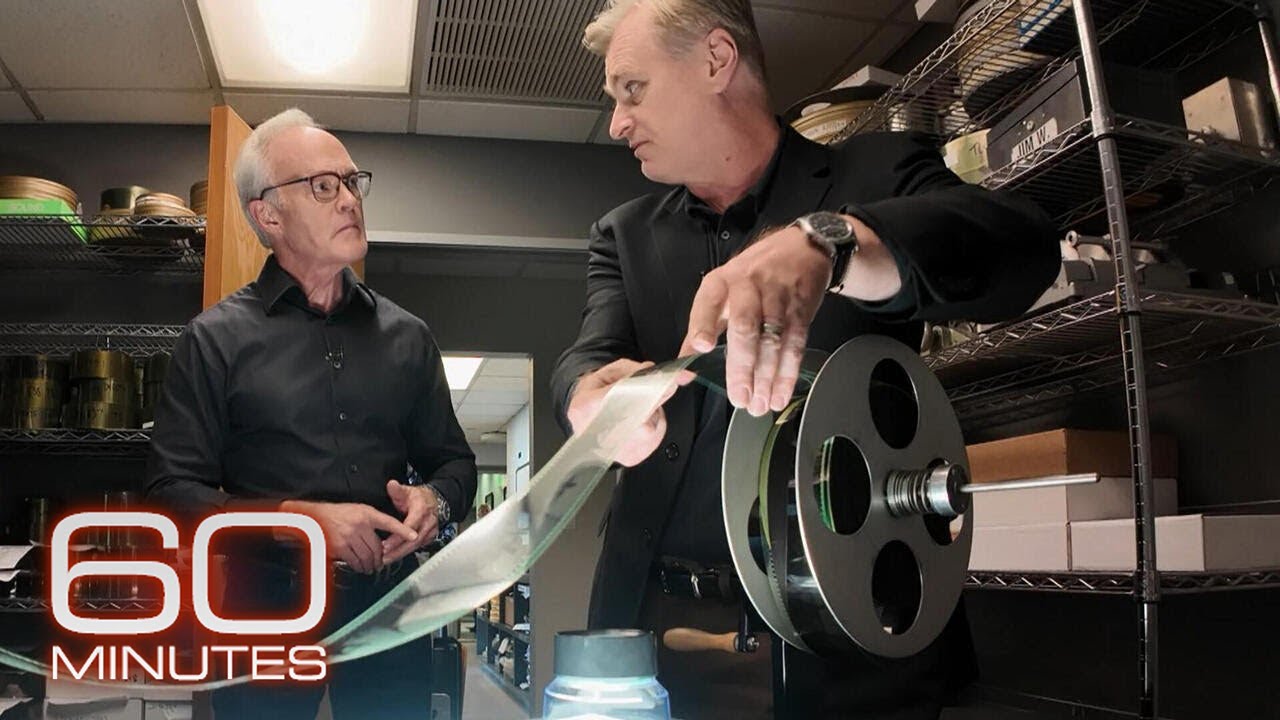
Indeed. It was no small task either. For example, the cameras could only hold 2.5 minutes of film and were also amazingly loud.
Watch this, it is interesting:
Having now seen it, I thought it was a good film, beautifully shot and worth seeing but, if I had waited weeks or otherwise made a big effort to see it in “the only way to see it”, I would have walked out wondering why I bothered with the extra fuss.
I agree with that assessment; see the movie in the best format you can easily see.
Just got back from an IMAX show. Looked good, but there was really no scene where a little less detail would’ve been a problem.
I’d say see it with the best sound you can easily find. Like Oppenheimer, the “soundscape” was very good, and I liked the use of ancient instruments at times.
But my advice to the rest of my friends was to forget all the hype and the press and the technology, and just go see it like you would any other movie. If you’re not expecting An Amazing Experience, it holds up well. Decent storytelling, shot well, with decent actors.
Interesting that they ranked IMAX Laser above standard 70mm.
Personally, I’d probably put standard 70mm second and IMAX Laser third, but that really comes down to personal preference: whether you value seeing the film projected from an actual film print more than seeing it in the expanded IMAX aspect ratio.
If I had to guess which version Christopher Nolan himself would prioritise, I’d say 70mm film projection. That’s based purely on interviews I’ve seen with him, where he seems to regard projection from film as an important part of the viewing experience.
At the same time, he clearly values IMAX, but I suspect he would consider the 2.20:1 standard 70mm presentation to be an alternative definitive version rather than simply an inferior one.
That said, I agree with the general advice here: see the best version available to you without causing yourself too much hassle.
I live right near the Chinese Theatre in Los Angeles, so I saw the IMAX 70mm version there. If I see it again, though, I’d seriously consider watching the standard 70mm version for a different experience.
How can you tell if your local IMAX is film or laser?
Check here.
So if it’s not there, it’s laser?
Oh well, i already bought tickets. I’ll see it in laser imax
I have a confession to make. I -do- have a 70mm IMAX theater in town, but I won’t be going there to see it (well, having to wait three weeks for seats doesn’t help).
Mostly, because while I’d love it, my wife gets motion sick from watching any sort of “action” sequences on standard IMAX these days. She also gets motion sick in a car when not up front, so no real surprises. While it’s not the biggest screen, we’re planning on seeing it at a local theater with full food/alcohol service, which will offset part of the three hour wait.
Just an “in-case” for anyone who HASN’T seen a big film in IMAX and has a history of motion sickness, which is probably few to none participating in the thread, but may be helpful for a lurker or wanderer from the wilds of the internet.
I’m going Friday after school to see it in 70mm. I’ll render an opinion after that.
If your theater doesn’t specifically say “IMAX with Laser,” but only IMAX, it’s 2K, not 4K.
No, if it’s not there, it means it’s not in 70mm IMAX.
But you might still have a cinema showing it in 70mm that’s not IMAX and they won’t appear on that list.
Just to give an example, the Alex cinema in Glendale, California shows the movie in 70mm, but they don’t have IMAX capability.
Here is an interesting video by the director of Sinners talking through the different formats he released his movie in.
One thing I find interesting is that he implies is that the regular 70mm versions (IMAX and regular) take priority over the digital versions (including imax).
Right, there are at least four versions of projection all being marketed as IMAX. It’s all rather confusing.
IMAX 70mm Film
IMAX GT Laser (Dual Laser)
IMAX with Laser (Single Laser)
IMAX Digital Xenon (2K)
The IMAX website notes the few 70mm IMAX theaters. It also notes whether or not a theater has the “IMAX with Laser” projection format, but does NOT tell you if it’s dual-laser or single laser.
And if a theater just says “IMAX”, it’s almost certainly one of the 2K Digital Xenon theaters with relatively small screens (so-called “LieMAX” theaters).
See here for more details from the other thread (thanks to @commasense):
I saw “The Odyssey” last night in this format. I have not seen it in the more ideal IMAX 70mm or just plain 70mm so I cannot give a comparison but I will say is was pretty amazing. VERY big screen and the sound was amazing. Sound was sometimes overwhelming (a complaint…e.g. when the cyclops was talking I could not understand a thing said…apparently there were words in that wailing but I never heard anything but wailing random noise and that was super annoying cuz it went on and on and on). Still, you literally felt it.
9/10. Would do again.
Wired has an article about the confusion of the different IMAX formats. I was able to see it, but it may be paywalled for some, or after some time.
My theater is essentially sold out until it stops running the movie, unless I settle for terrible seats. However one of my local theaters (Not IMAX) is doing a 35MM viewing of the film. I haven’t seen much comment about that, but would it essentially be the 70MM version just at half resolution?
I’d suggest it is less about the resolution and more about the size of the screen. Lower resolution just means smaller screen basically. It’ll look good. As screen size increases need for more resolution increases.
Since this is a BIG spectacle movie bigger screen is better but if you like what the movie is I am sure you’d be happy watching it on any screen (maybe your cell phone on a plane would seem a bit weak).
Yeah I should have clarified better, but the only 70mm IMAX in Arizona is effectively sold out of all showings at all times. (Yeah even the ones at 1 am) So the alternative to me is to see it at a regular theater I frequent. (The Majestic) Which has a normal showing for The Odyssey and a separate 35mm showing.
If it’s just watching it on a smaller screen then I’ll survive. I tried to do it at 70mm just didn’t get tickets in time… But I do wonder what are the fundamental differences between the normal showing vs 35mm showing… no cropping?
There will be cropping. Each format seems to have a different aspect ratio.
@robby listed some just above. What that means for what you see I do not know. Letterboxed? Cropped? I dunno.
It’ll be pretty close though and most film makers know to keep the important bits in the center and not get cropped. You’ll get it all. Nothing important will happen where you cannot see it.
ETA: Bigger the screen the bigger the cyclops…don’t want to spoil that any more but bigger is better for that.