He really lost his head.
"Milady, have your great buttocks grown any less?”
“No, but methinks the weight of your head upon your shoulders shall shortly be lessened”.
It wasn’t, though. Elizabeth wasn’t queen, or next in line to be. You should read up on what Dudley did to try to get his son on the throne, for a Games-of-Throne-esque bit of history.
His head DID roll, though.
I did check out his wiki page out of curiosity. Yep, he was executed, as was his father before him when he was 7. The royals really didn’t need retirement plans back then, did they?
Oh, there’s much more to it than him simply being executed. He married his son to Lasdy Jane Grey, seen as one possible heir to the throne. He then got Edward to change the documnt about the succession – or maybe clumsily changed it himself, to read that his son Dudley and his heirs would rule England. Then they got up an impressive procession up the Thames after Edward died with Lady Jane as the center of attention. The populace, who had been primed to expect Ladt Mary Tudor to be the next in line collectively said “Who the hell is that?” and didn’t accept her. Jane was queen for all of nine days. Mary’s supporters swept in and grabbed all of them. And eventually (although Jane wasn’t at fault – just in the wrong place at the wrong time) executed all of them.
Which consists of “Honestly, the Havana version seems the most concrete to me.” In a travel article about the author visiting Havana.
When I went into the results for 1920-1939 I found a multitude of articles about Sloppy Joe’s the bar, but nothing in the articles mentioned anything like the sandwich.
Honestly, the origin is still unproven.
My dive into newspaper archives show Sloppy Joe’s as a popular Havana bar starting in the 1920s. After the bar’s closing in 1942, the term was almost exclusively used for a style of cardigan sweater popular in the 40s, as a term for a general unkempt dressing style popular in the 40s and early to mid 50s. The sandwich suddenly shows up as a recipe (at least in the Cleveland Plain Dealer) in 1949, but that recipe already notes that it is popular with teenagers.
It also points out how the sandwich is a variation on a popular Cuban sandwich, appropriately modified for gringos. Seems pretty likely to me.
The only thing riskier than being the Caliph was being his vizier.
Small correction-- the article said it was a variation on a popular Cuban dish called Ropa Vieja, which is more of a stew. The owner, knowing how much Americans like sandwiches, used ground beef instead of shredded beef, and put it in bread to make a sandwich out of it.
The article also mentioned picadillo, another ground beef dish which also isn’t a sandwich. Neither one is mentioned in any of the early reports. Nor is a sandwich. Virtually every report mentions only that it’s a bar. A few also mention food, but no specifics.
As I said above, the claim was made to hype a visit to Havana. Can anyone imagine she would land on a different origin?
I can’t find any source that does more than reference the story without a particle of actual research. But Wikipedia in fact does mention research in its article.
Marilyn Brown, director of the consumer test kitchen at H.J. Heinz in Pittsburgh, says their research at the Carnegie Library suggests that the sloppy joe’s origins lie with the “loose meat sandwiches” sold in Sioux City, Iowa, in the 1930s and were the creation of a cook named Joe.
Actual research from a creditable source. I know which one I’m going with.
The first published mention of a Sloppy Joe sandwich appears to be from 1940.
John Mariani in The Encyclopedia of American Food and Drink says that the origins are unknown but that the first mention in print was in 1940 for an Ohio restaurant.
Why any connection to the real Sloppy Joe’s bar, which was publicized for travelers all over America in the 1920s, didn’t come up as a theory for many decades makes the link additionally suspicious. The many claims for the Midwest along with the first use of the term in Ohio gives that origin more credence for me.
Possibly relevant is that the same sandwich appears elsewhere in the Midwest, under different names. IIRC, it’s a made-right in Wisconsin.
Originally (and sometimes still) Maid-Rite. Dating back to the 1920s I believe. An Iowa creation.
And un-sauced. So not really a Sloppy Joe at all.
I found a 1914 reference to “sloppy seconds:”
“Love is what makes a man eat cold beans out of a can and drink sloppy seconds out of a tea pot and imagine they taste better than the meals his mother used to cook.”
Seems to have acquired a golf connotation by the 1930s:
“Only a few holes require extra-long tee shots, but even fewer can be negotiated safely in sloppy seconds or thirds.”
Seems to have been mainly associated with golf when it was (rarely) used. I saw a few references in the 1960s where it referred other non-lewd things:
“The theater is of secondary importanc to [critic Clive] Barnes–sloppy seconds some theater men feel–and when there is a ballet opening, he often prefers to go to a preview of a play that might coincide with it.”
“[Baltimore Colts player Tom Matte] qualifies as a runner with hunger only for sloppy seconds. Alex Karras calls him the garbage man, noted for stealing those cheap yards which certain backs seem to accumulate because of a missed tackle or other bonehead defensive play.”
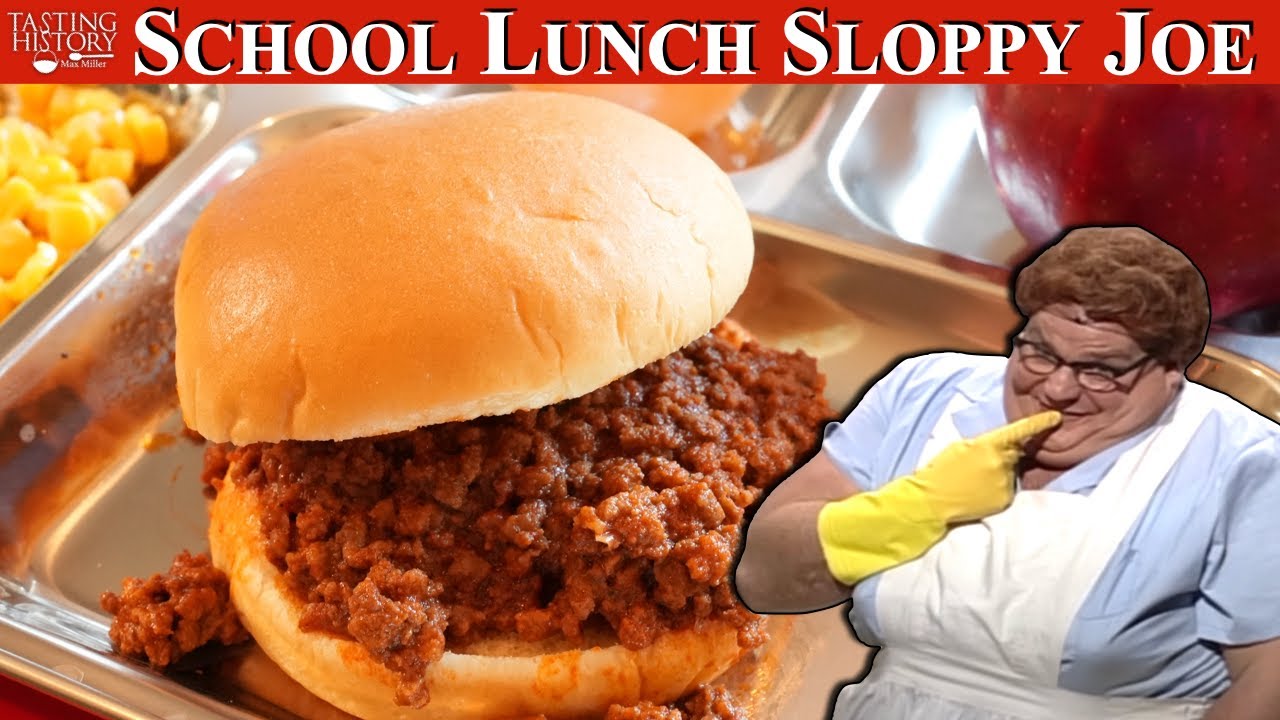
Tasting History did an episode on the Sloppy Joe sandwich, where he cooks one from a school cafeteria cook book.
He does go into the history, and concludes there is probably no way to know who invented it. He goes over the Cuba, Key West, and Ohio theories presented here, and also talks about an Iowa link. Sloppy Joe has referred to several different meat sandwiches, non-sandwich foods, and non-food things over time. Many of the historical references to Sloppy Joe sandwiches don’t describe the sandwich, so it’s unknown if they mean the ground beef and tomato sauce sandwich.
Here is the video, possibly queued up to where he starts talking about the history of the sandwich.
Thanks for the spelling; I’ve only ever heard it spoken.
And the context where I heard it was a potluck where I had made (what I call) sloppy joes (with sauce), and someone asked “Who made the Maid-Rites?”. So even if a Maid-Rite is usually unsauced, it’s at least sometimes considered to encompass sauced sandwiches, too.
i looked through some newspapers, and found several stories, with recipes
Cleveland The Plain Dealer
Sat, Jan 22, 1955 ·Page 14 – gives recipe
Franklin PA The News-Herald
Wed, Aug 31, 1960 ·Page 12
The Bismarck Tribune North Dakota
Mon, Feb 27, 1956 ·Page 5 --with recipe
The Cleveland Press
Fri, Feb 14, 1947 ·Page 21 – no recipe but description
I can’t fins any references prior to the mid-1940s.
Wikipedia lists all three origin theories, and notes that similar sandwiches appeared in the early- to mid-1900s, but under vastly different names.
Early and mid-20th century American cookbooks offer plenty of sloppy joe-type recipes, though they go by different names: Toasted Deviled Hamburgers,[4] Chopped Meat Sandwiches,[5] Spanish Hamburgers,[6] Hamburg a la Creole,[7] Beef Mironton,[8] and Minced Beef Spanish Style.[9]
Google Books has a lot of cites from the mid-1940s on, and one tantalizing reference to "sloppy Joe SAuce: from 1940, but which I can’t open. (IN the magazine “Metal Finishing”)
Cites before the mid-1940s generally refer to “sloppy Joe Sweaters” and other clothjing items.
The spelling “Maid-Rite” just screams “Food company recipe using our own-branded ingredients ® ™”.
IIRC, the era of branded packaged foods got underway in the 1920s and really took off in the 1930s. The Depression and into the war led to lots of oddball ways to make a meal from snips and snails.
The only (gaping) hole in my theory is that if the Maid-Rite name came from a food company recipe pamphlet, or the label from a tin can of whatever glop, there ought to be written record of that still available somewhere somehow.
Which gives me a chance to plug an old fave site that I bet many of you know about, but not everyone: LILEKS - The Gallery of Regrettable Food. This site/cite doesn’t answer the Maid-Rite question, but does include a lot of the same sort of alarming food ideas from sorta the same era.
Maid-Rite was a restaurant chain in Iowa.