Elizabeth Holmes, who was convicted of fraud for siphoning hundreds of millions of dollars from several high-profile investors, is scheduled to be transferred from a low-security federal prison to a halfway house next year, according to one of her victims…Eisenman, an early Theranos investor who testified at Holmes’ trial, said he received a message from the Justice Department’s victim notification system Wednesday saying the halfway house transfer would occur in August 2027.
It’s not clear how long she might stay in the halfway house.
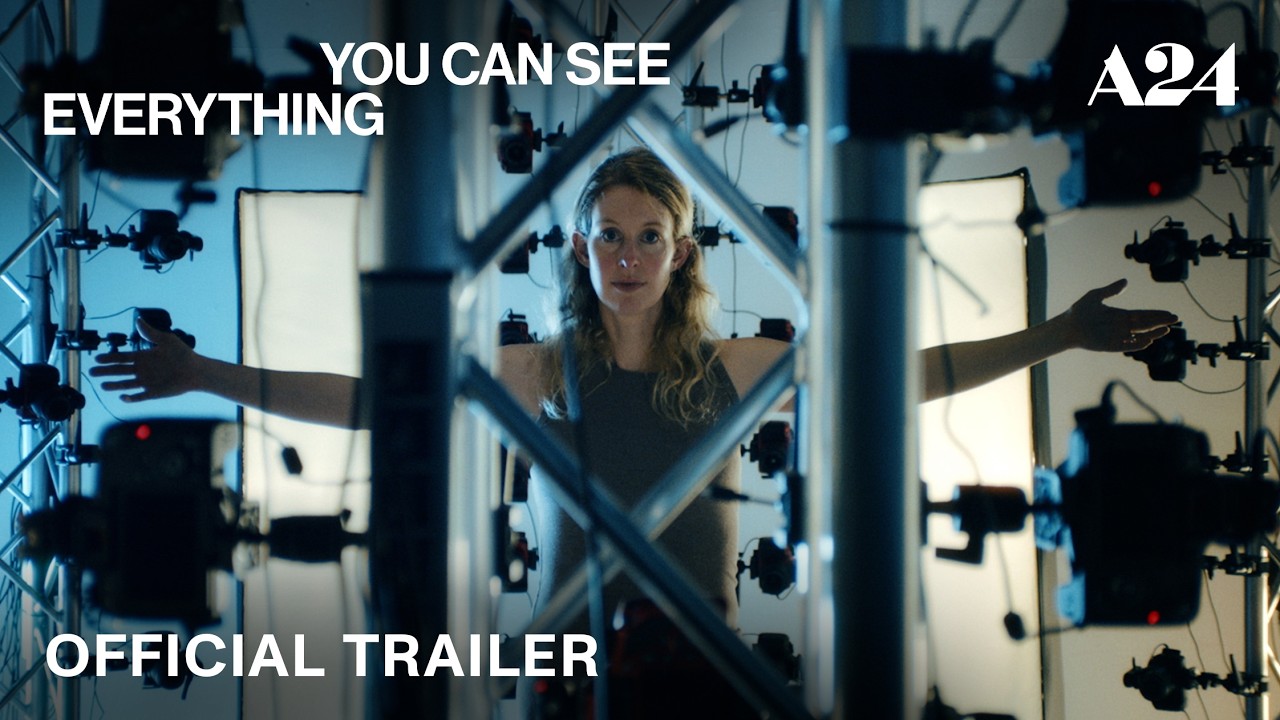
There’s a full trailer for You Can See Everything, and The Guardian gave it a 5-star review. I was a little weirded out by the first snippet, but now I’m intrigued.
Those who were [at the NYC film festival premier] can confirm: the hype is deserved. You Can See Everything is, somehow, more shocking, twistier, thornier and revealing than billed – a stupefying and gloriously destabilizing hall of psychological mirrors, a thrilling once-in-a-lifetime collision of director and subject. You know from the minute Billy Evans, Holmes’s shifty husband-cum-business partner who entered the picture post-Theranos, claims that “the best way for people to see who she is … is to give as much access as possible into our daily lives”, while lying with Holmes on a playroom floor, that you’re in for a wild ride. My mouth was agape for, conservatively, one half of the film’s unusually deserved three-hour run time.
…
The result is a three-hour documentary filmed like a thriller and scored like a drama that plays like an unraveling of certainty in real time.
Does anyone else wonder if the cover art (promotional poster) for the Holmes documentary (You Can See Everything, with a close-up image of Holmes’ facade of a face, masking untold malevolence) and 1985’s Come and See (depicting a close-up of a borderline adolescent child’s face with a thousand yard stare, witness to countless traumas) is intentional? Like, to suggest that the tech startup culture that enabled Holmes could have such adverse affects on humanity, in the end, as to rival Nazi Germany’s scourging of Eastern Europe?
Compare:
Agree with me or not, you can’t unsee the similarity.
I finally just watched the trailer link posted above by @Maserschmidt . Full agree. Yeah that was pretty creepy.
I have to admit though that my opinion of her is highly subjective. I don’t think I can be fair, unbiased, completely objective towards her.
Spot on.
I retired from a medical devices career, as an engineer, not a health care provider, and I find her very offensive.
I watched a recent YouTube where Tyler Shultz is interviewed and says that the machine (Theranos device) that is disassembled and displayed in the film (so that you can see everything) where Holmes describes it, it is falsely advertised by her and it’s not what she is claiming it to be. Sorry, I don’t have the link for it but the video is a recent and fairly current one. Posted maybe 5-6 days ago IIRC.
I’m a bit biased, too, since I work for one of the companies that she scammed.
I read the book by Carryrou, Bad Blood: Secrets and Lies in a Silicon Valley Startup. IF his reporting of the situation is at all accurate (and, his sources seem to be credible), then it was a scam from day one. It is a great idea - get multiple test results quickly with a minimum of blood - but the workings of her “manufacturing”, where engineering couldn’t communicate with manufacturing (WTF! Isn’t that kinda mandatory?!?!?) proves that she had no plan to actually create a working device.
Can anyone? I mean whether Fielder himself can remain objective is a major question raised in the film.
I can’t speak highly enough about the film, which I saw Sunday and cannot stop thinking about. I think it’s one of the best films I have ever seen. After the three hour run-time concluded, my husband turned to me and said, “I want it to keep going.”
But it’s not a detailed expose on Holmes so much as an examination of a number of thorny high-concept issues for which her case serves a powerful illustration. It’s also at least as much about Fielder as Holmes.
My husband and I have limited background in what she actually did beyond the basic facts, and we were both kind of taken in by her persona in this film. I don’t doubt the facts, I’m just less sure about what to make of her as a person. The film raises far more questions than it answers (as good art tends to do.)
But having watched it, we’re now interested in learning more about the actual facts, to help make sense of at least some of what we saw in the film. The film is about Holmes but it’s really about so much more than that, and it doesn’t go into the messy details of her crimes. I’ve heard the HBO documentary is worth watching. Anything else?
I don’t think this is a spoiler because I’ve seen it reported elsewhere, but she and her fiance are still trying to push this technology and find new investors. I read an article in People where she claims, while sitting in prison, that realizing this technology is her life’s work. I can’t fathom the suckers who are apparently fronting money for this.
I was always under the impression she thought the technology was possible but possibly quite difficult to achieve. That “fake it until you make it” mindset is an abomination, though, especially applied outside software
What do you mean it’s highly subjective? It’d be silly to look at Holmes without considering she’s been convicted of multiple accounts of fraud as well as conspiracy to commit fraud. The first time I saw the trailer for the movie I didn’t know what it was about and I didn’t recognize Holmes. Even not knowing what I was looking at, like most everyone else, it creeped me the fuck out.
To be clear, I was not at all convinced this woman is normal or trustworthy. Just perhaps different than popular media would suggest. The fact that she welcomed cameramen into her home and that she chose to portray herself the way she did, assuming it was a choice, well, it’s not normal. Nobody normal would think that was a good image to project.
So no matter what kind of broken she is, she’s definitely broken.
If you haven’t already scroll up to the New York Times article linked in post #600. It’s the one that caused turmoil in NYT editorial office and caused many an eye to roll elsewhere as with the Jezebel response linked in post #614. It’s not just you - she seems very good at sowing confusion.
Harmless, clueless naif or sociopath? Or autistic, clueless sociopath? My vote from afar is probably pure manipulative sociopath, because it beggars the imagination that anybody can be that confused about the very blatant lies she told. Her own internal correspondence seems to suggest someone more aggressively aware and canny than this. But who knows. Regardless, she was objectively guilty by any legal standard and at the end of the day that’s that.
What I find so unsettling is that she refuses to provide an alternative explanation. Like a normal person would. Or even a sociopath would, wouldn’t you think? Not so much as a “my competitors had it out for me.”
Instead it’s “Gosh, gee willickers, I have no idea why I’m going to prison.”
She can’t think people would buy that, can she? Why would she think that was her best move?
I actually think she may be, for lack of a better term, histrionic. It’s a sexist term but there is an archetype of women who portray themselves as helpless and naive, cede all agency to the men around them (at least as far as the men can tell) and therefore avoid accountability for their actions. I have family members like this. It’s very weird to witness and sometimes Holmes gives me the same vibe.
 .