I thought I had written that above in my post about Eight Days a Week, but I apparently erased it. (Originally, I had written that the “Eight Days a Week” part was parallel fifths, and “I love you…” part is parallel fourths, which is just an inverted fifth). I edited it because from a classical harmony standpoint, when dealing with independent voices, parallel fourths are considered okay for some reason, but not parallel fifths. It’s been much too long since I studied theory to remember why, and pop music doesn’t really care about those kinds of things, except maybe in orchestrating horn parts. (And even then, it depends on the effect you’re going for. If you’re scoring a four-part horn part in a traditional manner, you’d avoid parallel fifths and octaves.)
My surprise with “Smoke on the Water” is that typically power chords are played as “root-fifth” or “root-fifth-octave,” not “fifth-octave.” I had never noticed the lack of the root note on the low guitar string.
But, yes, of course I understand inversion. Regardless, the notes the OP is talking about (at least what I think they’re talking about) refers to the A-B, a major second.
Or tight vocal harmonies or strings orchestrated in a more traditional manner. Regardless, parallel fifths and octaves are not quite seen as the bugaboo they once were, but using them does take away from the sound of independent voices. Basically, a fifth or an octave is seen as “doubling up” a voice.
The ugliest chord ever is the 4th word of, “You Know My Name (Look Up The Number),” the flip-side of the “Let it Be” single with 1730 other versions on hundreds of other Beatles re-mix albums (slight exaggeration).
It’s a G flat 7aug/B flat bass, yet somehow it resolves into a Bm7. And sounds perfectly natural doing so.
Well, one interpretation is that it’s a V of the vi chord. (The song is in D. The vi is B minor. The V of vi would be F#. The A# (B-flat) in the bass would be the chord inverted with the third as the bass.)
Outside of the rules of contrary motion in counterpoint and the desire classical composers to be different than folk music limiting the use of parallel 5ths the difference between them is the interaction of the overtones.
While a 4th and a 5th will use the same notes an inversion will obviously differ in the number of semitones separating them. A perfect 5th accentuates the 3rd order harmonic and thus a 5th or the V chord will add texture.
As lots of music theory relates to perception I am going to focus on the math for the next part which may conflict with “official” theory but may provide an easier to grasp example.
It is just a side effect of twelve-tone equal temperament’s perfect perfect 5th being ~1.5root where the perfect 4th is ~1.333333root and thus not as much of a harmonic similarity. 1.5 * the root first even order overtone of the perfect 5th is the 3rd harmonic of the root.
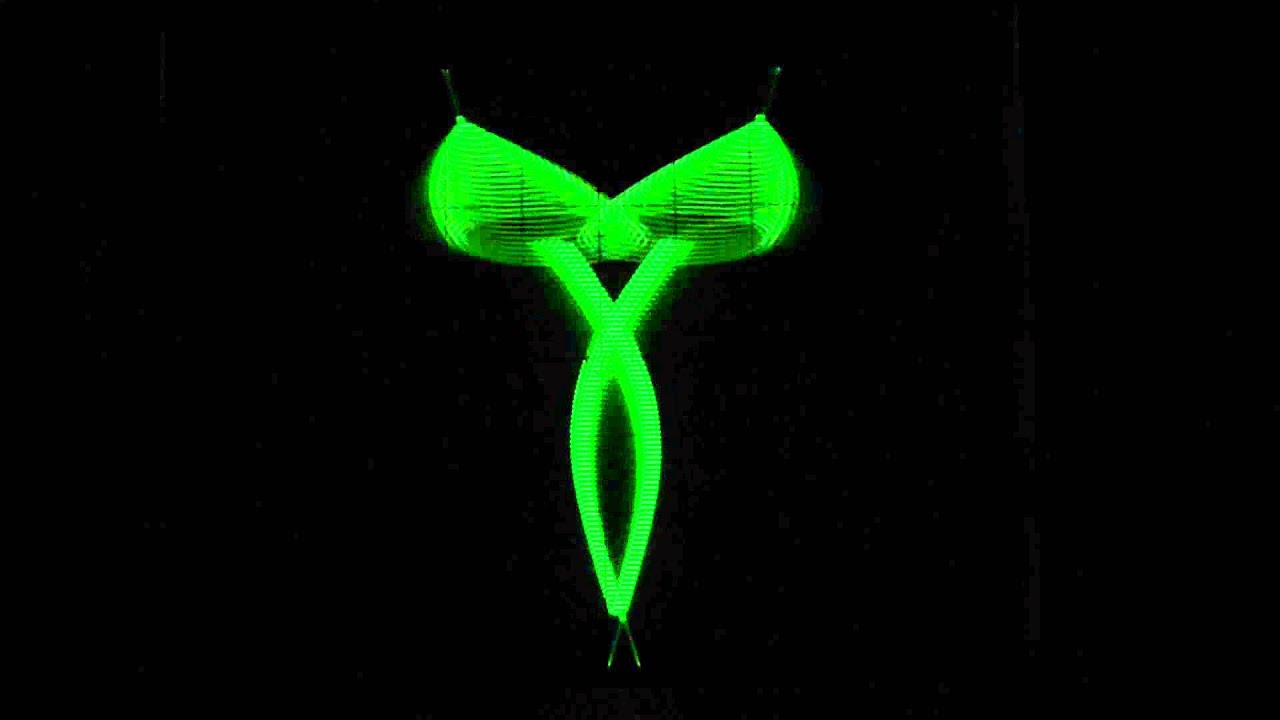
If you add two sine waves where the root is (50 Hz) and 3rd (150 Hz) harmonic the waveform will start to look like a 50 Hz square wave.
It is hard to describe without a synth and a oscilloscope but not in this video when he adds in the square wave and the images multiply.
A few more points.
Both square wave, the triangle wave contains only odd harmonics but a triangle wave the harmonics drop off rapidly.
A square wave can be created by adding all odd harmonics of a sine wave to infinity.
A sawtooth wave can be created by adding all (well the sign changes so really something like 1 + 2 + -3 + 4) harmonics of a sine wave to infinity.
If you play a stringed instrument you can approximate this by noting the same note on instruments with different ranges, E.G E2 on a guitar and E2 on a Bass Guitar. The lower tension shorter string will be closer to the sound of a square wave and will sound fuller or more powerful.
Mahler uses this in Adagietto from Symphony no. 5 where the cello play notes above the viola. Another example is John Williams playing instruments higher in their register in the original Star Wars theme.
Guitar distortion and fuzz pedals also often clip the top of the sine waves to produce a “thicker” more square wave like sound.
So if you use the perfect 5th and octave in a power chord or follow the circle of 5ths to the right in a progression perfect 5th is more consonant, or stable for the same reason as the notes are “familiar” to the ear.
I only can try to listen to the song in the OP on my phone right now so I can’t really judge but to me it feels weird not because of the 5th.
I think a segment is going in the natural minor intervals (to avoid modes less known modes) 1-2-3-6-2-3-6 and I keep wanting a resolve. But don’t put too much stock in that guess but I wouldn’t mind confirmation if I am not nuts
OK massive long post trying to say that the root + perfect 5th starts down the path to being square wave like.
I think it’s just a plain G major chord followed by a Bb augmented fifth chord, as illustrated in this sheet music. The bass is also just playing the basic root notes of each chord (G and Bb respectively).
The Bb augmented fifth chord sounds somewhat jarring because it’s deviating from the D major scale used up to that point. Moreover, the new note that has been introduced, the Bb, is the minor third of the G major chord preceding it. So there is the effect of a major to minor shift on a single chord, which is always rather dramatic. Plus, augmented chords have a rather tense sound anyway - one that is seeking musical resolution. This is provided by the B minor chord that follows, which is back in the D major scale again and from which it deviates again with the E7 that follows.
OK I had to go figure this out, first of all I think the song is in G major and amazingly wikipedia agrees with me. Second I hashed this out on a minimoog so don’t take it as correct.
So if we consider
1 - 2 - 3 - 4 - 5 - 6 - 7 - 8
G - A - B - C - D -E - F# - G
So the at least the first guitar run is doing double stops, which looks like the following.
Notes ( G major #) distance - possible chord name (no 5th or other 3rd note I can detect so not a chord)
F# - A ( 7 - 2 ) 3 semitones - F#m
D - F# ( 5 - 7 ) 4 semitones - D
A - C# ( 2 - 4 ) 4 semitones - A
E - F# ( 6 - 7 ) 2 semitones - Esus2
Note how the leading tone (7) and Submediant (6) are where they leave you hanging, but even if we assume they do a proggy key change to F# phrygian that leaves us with a 1 - 6 - 3 - 7 chord progression which I have only seen in a minor scale context.
I have hit my limits here I hate to say, and I get lost later in the song as there is some weird time signature thing going on that doesn’t seem to just be syncopation so this is as much misdirection as I can offer.
But anyway that phrase is way outside of the main scale and the last note doesn’t release the tension. Worse the guitar i was using plays the first iteration of that phrase then drops out for several measures after the organ takes over. As the minimoog is a mono synth I can’t really do chords until I get home anyway.
But what makes Siberian Khatru one of the best songs to come out of Yes’s catalog of great songs? Huh? No one’s explained that yet. It’s still one of my all time favorite songs. If I hear it I have to stop what I’m doing and listen to the whole thing.
Dang it…had to work through at least one of the organ tracks. I think it is multi tracked or Rick Wakeman is playing two keyboards at once.
But you are right.
Here is what I think the riff progression is, I was thrown off by some errors or differences between repeats which I should have expected from an early 70’s recording.
It falls pretty natural across the keys too so I am pretty sure this was written on an organ or a piano by Rick Wakeman.
Well you could get there from a barred E9sus4 with x 14 14 14 14 14 ( x B E A C# F# ) with hybrid picking but I don’t see Steve Howe starting with a bar chord.
OK, Rick Wakeman had a minimoog at that time and he starts following the lowest note on the organ and switches to the high notes which probably adds to the feeling.