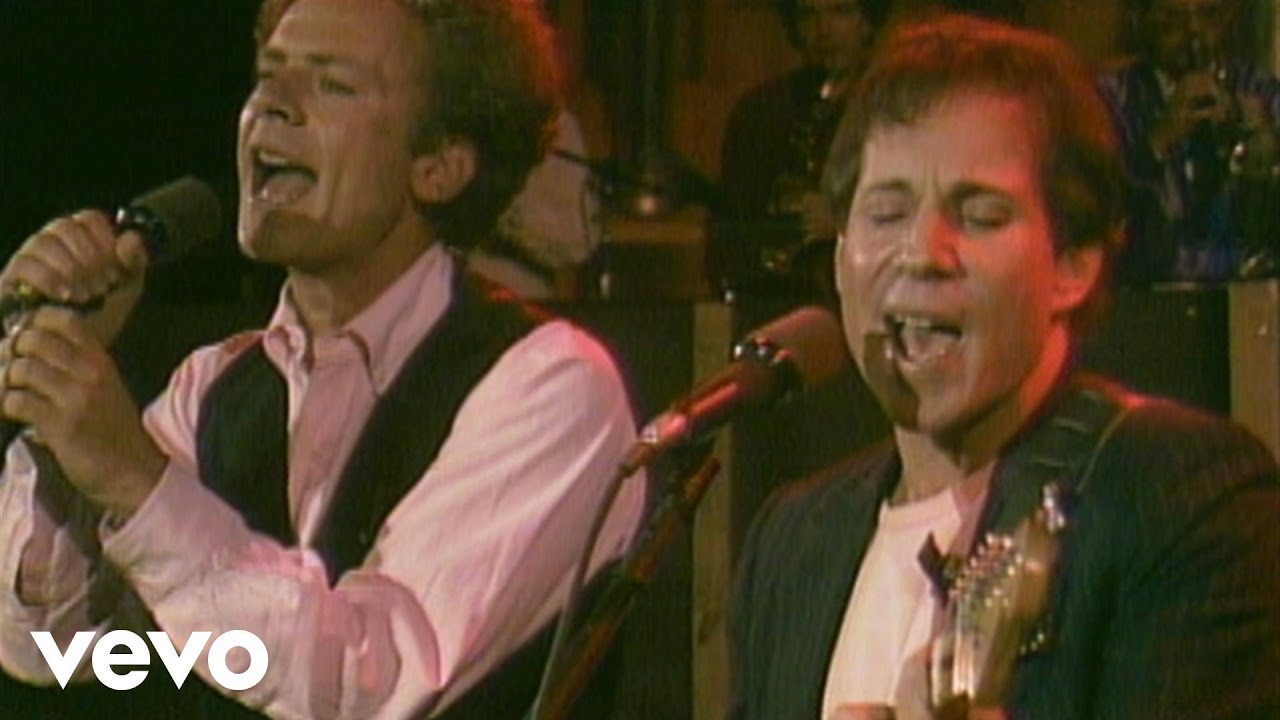
Simon and Garfunkel did a reunion concert in Central Park in 1981. I’ve seen the film of it. I don’t know if their backing band played together regularly, but they were tight and the sound quality is great; probably tough to do at an improvised site with 500,000 screaming fans.
I heard somewhere that, at the height of their popularity, the Beatles did a concert in Japan, and the crowd were very reserved. Without all the screaming fans, the band could really hear their live performance again and were very disappointed with how sloppy they had gotten.
I saw the Talking Heads in 1980, and I would not say they were tight, though some of that was having Adrian Belew and Bernie Worrell and various other members of the rhythm section on stage. It was definitely a big sound, but not tight.
I’ve seen mention of Yes and King Crimson in the thread, and those were by far the tightest bands I have seen. King Crimson in particular, because they like so much to play the same lead lines on top of each other.
Actually, The Who became a pretty tight performing unit when Zak came on board and later when they added musicians for the tours that featured Quadrophenia and the orchestra-backed Tommy shows. (Katy Jacoby playing the violin solo on Baba O’Riley was a real highlight on those nights)
Zack isn’t much more controlled than Keith Moon was. The big difference now is that they have a bass player that is content playing bass like a bass player. John Entwistle was more like a lead guitarist who just happened to play bass. It took two musicians to replace him; a bass player and Pete’s brother on guitar. The original instrumentalists of The Who were like three soloists playing at the same time. Some sort of voodoo magic even they didn’t understand made it all work.
A related concept is ‘the pocket’. It’s often used most with drummers, but can apply to the whole band. It’s not just about being ‘tight’ in terms of rhythm, but also actually being at the correct tempo, with the correct phrasing, pitch and emotion, etc.
It’s usually a term used by a band itself. “Man, last night we were in the pocket!” Or, “One thing about Ringo - he was always in the pocket.”
The closest thing I can think of as an analogy is being ‘in the zone’. If you’ve ever played in a band, you probably understand. Sometimes everything just clicks, everyone is playing at their best and fully engaged, and it’s just a great feeling.
“Tight” can mean other things as well. For example, getting a buzz on. “We got good and tight before going on stage.” Archie Bell and the Drells, who wrote “Tighten Up”, didn’t mean it as being on the beat, but just in general being good on stage. If he said, "We were tight during the show, he just meant that the band was firing on all cylinders. Or “We gotta tighten up this song before we play it live”. Or even as a replacement for, “Oh yeah!” as in, “You hear that new Otis Redding song? Man, that’s tight!”
Or apparently it also meant you could sing and dance just as much as you want…
Led Zeppelin described themselves as tight but loose. They were big into improvising live. They would often experiment with playing ahead or behind the beat. They were spontaneously trying to create. Sometimes it worked, sometimes it failed and sometimes magic happened.
The Grateful Dead is another band that improvised a lot live and they could be pretty sloppy sometimes because they were taking chances in order to create in real time.
Contrast that with bands like The Eagles, Rush or Yes where everything is almost perfect, which is what they were going for.
I am sure if Led Zeppelin wanted to perform something super tight, they could have but they were not going for that. After all, Page and Jones were both first class session players for years before they got together. Page has said that he would often leave imperfections in studio takes because they added a “realness” or authenticity to the music.
Sequencers can play 100% perfect but many of them have a feature where you can “humanize” the parts by adding timing imperfections. That is because 100% perfect timing in music often sounds robotic to people.
‘Tight’ isn’t necessarily what you want anyway. Modern pop often sounds ‘tight’, because it’s quantized and pitch corrected. Drum machines are always ‘tight’, but that can make them sound soulless.
The Eagles have often been accused of being too tight. Their concerts sound exactly like their albums, when you’d like a little live spark.
I’ve read that James Brown used to say a lot of guys can play music but not many can play all night.
I can’t find the full quote. But he was making the point that a lot of wannabees can’t play with high-energy, all night. They get bored or apathetic as the night wears on. It took someone special to keep up with James Browns performances. He demanded a lot from his band.
What’s so special about 1995? The Ladder and Magnification were Anderson-vocalized records recorded after that time I own and enjoy, though I don’t have the rest of the albums after Big Generator (and only have that as a gift from someone who knew nothing about Yes). I’m not really qualified to comment on the tightness of the group, but other than both of those records lacking Wakeman (who was only on around half their records anyway) I’m not sure what’s so different about that era.
Looking it up now, I see Open Your Eyes came out in 1997, but that was really a Sherwood/Squire solo album that turned into a Yes album. Perhaps that’s the album that you consider a cutoff point, not knowing much about the two records that follow that were really just more Yes music like from back in the day.