Note on terminology. “Boot camp” is not just another word for training.
“Boot camp”, at least in US parlance, is the initial military schooling civilians go through to become enlisted military members.
After that there are any number of specialist schools that either officers, or enlisted, or both, will go through at various points in their career. Some, e.g. SEALs, is very physically demanding. Others, e.g. AWACS command battle manager school, involves no pushups at all.
The OP might want to clarify whether he’s talking about actual boot camps or specialist training or both.
And what he means by toughest? Most physically demanding, mentally demanding, lowest graduation rate, most effective, most physical or mental change from before to after, most lethal to trainees, able to produce the graduates with the most killing potential?
Which is it?
IMO the French Foreign Legion probably qualifies as the shittiest overall experience. And produces a pretty effective light infantry / paratroop corps.
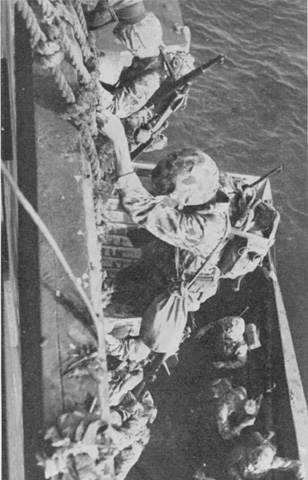
Yes, IIRC only the Marines require the full hanging pull-up as a test exercise that counts for score in the physical fitness test. I suppose part of it comes from the tradition of Marines climbing on cargo nets to get into the landing boats, but more practically from the need to have people surmount obstacles or if necessary assist someone else over the obstacle, while packing heavy gear. This is something an infantryman needs to do anyway, the Marines seem to have decided they might as well make it a scored requirement up front, under their “every Marine a Rifleman” mythos.
If we’re talking about drop-out rates, Israeli Air Force flight school has to be up there. Just getting in is almost impossibly difficult, and of those who start the course, 8 out of every 9 are expected to drop out. And that’s to fly *any *aircraft, from fighter jets to transport helicopters. There’s a reason that pilots basically have the same status in the Israeli military as the Jedi did in the Old Republic.
yes and no
as an individual scored thing on the PT test, probably
army PT individual exercises are push up, sit up and 2 mile run
but there are other events you need to pass that do entail pull ups
well. back when anyways.
You have a platform tower climb you have to pass.
It is not timed but you have to go up and come back down
And you have to complete the obstacle course, which has a cargo net climb, and a hand over hand you have to traverse etc.
I do not know about the navy and airforce, but i assume they need to do a similar obstacle course?
Navy guys need to climb ships too, and airforce might need to climb up one to get rescued?
But aside from their specialty units, their emphasis is definitely not running around on the ground
It’s not at Ft. Jackson, SC. That’s where I went to IET (the official name is “Initial Entry Training”), and while I’m not going to say it was easy, or cushy, or gawd forbid that I’d want to do it again, but it wasn’t the nightmare you hear about other places. I think Ft. Leonard Wood is tougher than Jackson. That’s where my husband went.
Not surprising. That course looks like a certified bitch. Here’s a similar case.
In my time working with the Army and in doing software for homeland security I’ve worked with a few guys who were Army Green Beret types. Nice albeit no-nonsense guys. As long as they’re on your side.
One told of doing the HALO parachute course (High-altitude military parachuting - Wikipedia). Which is an advanced qual even within the SF community. One of his long time pals, coworker, & HALO classmate just couldn’t do it. So he went back to being an ordinary SF Green Beret dude. As bad-ass as they are, some things are just too far out for some folks. And the system accepts that.
The (physically & mentally) toughest boot camps are likely in countries with little money, little expertise but lots of non-skilled, poorly educated recruits. So, third-world countries or Russia.
Is it that common for failed courses to be a black mark? Any organization which had black marks on people’s career as a result of failing a course would instill a counterproductive amount of skittishness among those considering taking courses.
How did he fail? He wouldn’t jump? He opened too quickly? If you jump and don’t open too quickly, it seems the only way you can fail a HALO jump is if you modify it into a HANO.
Yeah, I was going to say that it’s probably all relative to some extent. You may have some physically astounding SEAL who is a terrific shot and cool under fire, and the guy might be dead meat if he tried to attend the National War College. Conversely, a guy who didn’t have too much trouble with Nuke school might wash out on the first day of SEAL training.
I don’t know if this is the case now, but during the 70’s and 80’s the general military training for the Soviet military (now Russian) was horrendously awful. You got better training if you went on afterwards to say a reconnaissance or other combat-heavy job but for the rank-and-file soldier your training was literally a week long and most of that was just learning to march and salute. Once you got to your actual unit was when actual combat training would take place but during the Afghanistan War people were literally sent out to fight without that additional training, you were expected to learn by fighting.
I’ve probably watched the same documentary as you and that doesn’t jibe with my recollection. To say that they failed due to a lack of aerobic endurance suggests that most of them dropped out of mandatory runs and such simply because they weren’t fit enough, but from what I recall most of them dropped out because of the collective exhaustion of all that they were under rather than simply being unable to continue with a particular aerobic exercise. Some failed in the cold water training, some failed in strength-based exercises, some simply broke mentally and quit in the middle of the night. What you’re really weeding out is people who can’t operate effectively on the limits of physical and mental exhaustion, which is entirely relevant to work as an SF soldier.
The Russian Spetsnaz have a pull-up requirement as part of their fitness test. A minimum of 12 full-ROM pull-ups wearing body armor, if I remember correctly.
I’d say this is exactly it. People with exceptional endurance will end up in athletics or something like that, not the military. They’re only interested in what that person does or how they respond when placed at the point where most people say ‘sod this, I’m off’.
Most reasonably fit and healthy people can put on a pair of trainers right now and run a full marathon - the body can handle that. When you think about it, it’s not that taxing physically. Sure, the time it going to be slow, and you’ll probably need to stop and walk quite often, but it’s doable… physically. Mentally? That’s completely different. Very quickly your brain is going to send you as many signals as possible that you should stop… and most people listen.
Part of what makes an elite soldier is being able to handle mental stress. The easiest way to do this is to push them past their comfort zone and see how they react.
There’s no point having someone with exceptional skills if when in the middle of the Iraqi desert at 2am, they’re constantly complaining about the cold, or the blister on their foot - which is exactly what I would do. Hence, I’m not cut out for that line of work.
Another thing; the recruits that don’t quit will be a combination of mentally tough individuals and those who have thoroughly prepared themselves for what may happen, and have a plan in place for such occasions to deal with it effectively. Both traits are desirable in the military, and many other jobs.
Disagree. Brutal is not the same as tough. Training is pretty expensive. Poorer militaries don’t offer much more than a few weeks of rifle training and a lot more of it is “on the job”. I read about the Eritrean-Ethiopian War a few years back. Conditions were horrific; it probably took amazing toughness and fortitude to last there. Doubt they had as tough training as other more modern militaries.
And non-skilled? By definition all recruits are non-skilled.
Suppose it depends on the military and how and what you flunk.Failing the grade at SF school, which is elite is different from flunking the Basic Officer Leader Course.
[QUOTE=Fuzzy_wuzzy]
I did know someone who was in the FFL and the Parachute Regiment. He had the balls to join the FFL at a very young age. He said the Paras were a more difficult training camp. I don’t say that to disparage the FFL as I assume they and the Paras contain a very different breed of soldier.
[/QUOTE]
Why is that surprising. The Foreign Legion is nothing more at the end of the day a regiment with a special recruiting area (the part of the world thats not France). Their actual role and training is no different from regular French troops. Para’s are soldier with a particular and specialized role. Sure the FFL has great pride and esprit de corps, but so do soldiers of a regiment with a centuries-long history.,
As the story was told to me … He was unable to force himself to actually jump out at 25,000+ feet. They made a couple passes over the drop zone and when he called Uncle the second time that was the end of that.
My father was Parris Island class of 1945. I watched Full Metal Jacket with him. The first part of the movie felt so real to him he was a bit stunned.
I wish I could find the clip, I remember seeing a doc about NCOs in different branches and they interviewed a present day Marine Drill Instructor and also R.Lee Ermy. The modern day DI explained how they used stress and psychology to mold recruits. Ermy stated that most of their recruits were going straight to Vietnam and class sizes were made bigger and time was cut short. They didn’t have time for psychology so they just beat the shit out of the recruits.
It’s not called relaxin’ Jackson for nothing. I don’t know if there is any way to quantify which Basic Training location is tougher. I went to Fort Knox the hills were brutal. Agony, Misery and Heartbreak Ridge. Torture.