In a military platoon, a “rank” of troops is a horizontal line of troops standing shoulder-to-shoulder, while a “file” represents a vertical line of soldiers standing one behind the other.
The phrase “rank and file” often broadly describes all enlisted personnel who are not officers.
King Edward VII, who reigned from 1901-1910, was the first to use a literal rubber stamp to “sign” the commissions of officers of the British Army and Royal Navy.
Natural rubber sap is milky white in color; due to this, the first rubber tires which were made for automobiles were white or light gray in color. However, these rubber tires wore out quickly, and by the early 20th century, chemists introduced the material carbon black into the rubber, which greatly increased the durability and lifespan of tires, as well as giving them their now-traditional black color.
One of the earliest manufacturing uses for rubber came in the form of the overshoe. Introduced in 1845, it was a sheath designed to fit over one’s shoes, to be worn in inclement weather. Rubber boots soon followed; Wellingtons, or “wellies”, named after the 1st Duke of Wellington.
The first condoms- aka “rubbers”- were in the late 1500s,consiting of linen sheaths soaked in a chemical solution. It wasnt until the late 1850s that the actual rubber condom was popularized, due to vulcanization. In many places, including the USA “rubbers” faced legal challenges. However, by 1931, rubbers were standard issue to all members of the U.S. military, and the GI’s started coming up with other uses- like to keep their rifle barrel dry, etc.
In Stanley Kubrick’s Cold War satire Dr. Strangelove, U.S. Air Force Major T. J. “King” Kong leads his B-52 Stratofortress crew in a survival-kit contents check: “In them you’ll find: one forty-five caliber automatic [pistol]; two boxes of ammunition; four days’ concentrated emergency rations; one drug issue containing antibiotics, morphine, vitamin pills, pep pills, sleeping pills, tranquilizer pills; one miniature combination Russian phrase book and Bible; one hundred dollars in rubles; one hundred dollars in gold; nine packs of chewing gum; one issue of prophylactics [rubbers]; three lipsticks; [and] three pair of nylon stockings. Shoot, a fella could have a pretty good weekend in Vegas with all that stuff!”
Director Kubrick instructed Slim Whitman to “play [his character, Major Kong] straight.” Whitman, a veteran of westerns and crime dramas, assumed the movie was another war drama and played his role seriously. His opinion changed after Kubrick made him straddle a fake missile nose cone and whoop it up, like a bronco buster, and Whitman wanted to punch Kubrick for playing him like a fool.
Not in play: Slim Pickens. Slim Whitman was a country singer, “famous” in the U.S. for the direct-response TV ads for his albums.
In play: Slim Pickens (birth name Louis Burton “Burt” Lindley) was a successful rodeo clown, prior to becoming a film and television actor. During his acting career, Pickens usually appeared in Westerns, where his rodeo background and experience in riding horses meant that he rarely needed a stand-in for scenes involving riding.
The term “Slim Pickings” appears to have originated in the 1600, after seeing large carnivores eat all the best parts of an animal, leave only “slim pickings” for the scavengers. A good example is lions and jackals. Or wolves and buzzards.
The air-cooled 1600 engine, most famously the Volkswagen Type 1 engine (1,584 cc), is the gold standard for classic Beetles, dune buggies, and kit cars and famous for powering the classic Beetle, Karmann Ghia, and Type 2 Bus. Featuring an 85.5 mm bore and 69 mm stroke, factory dual-port versions produced around 50 horsepower.
For the Disney movie The Love Bug the producers used 21 different Volkswagens, all L87 Pearl White 1963 Model 117 Volkswagen Type 1 with sunroofs. Because the standard VW Beetle engine only had 40 horsepower, the studio built special stunt vehicles—including a version equipped with a Porsche 356 engine—to convincingly outpace race cars on screen.
Cool trivia! I own a 1963 Porsche 356. I never knew Herbie from The Love Bug was also a ‘63!
For deciding which car to use in The Love Bug (1968), producer/writer Bill Walsh set up an auto audition by parking several small automobiles near the Disney Studio commissary.
“As the employees passed by on their way to lunch,” Bill Walsh recalled, “they looked at the little cars, kicked the tires, and turned the steering wheels. But everybody who went by patted the Volkswagen. They didn’t pat the other cars, which was indicative. The VW had a personality of its own that reached out and embraced people. Thus, we found our star.” The new car-star was a 1963 sunroof-model 1200 Volkswagen Beetle, defined by Volkswagen as the Type 1.
The VW Type 2 was the Transporter, also known as the Bus, the Microbus, or the Kombi.
The Volkswagen Type 181 was a jeep-like four-door vehicle, originally developed for the West German Army, and first produced in 1968 for military use. In 1971, VW introduced a consumer version of the vehicle, which was marketed under a variety of names in different countries, including the Kurierwagen (“courier car,” West Germany), the Thing (United States and Canada), the Trekker (United Kingdom), the Safari (Mexico and South America), and the Pescaccia (Italy).
Civilian sales of the Type 181 ended after the 1980 model year, though sales ended in the U.S. in 1975, as it was not able to meet higher emission standards in that country.
In 2015, the U.S. Environmental Protection Agency discovered that Volkswagen had been cheating on exhaust emissions standards on a massive scale for seven years. The German company eventually refit 11 million cars and agreed to pay a $15.3 billion civil judgment to satisfy claims against it; the CEO lost his job.
Comment only — Excellent trivia! In 2014 I bought a diesel Jeep Grand Cherokee and was amazed by its good fuel economy. (My 2015 thread is here ➜Good Fuel Economy in my Diesel Jeep Grand Cherokee■ ). But then later, Jeep brands got slammed by required testing and emissions controls fixing which choked the engine and its excellent MPGs. Damn!
Sadly, this issue hits close to home for me.
In play — The Volkswagen emissions scandal is also known as Dieselgate. Around 2006, VW began cheating when testing their TDI diesel engines (diesel Turbo Direct Injection) by having their emissions controls active only during laboratory emissions testing. The cheating was implemented by firmware programming that detected when the vehicle was likely undergoing US EPA protocol testing as determined by the vehicle’s steering wheel angle, vehicle speed, and engine operation duration, and when the vehicle met these criteria it activated its full emissions controls system. This masked elevated NOx emissions that went unchecked during real-world normal usage.
This cheating was discovered by West Virginia University during their independent testing in 2013. A later study showed elevated NOx emissions from Volvo, Renault, Jeep, Hyundai, Citroën and Fiat, resulting in investigations opening into other diesel emissions scandals.
And thus, we Jeep diesel owners too got captured in this fiasco.Damn!
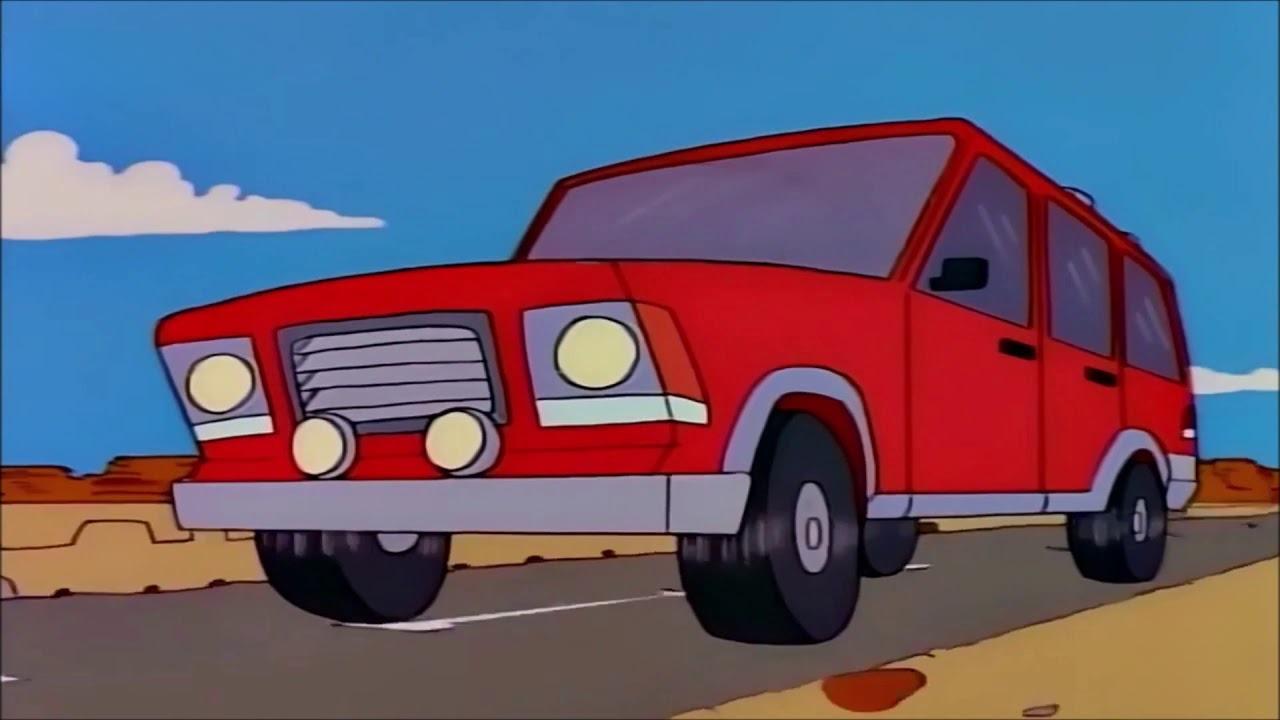
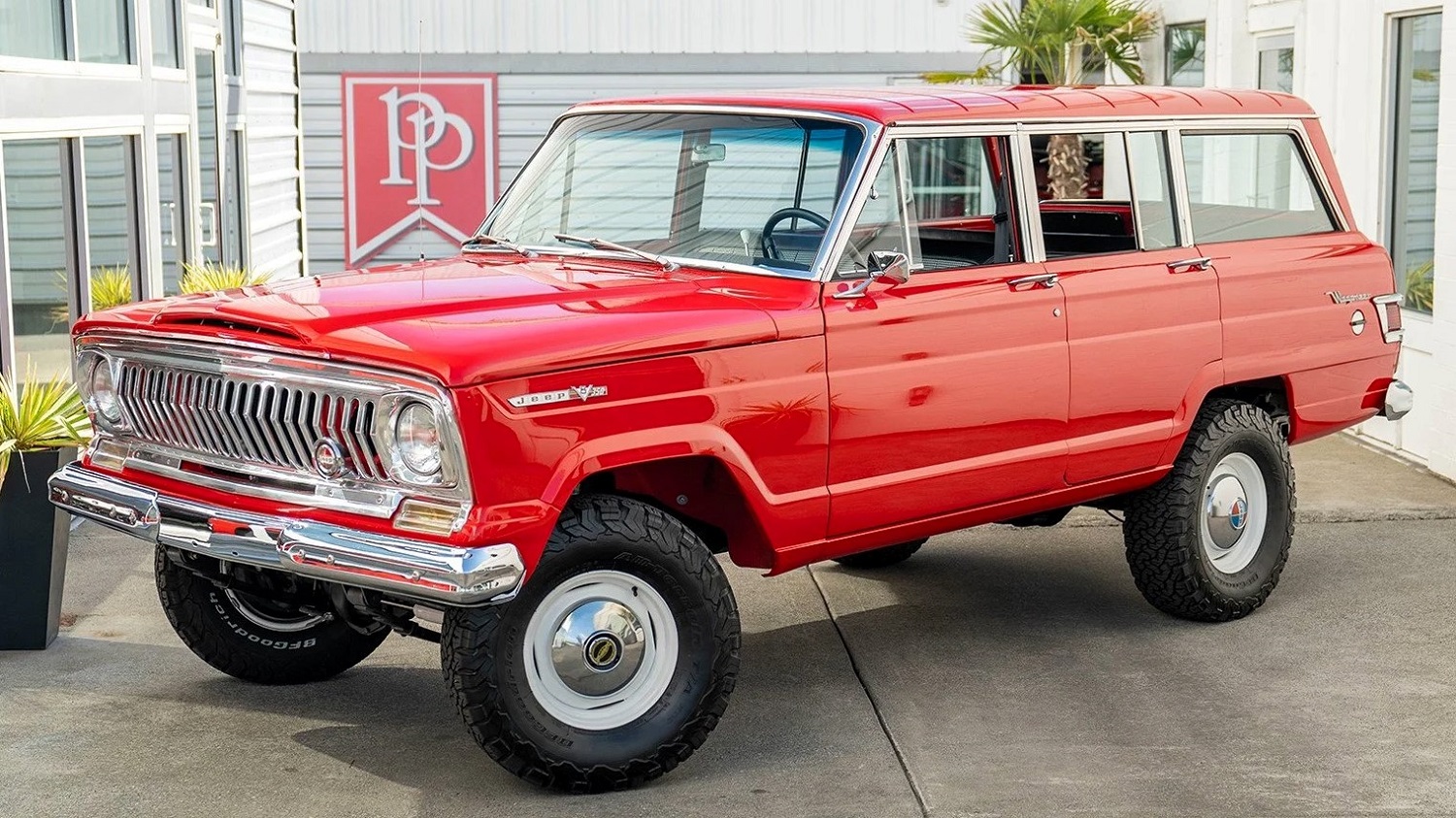
Simpsons show runner Al Jean revealed that the inspiration for “Canyonero” came from all of those oversized SUV commercials of the 90s, but the body style is of the 1968 Jeep Wagoneer.
The penultimate large and bad car is the Wagon Queen Family Truckster, from National Lampoon’s Vacation (1983). It was really a modified Ford LTD Country Squire. Five were made for the film, none survive today.