Joel Youngblood played for the San Francisco Giants in the late 1980s. He broke in as a rookie for the Cincinnati Reds in 1976, the year they would sweep the World Series against the Yankees. The Reds also swept the Phillies in the NLCS that year, making them the only team in MLB history to sweep through an entire multi-tier postseason.
Although he didn’t play, Joel Youngblood was an active player for those Reds, so yes, Joel Youngblood has a World Series ring. It is his only one.
In the 1970s and early 1980s, the NFL’s Los Angeles Rams had two starting players on their defense with the surname Youngblood: Jack was a defensive end, who was a perennial All-Pro, and was later voted into the Pro Football Hall of Fame, while Jim was a linebacker. Because they had both (a) a long surname, and (b) the same first initial, their names on the backs of their jerseys showed both their first and last names, on separate lines.
Despite sharing a surname, and playing for the same team at the same time, Jack and Jim were not related at all. Additionally, neither of them were related to Joel Youngblood, who was playing in Major League Baseball at the same time.
Created by Rob Liefeld, Youngblood was a superhero team published by no less than five companies. The idea was that if superheroes existed IRL, they would be big time celebrities celebrities, much the same as movie stars and athletes. Autograph Hounds, fans, etc. One of the Heroes was Badrock (changed from Bedrock), with the catchphrase Yabba-dabba DOOM! the leader is Shaft (not the MFer ), an archer supreme, and one time undercover FBI agent. The comic ran- on and off, mostly off- from 1987 to 2025.
The Youngbloods were a rock and roll band popular from 1966 to 1972. They began as Jesse Colin Young & The Youngbloods before Jesse, the band’s leader, dropped his name and assumed the title, The Youngbloods. Their two most recognizable singles are “Get Together” and “Darkness, Darkness.” “Get Together” was released in 1967 and charted at No. 62 on US Billboard’s Top 100, but re-relased in 1969 on a different album and charted at No. 5 US. “Darkness, Darkness” was released in 1969 and charted at No. 124; it was re-released in 1970 on a different album and charted at No. 86.
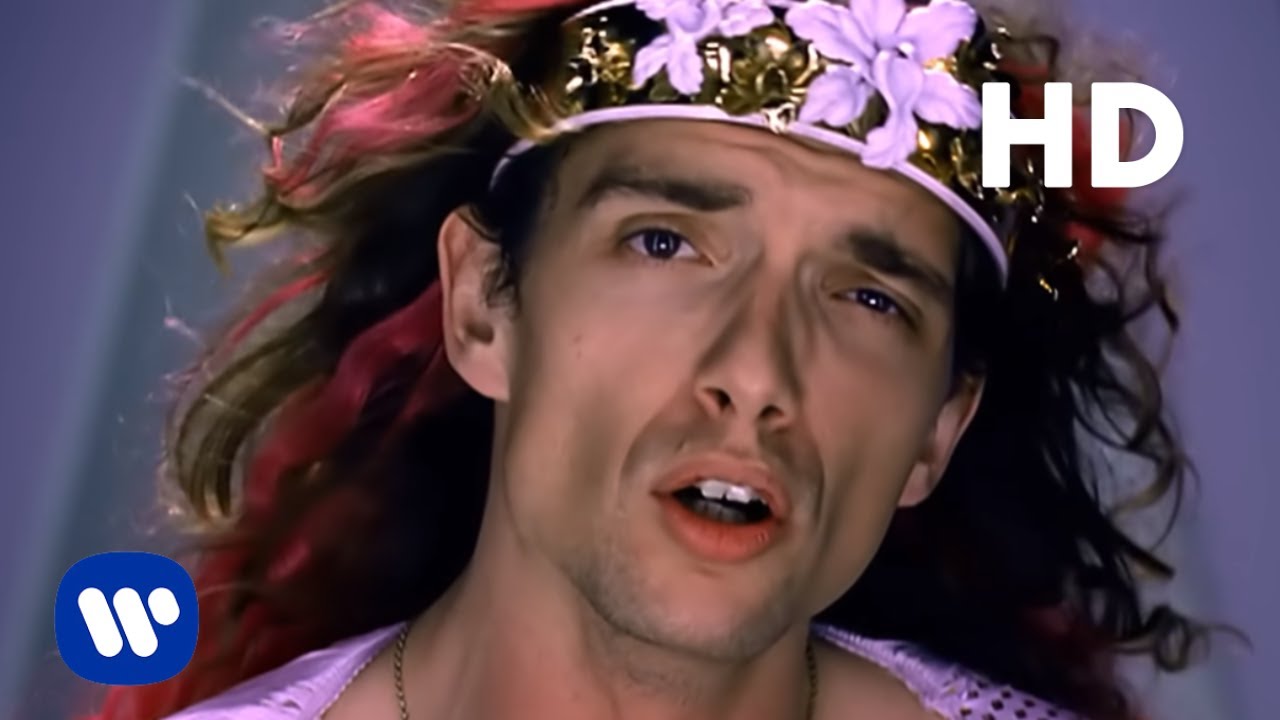
The Darkness are a British hard rock band that formed in 2000. Fronted by brothers, the band brought back (if it ever left) the general “look” of late 1980s Hair Metal bands like Poison, Warrant, etc. And by that I mean, tight leather pants and long hair reminiscent of the era, as well as the genre’s guitar and vocal techniques. This was at a time when the charts were dominated by grunge and post-grunge, and audiences found their throwback style refreshing. Their breakthrough single, “I Believe in a Thing Called Love” reached No. 2 on the UK Singles Chart.
No UK monarch has been in the House of Commons chamber since King Charles I entered on Jan. 4, 1642, uninvited, at the head of a column of royal troops looking for five Members of Parliament whom he had accused of treason. He asked the Speaker, William Lenthall, where the five were, and the Speaker memorably replied, “I have neither eyes to see nor tongue to speak in this place but as this House is pleased to direct me.”
Not in play: I rediscovered The Darkness’s “I Believe in a Thing Called Love” a few weeks ago: the song is great, and the video is just gloriously over-the-top funny.
In play:
The monarch butterfly got its name in 1874, when it was suggested by American entomologist and butterfly expert Samuel Hubbard Scudder; Scudder argued that the name evoked both the butterfly’s large size, and that it “rules a vast domain.” The “monarch” name won out over several others which had been suggested, including “Storm Fritillary” and “Archippus.”
Monarch, Wyoming is a town about 8 miles northwest of Sheridan that was founded in 1903 when the Chicago, Burlington and Qunicy railroad reached the area. The Monarch Coal Mining Company also was key in its founding, but as the coal mines closed down the town declined. Today it is an unincorporated community and ghost town with basically only scattered ruins remaining.
Maj. Gen. Phil Sheridan snatched victory from the jaws of defeat in the Battle of Cedar Creek, Va., on Oct. 19, 1864. Confederate forces under Lt. Gen. Jubal Early surprised Sheridan’s army while he was away consulting with the War Department, but he quickly rode back, rallied his troops (one soldier described his return as an “electric shock”) and then led them to a smashing victory.
The trees that grow in the US and that are called “cedars” are not true botanical cedars. That’s because European settlers confused the trees of the cypress or juniper families with European cedars, because of their reddish, aromatic ward. The modern cedar chest is a sort of amalgamation of two things: actual storage things made of (non-North American) cedar, which is a natural pest repellant, which date back to ancient Egypt; and “hope chests,” into which girls and their mothers would hoard this-n-that to eventually save up a dowry.
The Cedars of Lebanon were famous throughout the ancient world, being mentioned about 70 times in the Old Testament. The scientific name is Cedrus libani. Those trees were famed for being tall (130 feet) , tough strong wood, and of course their aromatic features, which repel insects. Although heavily used, some managed to survive, and now are only rated “Vulnerable”, even though endangered in the past- Emperor Hadrian made the first attempts to save the tree. Cedars have been cultivated for over 3200 years, and some of the ancient groves still survive.
Cedrus libani has been successfully grown in the USA.
Hadrian’s Wall was a defensive fortification, built by the Romans in their province of Britannia (now modern England). Construction of the wall began in 122 CE, during the reign of Emperor Hadrian, and in its final version, was a 73-mile-long stone wall, with ditches on either side, which ran east-west across the entire width of northern England.
The wall is believed to have been manned by Roman troops for about 270 years, until Rome began to withdraw from the island. In modern times, most of the original stones of the wall were removed by locals, for use in other constructions, though sections have since been restored and reconstructed.
NFL quarterback Roman Gabriel played college football for the North Carolina State Wolfpack and then was the second overall draft pick in the 1962 NFL draft behind running back Ernie Davis. Roman Gabriel was the NFL’s first Filipino-American quarterback and the first and only Asian American to ever win the NFL’s MVP award.
Ernie Davis was a running back for Syracuse University, where he became the first black athlete to win the 1961 Heisman Trophy, college football’s highest honor.
Davis was drafted first overall in the 1962 NFL draft by the Washington Redskins, but as the Redskins were owned by avowed racist George Preston Marshall, and had yet to ever sign a black player, Davis refused to play for the Redskins, and he was soon traded to the Cleveland Browns. However, Davis fell ill in July of 1962, and was diagnosed with acute monocytic leukemia; he never played a down in the NFL, and died from the disease in May of 1963.
In March 1963, country music singer Patsy Cline was killed in a small plane crash during a flight from Kansas City KS back to Nashville TN. The crash involved the small Piper Comanche she was a passenger in. Three other people were aboard, including the pilot. All four occupants were killed. There were no survivors. The plane crashed near Camden TN in western Tennessee roughly between Nashville and the Mississippi River, at the geo coordinates ▲ 36.0605, -88.1612.
Kansas City, Kansas, located at the junction of the Kansas and Missouri Rivers, has a population of 150k, making it the third-largest city in the state. Wichita, with a population of about 400k, is the largest city, while Overland Park and Olathe, are the 2nd and 4th largest. Both Overland Park and Olathe, like Kansas City, are located in the Kansas City metro area. That area, which includes Kansas City, Missouri, has a population of about 2.2 million.
The city of Three Forks, Montana is so named because it lies where the three rivers, the Jefferson, Madison, and Gallatin, converge in a junction to form the Missouri River — the longest single river in North America.
Geo coordinates:
Jefferson & Madison Rivers ▲ 45.926, -111.5034
Gallatin River Mouth ▲ 45.939, -111.492
On 27 Jul 1805 the Lewis and Clark Expedition, including Toussaint Charbonneau and his Shoshone wife Sacagawea, arrived at the Missouri headwaters.
They were named by Lewis and Clark after the President, and the Secretaries of State (James Madison) and Treasury (Albert Gallatin).
At this confluence, from west to east the 3 rivers are:
Jefferson River
Madison River
Gallatin River
Because the three rivers were roughly the same size, Lewis and Clark gave them separate names (instead of considering one of them as the Missouri).
The Lewis and Clark Expedition included the first Europeans to travel the entire length of the Missouri and reach the Pacific Ocean via the Columbia River.
The Jefferson National Expansion Memorial, also known as the Gateway Arch or the St. Louis Arch, commemorates the fact that Lewis & Clark started their expedition in St. Louis. The Arch itself, some underground bits (museum, gift shop, etc.), and some bits above the ground, all make up a National Park. It is the smallest, and the only urban, National Park in the United States.
Also, St. Louis’ soccer team (St. Louis City SC) still lacks a … term of endearment? (I don’t know what to call these unofficial/official names, like the “Foxes” of Leicester or the “Red Dragons” of Wrexham) and this fan is salty about it. I’ve been suggesting The Archies since before they took the field, but it doesn’t appear to have stuck.
Good trivia! And I’ve been to that museum of westward expansion and it’s a very good one.
In play — the shape of the Gateway Arch is not, as many people think, a parabola. It is a catenary, and specifically it is a weighted catenary instead of a simple uniform catenary. Architect Eero Saarinen of Finland chose this shape so that the arch would look less steep and less pointed at the top.

 ), an archer supreme, and one time undercover FBI agent. The comic ran- on and off, mostly off- from 1987 to 2025.