Famed children’s author Beverly Cleary struggled with reading at first, but had mastered it by Second Grade. This was in the 1920s, when most children’s books in US schools were British imports, and were focused on wealthy British children with nannies - utterly unrelatable to Middle Class American kids. So Clearly started writing her own books, and they included realistic, Middle Class American children with realistic problems, to include divorce. She went on to sell over 91 million copies.
Beverly Cleary’s most well-known children’s books featured Henry Huggins (and his dog Ribsy), his friend Beatrice (Beezus) Quimby, and Beezus’s little sister Ramona Quimby. All of them lived on Klickitat Street, a real street in Portland, Oregon, near Cleary’s childhood home.
The Klikitat Peoples were native to central and southern regions of Oregon, from Willamette Valley to eastern Cascades. The Lewis and Clark Expedition encountered the Klikitat, along with Yakima and Walla Walla tribes as they crossed over from the Sawtooth Range (in present-day Idaho) and into the Columbia River Gorge. Klikitats were generally hospitable to white explorers and early settlers, and with the establishment of Fort Vancouver on the Columbia River they became frequent traders with soldiers and trappers, exchanging baskets and elk hides for guns and horses. In 1855 the tribes were removed from their lands in present-day Washington State and relocated to the Grand Rhonde Reservation (outside of McMinnville, OR), and eventually became part of the Confederate Tribes of Grand Rhonde.
George Washington loved dogs, and is credited by the American Kennel Club with being one of those who helped develop the American Foxhound breed. One of his dogs, not confirmed to be an American Foxhound, was named Sweetlips.
In the MASH franchise, Major Margaret “Hot Lips” Houlihan is a U.S. Army nurse, who serves as the head nurse for the fictional 4077th Mobile Army Surgical Hospital during the Korean War.
The character appears in the original novel (MASH: A Novel About Three Army Doctors), as well as in the 1970 movie adaptation (in which she was portrayed by Sally Kellerman), and in the TV series adaptation (in which she was portrayed by Loretta Swit).
Advancements in medicine, plus the addition of helicopters spurred the development of the Mobile Army Surgical Hospital units to replace the out-dated Auxiliary Surgical Group hospital units of WWII. Field medicine streamlined into battlefield aid stations, which secured and stabilized wounded soldiers before transporting to MASH units located behind front lines by land and/or air; MASH units performed necessary treatment to determine if the wounded needed immediate care, convalescence, or cleared to return to duty. Severe injuries would necessitate transport to hospitals located in friendly areas with recuperating wounded being sent home. MASH units performed from the Korean War to the Gulf War, with the last unit phased out in 2006.
The MASH 4077th had two commanding officers during its TV run, which went much longer than the actual combat phase of the Korean War itself. Dr. Henry Blake (McLean Stevenson) was a US Army lieutenant colonel, while Dr. Sherman Potter (Harry Morgan) was a full (or “bird”) colonel.
In Malibu Creek State Park (formerly the 20th Century Fox Ranch) is the outdoor filming location for the MASH* TV series. None of the tents remain, but the Signpost, some restored Korean War-era trucks and ambulances, the footprint and the “Helipad” on a small hill.
The word “Malibu,” used for a city and a State Park (and likely other places) in California and originated with the Chumash people, who inhabited what is now California for millenia before the Europeans arrived. It almost certainly comes from the word “humaliwo,” which means “where the surf sounds loudly.” The Chumash language doesn’t stress the first syllable, and between the Chumash, the Spanish, and the English, the word got garbled until it became what it is today.
Michael Landon’s supernatural drama NBC TV series Highway to Heaven (1984-1989) was described by one critic as being like “Jesus of Malibu.”
“Malibu Barbie” was a 1970s variation on the Barbie doll, featuring tanned skin, sunglasses, platinum-blonde hair, and a swimsuit. Its popularity led to “Malibu” versions of other dolls in the line (Ken, Skipper, etc.), and additional variations, such as the “Sun Lovin’ Malibu Barbie,” which had tan lines on her skin, beneath her swimsuit.
In 1997, “Oreo Fun Barbie” was a partnership between Mattel and Oreo Cookies. Unfortunately the doll was created with a dark skin tone, which was pointed out to be a derogatory slur to African Americans. The doll was quickly pulled from retail shelves, and has become a collector’s focus in the ensuing years.
The second inauguration of President Bill Clinton, Democrat of Arkansas, and Vice President Al Gore, Democrat of Tennessee, on Jan. 20, 1997 was the last inauguration of the twentieth century, and the first-ever to be streamed live on the Internet.
John Quincy Adams swore his oath of office on a book of law, instead of a Bible- saying it represented the US Constitution. Teddy Roosevelt did not use a bible, either.
The tradition of politicians being sworn in on a prop other than the Bible continues: In December 2023, Karen Smith, a Democrat elected to a school board position in Pennsylvania, was sworn in on a stack of banned books - her statement against book banning. The banned books were:
- Night by Elie Wiesel
- The Bluest Eye by Toni Morrison
- All Boys Aren’t Blue by George M. Johnson
- Flamer by Mike Curato
- Lily and Dunkin by Donna Gephart
- Beyond Magenta by Susan Kuklin
Patricia Quinn is a Northern Irish actress and singer. She is primarily known for playing the maid Magenta in the stage musical The Rocky Horror Show, a role which she reprised in the film The Rocky Horror Picture Show.
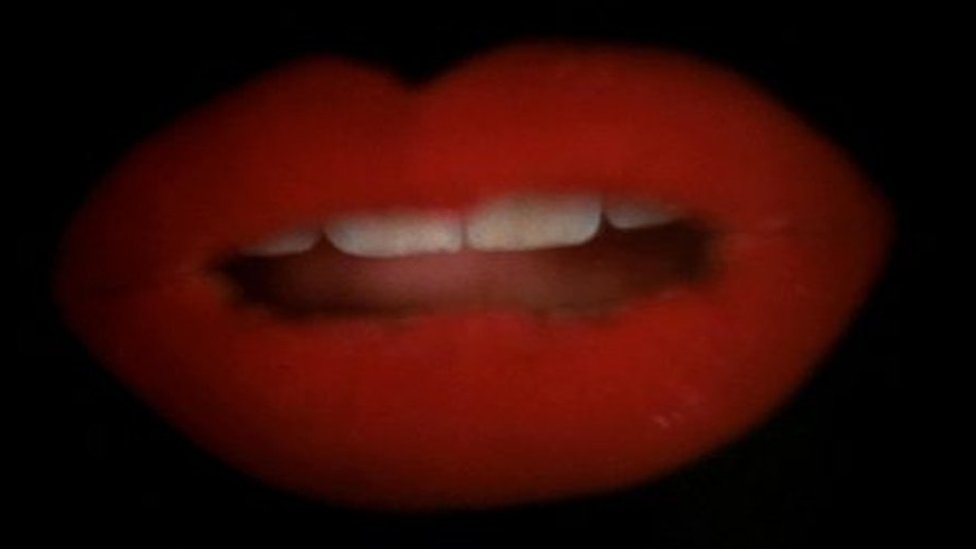
Quinn also performed the introductory song “Science Fiction/Double Feature” in the stage musical; in the film, Quinn’s red, disembodied lips lip-sync a performance of that song, the vocals of which were sung by Richard O’Brien.

Patricia Quinn became Lady Stephens, by virtue of her marriage to the actor Sir Richard Stephens. Sir Stephens was previously married to Dame Maggie Smith.
Quinn the Eskimo (The Mighty Quinn) is a song written by Bob Dylan and first recorded by him in 1967 during The Basement Tapes sessions. The song was first released as a single the following year by the British band Manfred Mann, using the title Mighty Quinn. This version reached #1 on the UK Singles chart and peaked at #10 on the American Billboard Hot 100. It is listed as #91 on the Billboard Year-End Hot 100 singles of 1968.
Manfred Mann’s Earth Band was the third eponymous rock group founded by South African musician Manfred Mann. The band was (and still is) primarily known for their cover versions, especially of songs written by Bob Dylan and Bruce Springsteen; they had two songs which reached the top 40 in the U.S., both of them Springsteen covers: “Blinded by the Light” (a #1 hit) and “Spirit in the Night” (which reached #40).
Blinded by the Light biggest cover was by Manfred Mann’s Earth Band, which changed the lyrics. The most prominent change is in the chorus, where Springsteen’s “cut loose like a deuce” is replaced with “revved up like a deuce”, but is often misunderstood as “wrapped up like a douche”.