You know those 10 trillion frames per second cameras that “film” the movement of light, how is it possible?
It seems to me that of course you can’t have a film camera, like with a mechanical shutter, with such an insanely fast frame rate because some pieces of the actual parts would have to be moving at relativistic speeds, maybe? And then there’s the chemical reactions on the light induces onto the film…those, I’m guessnig, are pretty slow compared to the speed of light. 10 trillion fps seems impossible with a traditional camera, QED.
But aren’t there similar things going on inside these ultrafast digital cameras? The light flies through the lens at about c, yes, but does the processing of each of 10 trillion images into a series of 0s and 1s occur that quickly as well?
Generally, these things are done by “sample and hold.” A single exposure is may take many nanoseconds, but the time is consistent. So, you take vast numbers of exposures, each offset in time from each other, and combine them to get a “movie.” Since the exposure time is consistent, it’s only the offset between frames that is critical, and this is where most of the “magic” occurs.
ETA: This has been the case for most high-speed measurements for ages. For example, modern digital oscilloscopes can use a “sampling” mode where they can slowly build up a graph of a repetitive signal. If the signal only happens once, they are not capable of resolving it nearly as accurately.
Which makes the original high-speed cameras developed for a-bomb testing so interesting - it’s a much more difficult task if you only get one shot at it.
Here they have an array of 500 sensors and then stitch them together.
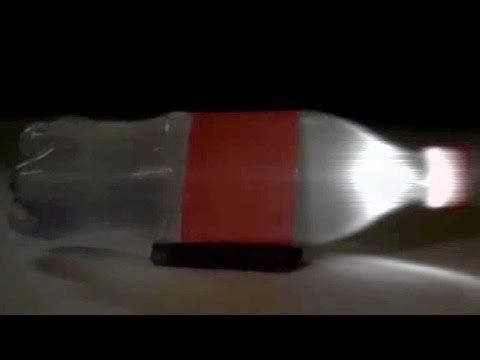
Here’s a Slow Mo Guys video, but I don’t think they explained how they accomplished it (but I skimmed through it pretty quickly, I didn’t rewatch the entire thing)

We use Phantom high speed cameras at work, in our Impact Physics Lab. Each has a price tab > $100K. This is how they work.