The Big Thirst, by Charles Fishman, copyright 2011:
“India’s economy has grown between 5 and 9 percent per year in the last five years, a stunning rate of modernization. And yet, not one of India’s major cities provides twenty-four-hour-a-day water. In fact, the cities most associated with India’s modernization – including Bangalore, Mumbai, and the capital, Delhi – provide just one or two hours of water a day to their tens of millions of residents.”
Talk about little-known facts … ever heard of that? Did tourist hotels and rich people have wells? Do they still? The city has mains that work for an hour or two, but that empties the reservoirs?
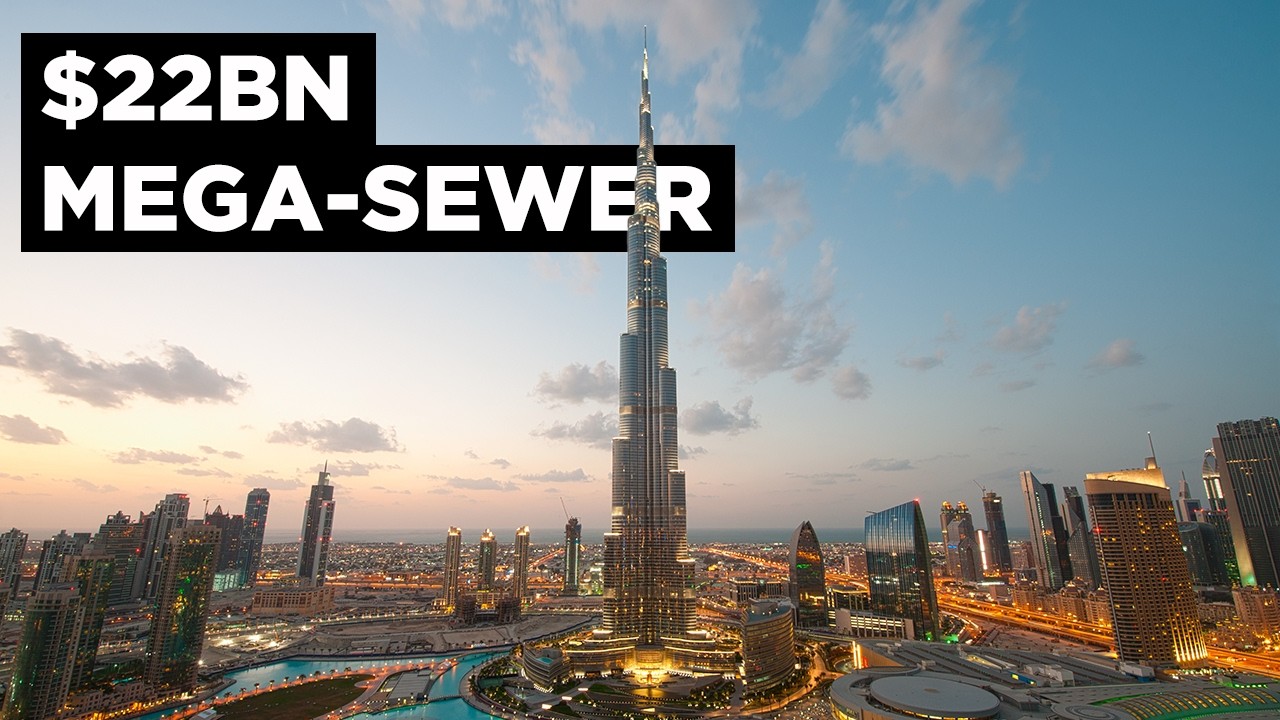
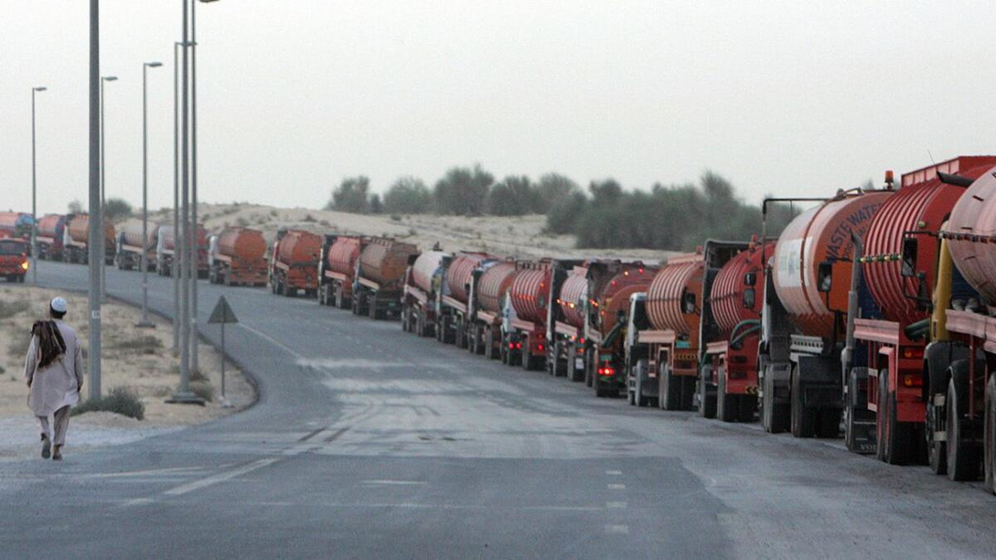
I haven’t head that but I just saw a youtube doc by The B1M about the opposite problem. Dubai has seen an incredible amount of growth in the last 20+ years. The problem they’re having is that they have three million people using a sewage system meant for a million.
Sounds like Dubai will have to go through London’s Great Stink of 160 years ago before things will happen. People are the same everywhere, ignoring a problem until it bites them on the butt.
If there is inadequate rainfall, the lakes do not fill. They monitor the water levels, so it is not a sudden big surprise, and then they plan cuts if necessary.
If you (as an individual, or neighbourhood, or business) do not have enough potable water, you will have to pay for some to be trucked in (from a privately owned well or some other source).
If it starts happening every year due to climate change, that is when the city needs to think about desalination plants:
It’s not just a problem for India. I heard on NPR this morning that Lagos, the second largest city in Africa also has out grown it’s potable water infrastructure. Here’s what Google AI says about it. “Lagos, Nigeria faces a severe water crisis driven by rapid population growth, inadequate public infrastructure, and environmental contamination. An estimated 90% of the city’s 24 million residents lack access to reliable piped water. Millions are forced to rely on expensive private water vendors, unsafe boreholes, and contaminated wells.”
Yup, QFT. This is what I do at work very day. I manage about $40-50 million of water and sewer projects every year.
The metropolitan area I work in has an extensive water and sewer network, typical of a major U.S. city. But like other older cities, the infrastructure is also pretty old, with a typical utility age of 50-100 years old or more.
This is right about the expected lifespan of the existing cast iron water mains and clay tile sewers. I have spent the last 20+ years of my career replacing this aging infrastructure with modern cement-lined ductile iron pipe for water mains and PVC or concrete pipe for sewers along with cured-in-place-pipe (CIPP) lining to rehabilitate sewers without needing to dig up the street.
Along with random other projects involving upgrades/repairs to our dams, water treatment plants, and wastewater treatment plants.
It’s enough work for many lifetimes—certainly mine.
My son has followed in my footsteps as well—although he works for a consultant engineering firm instead of a public utility like me. When he was trying to decide on an engineering major in college a few years ago, I told him that “civil/environmental engineering may not be glamorous, but you’ll never be out of work.”
And while the pipes you’re putting in last longer than the older ones, they won’t have an infinite lifespan, either. Probably before you can finish installing all of them, some of them will need replacing, too, and almost certainly, before you finish installing, there will be some even better technologies available.
A city is not something that can be just built once and then be done. It requires constant maintenance.
The pipelines I am putting in are expected to last at least 50 years and hopefully 100 years.
They will need replacement too in due course, just not by me.
It’s a funny thought sometimes looking at record plans from a century ago (that were all scanned into a database about 30 years ago*) and realizing that future engineers will be looking at my record plans a century from now.
They’ll probably say something like, “What the hell were they thinking back then?” and “Why on earth did they think this layout make sense?!” Just like I do sometimes.
*We are actually on our third database for record drawings in the 20 years I’ve been at my utility. First a system just called “EDMS (Electronic Document Management System), then an Oracle database, and now OpenText.
As I said in my postscript, we copy all of the records into a new database every 10 years or so.
First they were all stored on site with remote backups. Now everything is on site, at a remote backup site in a different state, and in the cloud.
What I think is short-sighted is getting rid of most of the hard-copy original record plans. But for record plans created today, there is no hard copy original. Everything is electronic.
P.S. Our records plans aren’t just set and forget, either. They are consulted constantly, every time there is a Call Before You Dig (CBYD) request and other utilities or the owner of the road wants to know where exactly our infrastructure is. Or when we are looking to make system improvements, or there is a new service connection, etc. etc.
And as for moving the information periodically to new databases, that’s a good idea, though at some point (perhaps multiple points), there’s going to be a penny-pincher who questions the utility of doing so.
Actual paper is a good idea for old records because sometimes the scans from thirty years ago weren’t so great.
For modern record plans, though, since they are created electronically from their inception, there is no quality issue. The resolution is essentially perfect. So there is really no advantage to paper and as long as you have robust backups, you won’t ever lose the information.
I was recently(ish) in Mexico City and asked about this. And while not doing anything is very expensive actually doing something is nigh on impossible in terms of cost and effort. It’s an intractable problem for them. It would be a colossal undertaking, monstrously to the point of absurdly expensive and, even if tried, would likely take decades to make a meaningful change.
The city has been very aware of this problem for a long time and still seems to not know where to even begin.
ETA: I was told one major problem is the existing infrastructure is old and falling apart which means loads and loads of leaks in the pipes. This is why visitors are advised to not drink the tap water. Too many possibilities for unprocessed water to get in the pipes and contaminate the clean water. This also means a scary amount of water is just lost
New York City’s water system, similar to a lot of other cities, only provides enough pressure to supply water to buildings a handful of stories high. Since New York has so many tall buildings, they have their own pumps and water towers to supply higher floors. That does require some extra capital investment, but I suspect you’d see something similar in India to ride out the dry period.
True, but there’s additional costs that aren’t necessarily obvious or a given. In the US pretty much all of our drinking water system is also our firefighting system. It doesn’t have to be that way, any more than our sewage systems also being our stormwater systems. Cities with those combined sewers have a lot of trouble dealing with storms causing sewage overflows. If a remote location needs drinking water or firefighting water, then the only choice is the most expensive one.
I’m reminded of a project to extend city water to a small airport on the edge of town (not even in the town) because the fire marshal declared that the airport’s firefighting abilities were inadequate. The city embarked on a $10-14 million water line project even though the fire marshal conceded that a tank and pump would do the job for just a few hundred thousand dollars. The powers that be pitched the water main as a means to grow the (low-density, low-value, suburban) commercial base of the city along the road to the airport, none of which has materialized in the 10 years since.
Even if such development did occur, it’s highly doubtful that enough additional taxes and fees would come in to cover the costs of that water main. Even if there was $50 million in new development, only a tiny fraction of that is recaptured to pay for that water main, let alone the additional roads, sewers, police, snow plowing, maintenance, and other infrastructure that development would demand. I don’t want to stray to much farther off-topic, the point is just that infrastructure can be a money suck that’s hidden by the abstraction of taxes and indirect benefits.
By simple physics, you see that this is by necessity. The typical water pressure supplied by a utility is 50-60 psi. Anything higher than 80 psi risks damaging typical internal building plumbing and appliances.
Since an additional 100 ft of water elevation equates to 43.3 psi, it’s apparent that any tall building requires pressure boosters. If the water utility supplied enough pressure for the higher floors, it would blow out everyone’s pipes and appliances at lower elevations.
(My utility has a section of our distribution area that is at a higher elevation than the rest of our system because of topography (i.e. the residents live on a hill). We have to employ pressure boosters and pressure reducing valves to maintain them at a higher pressure than the rest of our system.)
I have no idea what water towers and pressure boosters have to do with “riding out the dry period”. Water towers maintain system pressure to reduce wear on pressure booster pumps so they’re not constantly cycling. They aren’t the same thing as a reservoir.
Yup, we spend a lot of time and effort maintaining adequate flow to fire hydrants and fire services to buildings. It is a secondary consideration behind domestic service (i.e. potable drinking water) though.
Indeed. My utility is spending billions of dollars to separate our combined sewers and eliminate combined sewer overflows (CSOs). This effort is why I was originally hired.