There are also a lot of faked knock-offs of name brand products in these stores. Buyer beware.
I was in a supermarket a couple of days ago and I noticed they were having a “buy one, get one free” sale on avocados. The price on them was $2.99. The normal price for avocados in this area is around $1.50.
Yeah, but you would be getting those high-falutin’ three-buck-a-piece avocados instead the ordinary buck-and-a-half-a-piece variety.

Derleth mentioned that “organic” has a legal definition. Does this definition guarantee that a cucumber labeled “organic” will “cycle resources, promote ecological balance, and conserve biodiversity” any better than the half-price cucumber on the next rack? Organic products may restrict the use of certain pesticides and fertilizers, but where is the evidence that the substitute pesticides and fertilizers are more responsible? “In general, organic foods are also usually not processed using irradiation, industrial solvents, or synthetic food additives.” That sentence is meaningless because 1) in general and usually are added to make the claim unmeasurable and unenforceable, and 2) irradiation, industrial, solvents, synthetic, and additive are just scary-sounding words that you have not proven to be less “responsible”.
Your post is filled with many of the same weasel-words that have been pointed out as misleading throughout the thread. I’m not certain whether organic methods are more responsible or not, but your post can be paraphrased as “Organic foods may-or-may-not avoid words that some customers don’t like to see on food packaging. How can that not be construed as more responsible?”
Ok then how about this?
http://blogs.usda.gov/2012/03/22/organic-101-what-the-usda-organic-label-means/
The full regulations are lengthy, but that still pretty much sums up what I said earlier.
Your cite is talking about the phrase “naturally flavored”. Consumer Reports, in talking about the label “natural” in general, says “the ‘natural’ labels offer no clear meaning and are misleading consumers” and “the inconsistent labels are not illegal … because the FDA has ‘nothing on the books’ to give a clear definition of what ‘natural’ means.” (cite)
The FDA itself says “From a food science perspective, it is difficult to define a food product that is ‘natural’ because the food has probably been processed and is no longer the product of the earth. That said, FDA has not developed a definition for use of the term natural or its derivatives.” (cite)
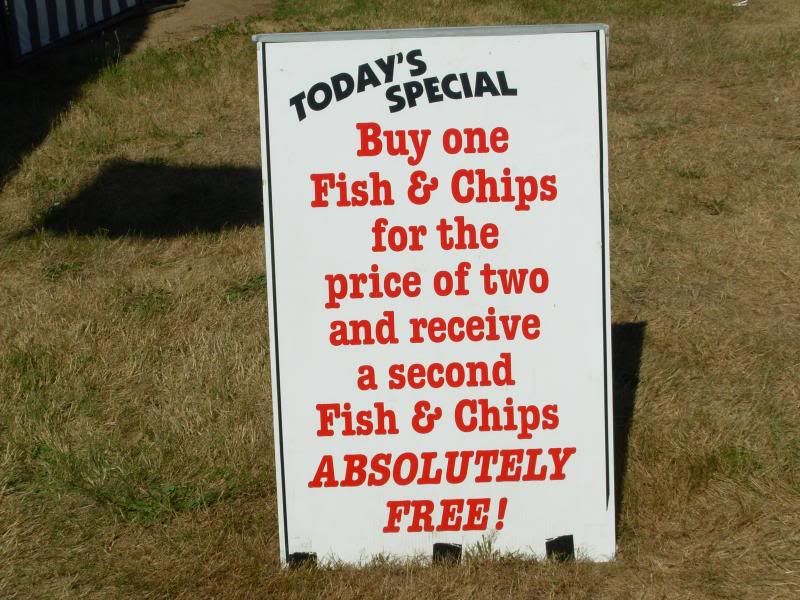
I snapped this photo a few years ago: One for the price of two. Second one is free!.
And if you can’t even afford to bribe the researchers for one study, you can say “Contains a clinically-studied ingredient”. I’ve seen that on a cold snake-oil.
And while there is definitely a market for products which treat animals, the environment, etc. better, that market is poorly served because too many people don’t know what the words mean. Often, the products bearing the magic words are even worse than the standard ones. I know of a couple of examples for chickens: One, I’ve seen eggs that advertise that the chickens are fed a 100% vegetarian diet, but that’s a terrible diet for a chicken. Buy the ones that don’t say that, and there’s at least a chance that the hens are allowed to scratch for bugs. Another is “cage-free”, which means that instead of putting each chicken in a cage that’s too small for it, you put all of the same number of chickens in the exact same space but without bars between them, so now they’re not only cramped, but they’re pecking each other to death, too.
So many assertions, so few facts.
The way they package them now certainly helps give the illusion of bulk, which is what matters.
The problem is that it’s all being sold on lies.
They claim that GMOs are bad. Who? The people who profit from selling Non-GMO foods. Never mind that we know GMOs are not bad. They say they are, and that’s what matters. It’s lying.
They claim that “Organic” produce is better. Who? The people who sell “Organic” product. Never mind that it isn’t better. They say it is, and that’s what matters. It’s lying.
It isn’t technically fraud, because fraud has a legal definition, but it’s still profiting from lying.
As this article points out, conventional farming is about 25% more productive than organic farming. In other words, it takes more land and more resources to produce organic food. This is supposed to be good for the environment?
Also, organic food is grown with pesticides. A LOT of pesticides. Just different ones. According to Scientific American, organic pesticides are no better and may be worse for the environment than conventional pesticides.
Personally, I buy organic food only when there is no alternative. If I have a choice, I buy non-organic food, because I care more about the planet than I do about my feelings of smugness. The choice to buy organic food is only available to first world countries where people are rich enough to pay the premium and uncaring enough not to worry about the global consequences of their choice.
Derleth, where are your facts showing “it’s all being sold on lies”?
Regarding GMOs, it’s entirely legitimate to not want GMO food simply because you do not want to support companies like Monsanto, or don’t like the idea of one or a few companies holding the keys to food production through things like terminator seeds, lawsuits, corporate lobbying, and engineering crops to be resistant specifically to your own patented herbicide. It’s no different than saying you want free-range grass-fed beef because you believe conventionally raising livestock is animal cruelty, or that you don’t want shoes made in a Chinese sweatshop, even if the end product is the same as one made in Seattle. Like I said before, that doesn’t mean it’s perfect, and may be far from it, but I would argue it’s still an improvement over the status quo.
As for markn+'s comments, I have little doubt that traditional farming is 25% or even more productive than organic, at least in the short term. The question isn’t dependent only on yearly yields however. You must also look longer term at things like topsoil loss, risks of insect or fungal infestations to monocultural crops, and poisoning of aquifers and soils from fertilizer and pesticide contamination. Also consider that the most common chemical fertilizers and pesticides are petrochemicals, which have farther-reaching impacts from things like oil well drilling and fracking, military protectionism, tanker and pipeline spills, etc. Those are all externalized costs, as is the growing problem of antibiotic-resistant bacteria in livestock.
No, it’s not, because not all Monsanto products are GMO, and not all GMO products are Monsanto. Ask for what you actually want, not for something vaguely related to what you actually want. If you want to avoid supporting Monsanto, then push for Monsanto-free labeling.
Saying some food is “Safe” or “Unsafe” as a blanket assessment is pointless. People are allergic to different things, some foods are only safe if cooked (beans are notorious for this), and some foods have unsafe portions (rhubarb, for example), so a blanket assessment is meaningless. However, I daresay that GMOs are actually studied more than cross-bred foods, where genes are mixed randomly and the result is assumed to be safe.
So the people screeching about how GMO foods are evil and frankenfoods and so on are being dishonest. They are lying. They might not know they’re lying, but they are, and it’s hurting our ability to deliver foods such as golden rice, which could do a world of good if anti-GMO zealots weren’t standing in the way by literally destroying fields.
In short, anti-GMO zealots want to be morally superior more than they want poor people to get sufficient vitamin A.
And let’s not forget the “might maybes.” This medication (never ever call it a drug) might maybe make you feel better. This food might maybe be better for your pet. And my favorite “Abortion might maybe make people homosexual.”
Might maybe don’t mean shit.
Further, a little research will show that an awful lot of the horrible things attributed to Monsanto aren’t actually being done by them.
… the Gummi Bears that are sitting on my desk…
Fat free, gluten free. Still bad for you.
As noted, check portion sizes. That’s where they really screw with your head.
Anything that says “New” in relationship to packaging is highly likely to mean “less product inside.”
“Clinically recommended”.
Unless you name the research organizations in question and the relevant published papers, pro and con, what it really means is “we gave a guy a white lab coat, and he recommended this product”.
Another one is calorie count or percent of recommended daily intake of some ingredient. On a 500-ml bottle it might say “per 100 ml”. On a bag of potato chips it might say “per two average chips” or something. 
wow that was the first question to cecil I ever read on the old aol sd site … it was "if 4 out of 5 dentist suggest trident gun what does the fifth recommend "
the answer of course was "don’t chew gum "
not really its just that some companies make deals to dollar/discount stores to make specific packs for then so they aren’t going to the sell off auctions and buying the full product for less
Like say you see glad sandwich bags at big lots in a bag of 15 for a dollar look at the bottom you’ll see “manufactured by big lots inc under license from glad llc”
like coke tried making a deal where they sold 10 oz bottles for 99c from coke its self instead of the 20 ounce bottles they’d get from a jobber
but people noticed the difference and they began stocking the 20 oz bottles again