As I said, many civilian factories converted to producing stuff needed for the war, at the behest of the War Production Board. The Wikipedia article on that group says, “Factories that made silk ribbons now produced parachutes, automobile factories built tanks, typewriter companies converted to rifles, undergarment manufacturers sewed mosquito netting, and a rollercoaster manufacturer converted to the production of bomber repair platforms.”
Corning makes both cookware and fiber optic cable.
There is a through line, they are a glass manufacturer and they make other glass products, such as lab equipment and LCD TV screens - but the products are extremely disparate.
Corning spun off the division that made cookware and dishes. It’s now a division of Anchor Hocking, after previously being called World Kitchen.
There’s a great museum of various glass works in Corning, NY. One section is on technical and scientific uses, like making very accurate, very large mirrors for telescopes.
Speaking of General Motors, GM once owned Frigidaire. I’ve seen old 1960s era fridges with the GM logo on them.
And along the same lines, International Harvester, the company best known for trucks and farm equipment, also used to make refrigerators.
Toyota, while touched on as a conglomerate, began as an automated loom company. The Toyoda-san, decided to make autos. He imported a Chevrolet as Fords were crude in the 1920s, copied and improved every portion of the car. Today in Nagoya, you can find the loom manufacturing working museum with the original loom and history up to current computer controlled looms. And the automotive museum with all the vehicles thru time. The auto side is also a working classroom for auto engineering students; forging, machining and stamping.
Corning famously made the enormous Pyrex mirror for the 200-inch Hale telescope at the Palomar Observatory. But that was a massive custom project – I don’t know if they routinely make telescope mirrors.
George Hale himself never lived to see the telescope completed in 1949. But there’s an interesting story that whoever was the chief astronomer at the time was the first to look into the enormous telescope. The story goes that after he did so, he climbed down and without a word went quietly to his office. What he had seen was a blurry mess. But it turned out that this was because the gigantic mirror had not yet stabilized to the temperature of the room. The Hale telescope was in fact a fantastic instrument and a credit to the ingenuity of Corning engineers.
Probably not anymore. Large (as in 8-meter diameter) mirrors are usually made at the University of Arizona where they have a spinning oven. The spinning gives the mirror a rough parabolic shape, which reduces the amount of grinding to get the mirror to its correct figure.
Rolls Royce started out making doorbells and dynamos.
In 1961, Ford bought Philco to compete with GM’s appliance division. So they both made fridges for a little while.
And TV sets! I remember hauling the old Philco back to my bedroom to watch anything other than what my dad wanted to watch.
Come to think of it, I’m not sure what happened to that TV. It seems like it just disappeared.
Speaking of TVs, when I was a kid and we got our first TV, it was a Dumont. Dumont made expensive high-quality TVs and my parents would have been too cheap to buy one themselves, but this was an anniversary present. Dumont also operated a tech company, Dumont Labs, that made television components like CRT tubes.
But they’re probably most famous for the Dumont television network, which I think became defunct around 1955. And in particular, for the invention of the Dumont Elecronicam, a combined television and film camera that allowed them to preserve all 39 episodes of The Honeymooners on high quality film while it was broadcast live. The Electronicam was obsolesced just a few years later by the introduction of the first commercial videotape recorder in 1956, but the recordings it produced of The Honeymooners was a treasure in television history.
McDonald’s is a landlord that requires its tenants to sell hamburgers.
Meanwhile, a lot of beer and liquor companies diversified during prohibition. Pabst, for example, now also sells cheese.
https://www.atlasobscura.com/articles/what-did-pabst-do-during-prohibition
Xiaomi makes smartphones and other tech products, but also just about everything else they can think of - including slippers, aquariums, novelty kitchen items and suitcases.
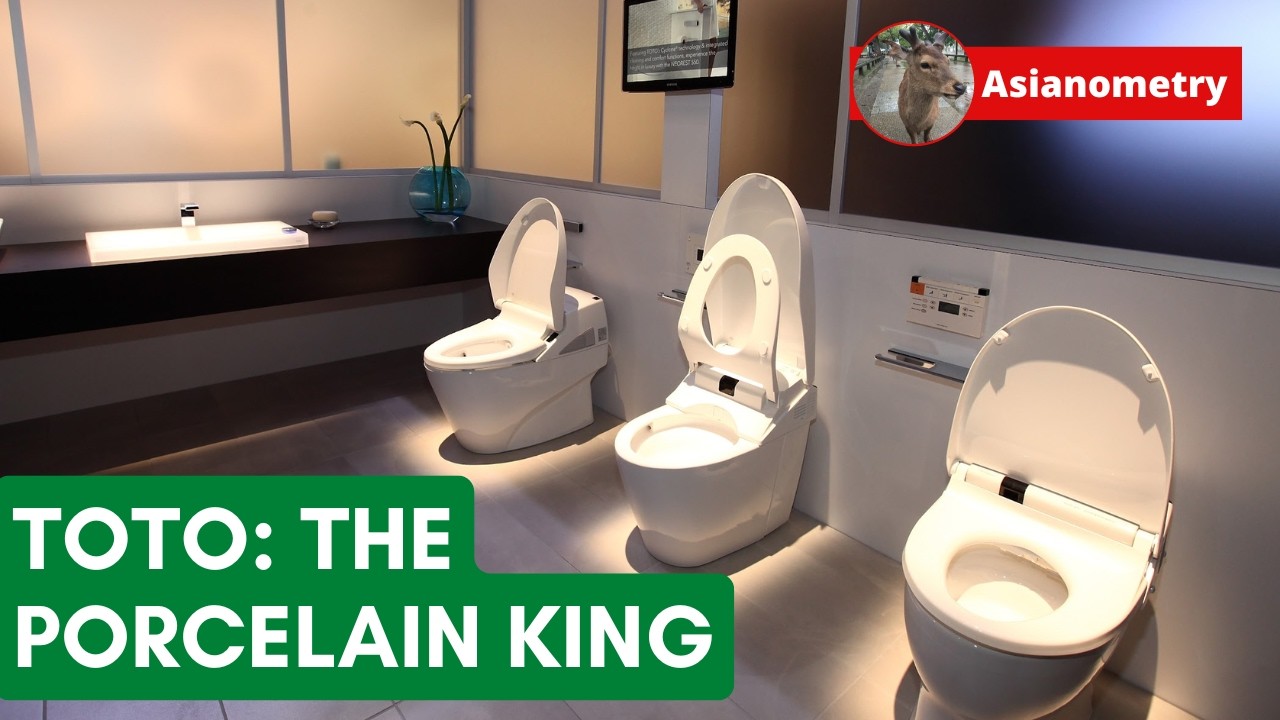
Toto is best known to consumers as a high end Japanese toilet brand that pioneered the bidet/washlet toilet but they’re also a component supplier of electrostatic chucks for the semi-conductor industry.
According to their wiki:
I n 2026, Financial Times reported that TOTO was the world’s second-largest producer of electrostatic chucks used in NAND memory chip manufacturing, and that the division accounted for more than half of the company’s operating profit.
Learned this from the excellent Asionometry channel
Presumably, the rubber is the common factor.
I recall their Thomas’ Register listing (condensing) " …space based weapons systems… home canning products"
I guess it’s not as disparate as most of the other examples in this thread since they all use gasoline engines, but I always thought it was interesting that Honda makes cars, motorcycles, and also power equipment like lawnmowers and generators.
A friend went to business school at the University of Michigan and one professor had a theory that companies that concentrate on their “core competency” find more success. One example was Honda, whose core competency was said to be engines, rather than automobiles.
That’s just asking for circular definitions, though, because you could just as well say that Bell’s core competency is glass (glass jars and glass instruments). Or likewise for most of the other companies in this thread.
How can you tell if something is a “core competency”? Well, is the company successful? Then it must be a core competency.
On another note, I can’t remember the specific company, but I’ve heard that one of the foreign automakers also owns a bunch of soybean farms in the US, just so they’d have something to load onto the cargo ships that would otherwise be going back empty.