Mary Eaton (fl. 1823-1849) The Cook and Housekeeper’s Complete and Universal Dictionary; Including a System of Modern Cookery, in all Its Various Branches, Adapted to the Use of Private Families.
“SICK ROOMS. To purify sick rooms from noxious vapours, exhalations, and all kinds of infected air, put half an ounce of finely pulverized black oxide of manganese into a saucer, and pour upon it nearly an ounce of muriatic acid. Place the saucer on the floor of the infected apartment, leave it and shut the door, and the contagion will be completely destroyed. Muriatic acid with red oxide of lead will have a similar effect. Sulphur burnt for the same purpose, has the power of overcoming the effects of noxious vapours”
Well, burning sulfur will produce sulfur dioxide gas, which is a pretty noxious vapor in its own right, although it will have a strong smell different from (though scarcely more pleasant than) the stench of decay that might already be there.
Muriatic acid is just hydrochloric acid (HCl). I am not sure, but possibly manganese oxide is a strong enough oxidizing agent that it will cause chlorine gas to be given off. This is another noxious vapor (used as a poison war gas in WWI), but again, one smelling different from, and so able to somewhat mask, the stench of decay and disease. It is the smell of bleach, which we still associate with cleanliness.
In short, none of this seems like a good idea. It also seems to date back to before the germ theory of disease, when many diseases were, quite erroneously, thought to be caused by “bad air”.
According to a quick google search, the reaction will produce manganese(II) chloride, water, and chlorine. Chlorine’s a common disinfectant but it’s also poisonous. I guess you want to hit the sweet spot where you kill all the germs in the room but not everyone living in the house.
Note that the directions say to leave so I guess the theory is the fumes will kill everything and then clear out before you go in.
I would not try it myself.
Amusingly, mixing manganese dioxide and hydrochloric acid is also the method of synthesizing chlorine gas in the wonderful Golden Book of Chemistry Experiments (see page 34). Don’t breathe the gas, kids!
This was the way to make bleach back in the days when Chlor-alkali processes (used to make caustic soda and chlorine by salt water electrolysis) was not mainstream.
If done with the right amount of muriatic acid concentration, it was safe.
Sulfur dioxide is also a mild bleaching agent and was used for similar purposes. Where food was stored in warehouse - it acted as a fumigant to get rid of pests.
One can argue if SO2 was better or the modern insecticides / pesticides used for protecting grains/foods are better - keep in mind the damage to birds and humans. My personal opinion is So2 is a fine fumigant for small purposes.
Sure, if people do not have to breathe it, but in concentrations high enough to kill significant numbers of germs in a sick room, either chlorine or sulfur dioxide are going to kill the humans there first.
But the suggestions in the OP are not about killing germs, as I said. No-one even knew about germs then. The point was to make a clean-seeming bad smell to mask, and so seem to overpower, the dirty bad smells that they thought actually caused the diseases. In fact, the gas was almost certainly doing more harm than good, even if its concentration never got high enough to cause any very serious damage to the patients.
People knew about germs in the 17th century. There was a prolonged debate over the next couple of hundred years over to what degree germs caused diseases. But it was hardly an unknown idea in the 19th century when the book mentioned by the OP was written.
OK: they knew there were germs, or microbes, in the sense of little living things that you could only see through a microscope. In the early 19th century, when the quoted work was published, they did not know, and, for the most part, did not believe, that diseases were caused by such things, or that diseases could be cured or prevented by killing them. As the author of that work would have conceived it, the primary purpose of the chemical operations described in the OP was not to kill germs (which it would not do effectively anyway), but to combat the bad, putrid smell or “miasma” in the air, which was commonly (but erroneously) thought to be the cause of many diseases.
And as I wrote, I disagree. There were plenty of people in the early 19th century who saw germs as a probable cause for diseases. Acceptance wasn’t universal but the miasma theory was clearly in decline. (And the fermentation and zymotic theories never really got off the ground.)
Do you also disagree that chlorine gas or sulfur dioxide in concentrations low enough to be relatively harmless to humans would be quite useless against infective germs? Are you saying that people at that time thought that low concentrations of chlorine gas or of sulfur dioxide were effective ways of killing infective germs?
The issue is not whether or not some people at the relevant time believed diseases were caused by microbes. No doubt some scientists and medical men did (though, heaven knows, Semmelweis, who wasn’t even born until 1818, and died in 1865, had no luck during his lifetime in even persuading doctors to wash their hands after they had been dissecting corpses). The germ theory was not generally accepted by scientists and doctors, let alone the general public, until the work of Pasteur became widely known, later in the century. The issue here is what Ms Mary Eaton, in her book of advice on housekeeping, written some time before the mid-century, thought was the point of by pouring muriatic acid on manganese oxide, or burning some sulfur, in a sickroom. It is most unlikely that she, or her original readers, thought that the point was to kill microbial germs. I doubt whether most of them had even heard of such things.
By today’s standards - NO - if I were to demonstrate this - I’d start and end with don’t do this at home …
Also - to be fair, a lot depends on the concentration of the muriatic acid and the temperature.
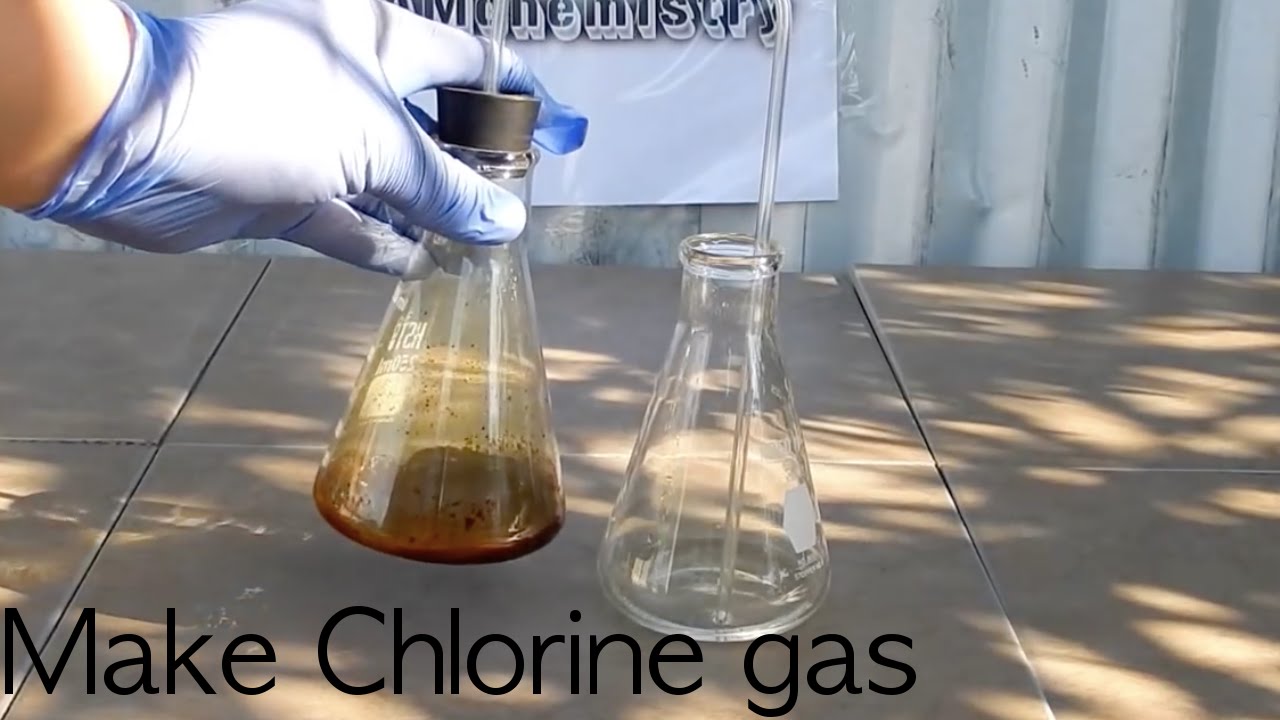
Here’s a youtube video (its permanganate instead of MnO2 - but essentially the same).
Quote " Thomas Watson, Professor of Medicine at King’s College Hospital, London, wrote in 1842: “Wherever puerperal fever is rife, or when a practitioner has attended any one instance of it, he should use most diligent ablution.” Watson recommended handwashing with chlorine solution and changes of clothing for obstetric attendants "to prevent the practitioner becoming a vehicle of contagion and death between one patient and another."
Quote - “First used as a germicide to prevent the spread of “child bed fever” in the maternity wards of Vienna General Hospital in Austria in 1847, chlorine has been one of society’s most potent weapons …”
The drugstore. There was a section in The Devil’s Gentleman where Harold Schechter talked about all the poisons that were commonly available over the counter up until the 1920s.