My motivation is almost purely the social aspect. I can’t imagine “striving to lift this weight” as a positive thing. That sounds like torture to me.
But the endorphin rush!
Then again, I don’t understand people who get in a car and see how fast they can drive in a straight line.
As you already know, different things work for different people.
Yes, personally, I found it all a lot more interesting once I took charge of my own plan, got educated, and could control my own sessions to be tuned to my preferences. I get bored with high reps - pretty much anything higher than 10 - and, yeah, if you’re lifting heavier with fewer reps then a mix of pain and push and all the blood leaving the brain to go hang out with the muscles does tend to make it not so monotonous.
As I understand it, I think we’re describing, Transient Hypofrontality.
But, as I understand it, the ability to max out - e.g. where you induce tunnel vision, go red, veins bulge, etc. - is a factor of muscle volume (the ratio between brain and muscle is higher so when the muscles recruit the juice…), fast versus slow twitch fiber differences, vasodilation factors, etc. generally favors men. Research seems to show that women may need to do about 2.7x the volume as men to hit the same level of fatigue, and then they’ll still recover faster.
https://journals.physiology.org/doi/full/10.1152/japplphysiol.01342.2003
Generally, it’s going to take a lot longer for women to get to hypofrontality and, since there’s a muscle size component, it may be more difficult for them to get to that point.
This lady did, I’m sure:

For most men, it’s likely that they start lifting as teens and blow through the boring phase and into hypofrontality within a few weeks, just on the desire to attract chicks.
For someone starting later in their life and/or a female, you might need other motivations to get through the boring phase. And I don’t know that I could say, confidently, that everyone will make it through or that, having done so, they’ll like the experience.
A lot of guys talk about “the pump” like it’s a euphoric experience. Personally, I just feel it as an annoying tightness that makes me less dextrous.
Peeps is different, yo.
Very interesting!
From your cite:
I completely agree. But didn’t realize I was inducing a medical condition when I get hyped for a set!
That’s a great point, and matches my observations. It’s interesting to see how a person approaches working out when they first start to weight train in their middle age. It’s a lot more practical, and perhaps a little less primal.
It feels good to me to flex a pumped muscle (well, except quads). It’s like scratching an itch.
It also depends from what the backdrop is. I started lifting as part of my exercise from early on but my focus was never big on aesthetics. There was never a time I was even close to being of the bro group. Or comfortable in the gym with bros. Maybe a bit more thinking of aesthetics than I would have admitted to myself (too vain to admit to vanity!) but my story to myself was always health related and was always more cardio focused than lifting focused. So younger at start but still more practical.
On both sides I hear about similar things … this hypofrontality thing … the runner’s high … never happen to me. I enjoy both. I enjoy that I can do both fairly well. That’s it. No rush of endorphins for me.
I don’t know that I’d call it euphoric. I’ll just admit that it’s not monotonous when you’re getting crushed and your brain isn’t tracking time, just breaths and tension.
Thank you. That’s all I was getting at.
Just a different perspective for those in the thread who have said it is boring
From what I’ve heard about it, Olympic Weightlifting focuses a lot on repeating movements in order to build up the muscle memory of how to do that particular sub-part of a particular lift.
While it does include elements on progressive overload, it also includes a fair amount of cardio.
If you’re ever thinking to dip your toes in, you might check for a class near you.
I appreciate the input but not for me. I enjoy my long runs, my biking 10 miles to and from work weather and enough daylight permitting, my stair climbing, my erg, my elliptical, my jump rope … 
Going to classes for exercise is not my jam, doesn’t seem efficient, and focusing on one form of resistance exercise would start to get boring for me.
I am pretty much like you. I don’t get any intrinsic benefits or pleasure out of working out, AAMOF, I actively dislike it.
It is only my mind/intellect and consciousness and the desire to live a good “old age” portion in my life that makes me work out. I work out because I am a responsible adult.
Gift link making a very good point:
Those of us who nerd out on fitness stuff really do often end up missing the forest for the trees.
What we do know is that people are more likely to stick with an exercise program that is tailored to their preferences and lifestyle. When doctors are advising patients about exercise, they should be as open as possible to the variety of ways people might want to get moving. Research should focus on which approaches are best to lead to long-term, sustained exercise habits — ideally, research with randomized trials. The type of flawed observational research discussed above gets in the way of both of these priorities — it takes research time from studying what matters, and it creates misleading and constraining advice. It doesn’t really matter which exercise people do — they just need to do it
Is that true though? I think most doctors tell patients the best exercise is one they will do consistently, as has been said many times in this thread.
No one argues that good studies are hard to do, and that journalists annd others often draw conclusions from low quality studies far beyond the caveats of the authors.
Yes, people often forget there are many ways to make a sandwich. But no one here has said swimming is bad and tennis better. You can easily fixate on relatively unimportant details. The more you know, the more likely this may be. But it is also true that there are effective ways to build strength, endurance, power and flexibility. And things people do instead that are less efficient.
I see your point. But also:
“Poets say science takes away from the beauty of the stars - mere globs of gas atoms. I too can see the stars on a desert night, and feel them. But do I see less or more? The vastness of the heavens stretches my imagination - stuck on this carousel my little eye can catch one - million - year - old light. A vast pattern - of which I am a part… What is the pattern, or the meaning, or the why? It does not do harm to the mystery to know a little about it. For far more marvelous is the truth than any artists of the past imagined it. Why do the poets of the present not speak of it? What men are poets who can speak of Jupiter if he were a man, but if he is an immense spinning sphere of methane and ammonia must be silent?” - Richard Feynman
OK, I have to ask, what kind of socializing is happening beyond “May I work in between your sets?” I suppose I politely greet people I recognize or know, but if I wanted to hang out with them, at the gym people are pretty busy lifting weights and stuff.
Some of the newer gyms are clubs with areas to drink smoothies and such. But I agree, at my more traditional gyms everyone wears headphones.
For some it is the social (and otherwise) contract with their trainer. For others the running club, biking group, strength training club …
And yes I think most docs are thrilled if people are doing anything… it is more the media focus on best thing to do.
But you’re right. Here at least we are in agreement that the hugest benefit comes from the step of nothing to something, and that sticking with something is the most important thing, even if it doesn’t include resistance training at all.
I don’t go to a gym. I hire a personal trainer whom i see over Google Meet, and work out in my basement. She’s personable, and we chat about her life and mine. And I’ve effectively made a promise to her to show up to each session. If i don’t, I’m breaking a social contract. I find this far more motivating than anything about the exercise itself.
Many people sign up for classes (yoga, aerobics) for much the same reason.
I mean, yes, it’s nice to have someone who corrects my form. But that’s much less important than that I’m not likely to show up because of the appointment.
Also, some of you might want to pop over to
And check it out
Titled “how best to get myself back to the gym”
More of a nerding out exercise question.
Somewhere in one of these threads, specific to discussion about prevention of osteoporosis or even treatment of mild to moderate cases of, I shared guidelines that specifically advised jumping and other impact loading exercises as safe and effective, to some incredulity. (Still it’s true, albeit with health provider guidance and building gradually, starting with just a few foot stomps and heel drops for some.)
Since then I’ve been learning that my understanding of “plyometrics” has not been precisely accurate.
I’ve used it as synonymous with “explosive”/“ballistic” exercise but it isn’t. Best illustration of my mixing it up is that I’ve thought of box jumps (as it sounds, jumping up onto a box and then stepping back down, repeat, can be done holding a light weight, but with caution of course) as plyometric; they aren’t. They are explosive and ballistic, which is important, but not plyometric. Depth jumps are, OTOH, plyometric. Those are with the dropping off the box and as much as possible bouncing right back up with minimal ground contact time. The key for being plyometric is not the rapid force development (my previous understanding) but the stretch shortening cycle: the brief eccentric phase storing some elastic energy in the tendons and immediately releasing it in a concentric phase. Apparently nothing does the job for tendon stiffness, reactive strength, and bone loading, all major issues with aging, as well as plyometrics. Other plyometric exercises include forward and lateral bounds, “reactive pushups”, and even jumping rope, for example.
So fitness nerds: how much and how do you program in plyometrics and/or ballistics, if at all?
Please note for those who don’t already do any of this: I do think it could be easy to quickly do too much too fast of these exercises. As @Dr_Paprika has often discussed in this thread, connective tissue strength takes time to build and a tendon injury can take a long time to heal from. Err on the slow progress side!
I use these terms slightly differently, but agree jumping into a box is not plyometric. Explosive exercises, to me, generate force using high acceleration with bodyweight, or with under 30% of maximal weights. Explosive exercises, often jumps and throws, can be divided into three classes (as proposed by Christian Thibaudeau):
JUMPING EXERCISES - vertical jump, hurdle jumps, lateral jumps, broad jumps, jump lunges, single leg jump, jump onto a box, skipping rope, push-up projections, etc.
PLYOMETRIC EXERCISES - depth jumps (jump from high box and back from ground as quickly as possible) or depth landings (jump from high box landing in sport-specific fashion)
BALLISTIC EXERCISES - barbell jump squats with 20-30% of max, jump lunges with 20-30% of bodyweight, kettle bell squat jumps, medicine ball throws, benching on the Smith machine while throwing light weights upward, various throws.
Though these exercises are good for tendon strength and generating power, I limit them in my programming. Jumps can be done repeatedly; if unaccustomed to them there is a simple progression (links below), and skipping can become more advanced too.
Plyometric jumps are stressful and should be limited. For jumping down from a box I like sets of five, taking time to reset between each jump, for a maximum of 2-3 sets.
For ballistics, I like using the Smith machine to do light throws while benching, and jump squats up to 30% of my maximum (but would recommend 10% for most). Olympic lifting also involves more acceleration than power lifts and I sometimes do those. I tend to use bodyweight for lunges.
Jumping and plyometruc progressions (for rehab after injury or untrained people)
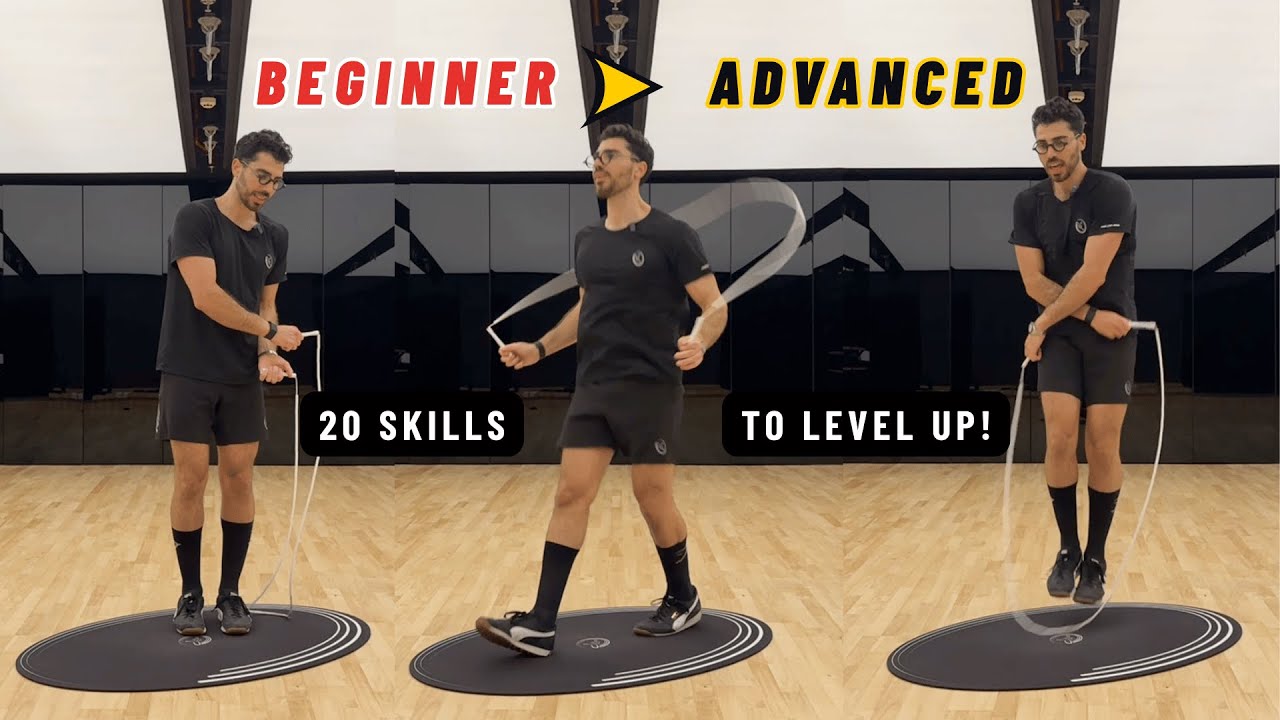
Jump rope progressions - easy to advanced: