Not a gym member. Over the past decade I’ve probably spent more on bike tune ups/flat repairs, and running shoes than new strength equipment. But yes more lifting overhead? 
I think that’s why a lot of people get into it in the first few years. But if you sustain your workouts for more than, say, a decade, you will get to a point where gains in your strength come very slowly, if at all.
At that point, where people are pretty much topped out strength wise, I don’t think they are still motivated by the sort of increases that they used to see when they first got started. Instead, I think the motivation derives more from the feelings the workout produces - whether the pump I cheekily described, the endorphins that come from being finished, or just a sense of wellness and ability when out and about.
It’s nice of you to say that (the other lawyer in my office was born the year I graduated high school). Yes, I’m 48.
I can assure you that I’m already well short of my ideal form.
But, yeah, I get that the body won’t keep up over the years. It doesn’t mean I have to accept it.
In my mind, I’m still making progress, and I always will. I’ll gladly live in denial if it comes to it.
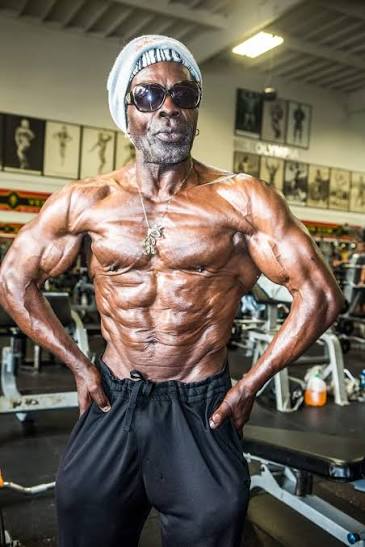
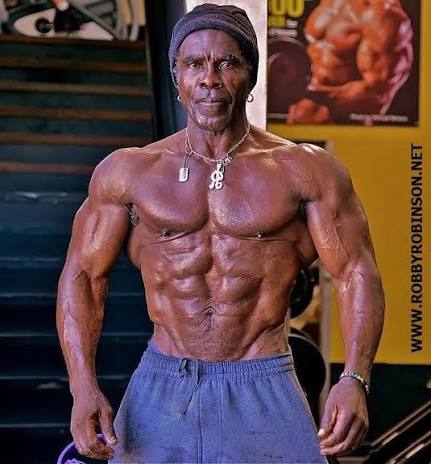
Then again, Robby Robinson is 79 years old. So I’m never going to believe that I have to accept losing my muscles. (Although yes, he’s lost mass since his prime in the 1970s)
You don’t need to do that stuff to retain muscle mass. Lots and lots of studies show that the body just isn’t as fickle as you suggest.
Changing up exercises and workout routines can be great for training your muscles in new and different ways. And it can be enjoyable to learn new skills or try new things.
But it is not the case that a person needs to give up the gym if they enjoy that type of workout. You don’t have to use all manner of supplements or make special accommodations, either. Yes, a person needs to listen to their body and treat it with kindness, but that’s always the case.
Jack Lalane continued working out into his mid 90s. Death was the only thing that stopped him. He’s an example we can all emulate
I take OTC supplements that people of every age take, but I think they help me more at my age.
- Yes, creatine. It helps me with the cellular energy to finish out reps of lifting or miles of running that aren’t so easy at my age.
- Beta-alanine, similar benefit to creatine, but different mechanism.
- HMB. Helps prevent muscle breakdown if I’m forgetting to eat enough or work certain areas.
I was never like a powerlifter or anything, but the things that were manageable at 30 now feel a lot more intense and exhausting. So a modest OTC supplement stack helps with that. It’s mostly about time efficiency and being able to get through a challenging workout without feeling absolutely wrecked.
I would agree. To get that look in practice often involves things like diuretics or worse, although this might be done naturally by manipulating carbohydrates. If you don’t have the energy to climb stairs, what you are doing might not be very healthy.
That said, there is nothing wrong with pursuing a certain look. If it is not an obsession or is not more harmful than healthy, who am I to judge? Many people would benefit from a modest reduction in fat and a modest gain of muscle.
Weightlifting has much lower injury rates than most sports. CrossFit is slightly higher due to its intensity. Most of the problems are avoidable basic safety issues, or thinking only about muscle and not joints, fascia, tendons and ligaments.
I would say there are modest positive benefits to recommended doses of creatine, and eating meat, fish, dairy, nuts, legumes and eggs is a good way to get adequate protein. I try to eat five servings of vegetables each day too, and the importance of fibre should not be overlooked but usually is.
FWIW, I don’t take any supplements. I don’t want any extra stress on my already messed-up kidneys. I’ve never used anything but OTC supplements.
At 65, I am as strong as I have ever been, although not as lean as I was in my mid-50s, when I had a dynamite (if I do say so myself) six-pack. I train with a much younger guy, and he is constantly pushing me to improve.
Hell yeah! Keep it going!
Hell yeah again. My goal is to be like you!
I think that mentality keeps you young. One of the benefits of the gym, in my opinion, is that it encourages you to focus on your future potential, and a belief that you can be better tomorrow is one key to staving off the ravages of old age.
Another FWIW - no supplements but HAD used creatine for bit. Maybe four months. If there was an impact I couldn’t tell.
Also at 66 fairly soon to be 67 I feel I am not far off from as good of condition as I’ve been.
Did a marathon two years ago; within five minutes of my time 26 years earlier. Could have done better if I ran smarter and didn’t try to keep up with my daughter’s pace. Current VO2max running on the Garmin marginally off from then but still allegedly top 5% for age. My current six mile run definitely a bit slower at same RPE than it was then though. Takes about the same time to cycle the ten miles to work with HR in same base to occasionally tempo range. I don’t test 1RM but estimating from how much I lift for five reps I am pretty close to what I maxed at years ago. Not quite though. Can still do the same number ring pull ups, dips, and inverted ring pull ups. Still can’t do a muscle up or a lever. Still need the same amount of support to do a pistol squat. Waist size at its low point on the belt. Been that hole before but never less. Resting heart rate same as it has ever been.
Exercise alone, not in a gym, no younger guy pushing me. I don’t think I’d do well with that honestly.
My own experience to date is that age does not automatically mean decline, at least yet. But I’m not looking to make progress anywhere. I just enjoy the process: fitness is my hobby.
I think you are referring to retention as opposed to why people don’t work out. People who work out tend to be in denial about equipment being an important reason. Just the fact that when new innovations in strength building come out there is always a surge in people who work out. This strongly suggests that equipment is a big factor in why people don’t work out. Adaptive resistance is not new, it has just proven difficult to attain at an affordable price. Many experts in the field see it as the gold standard. An older person has a very hard time starting off with weights, body weight, bands things like that because we fatigue quickly. Adaptive resistance is about the only way a person can do prolonged sets at a very high level of effort. I would think it is very much worth exploring if you really have an interest in bringing new people into strength building or increasing the percentage who work out.
Different people have different motivations. I usually feel crappy after working out. I fell tired and sweaty, both of which i dislike. I guess i envy people who don’t mind getting sweaty, but i find it really uncomfortable and unpleasant.
(And if i saw the guy in your photo on the street, i would be worried about his health, and curious what was wrong with him.)
But that’s my takeaway from this discussion. People are very diverse, and have different goals, different motivations, and different things they enjoy.
Yeah, but you like being able to be out and about and feeling capable.
I alluded to that earlier as a motivating factor.
He’s flexing. He looks more “normal” when standing relaxed.
Yes. I was responding to your comment about that.
Understood that you love your creation. It is something you enjoy. And puzzlegal is exactly correct that
Starting a plan to regularly exercise is a huge step. Including strength training as part of it is a big plus. Persistence with it happens easily when the process itself is enjoyable to that specific person. Or they get ongoing rewards they associate with it - such as hitting their own personal goals and palpable progress, be it strength numbers, function, aesthetics … And a habit once developed can persist even in the absence of frequent rewards.
That all said some people do drop off even after years of the habit when the rewards are less obvious.
I think this is spot on. I guess that the majority of people who persist with an exercise regimen find enjoyment in the activity (even if it comes from the good feelings associated with having finished the workout).
Others, like @puzzlegal , see more of those ongoing rewards - for them, exercise is a miserable chore, but the health and wellness it provides keeps them going.
Here, I’m not so sure. And this dovetails back to your earlier point about people exercising despite declining metrics (such as strength).
I think that if a person perceives that they are not getting frequent regular rewards from working out, they’ll tend to stop. They’ll get bored with the grind, or find new and different hobbies that are rewarding to them.
Now, I also believe that the rewards that people who persist in exercise receive are usually intangible. It’s the ability to move without pain, or do daily tasks without hindrance. Or, again, it’s the good feelings people get during their exercise (the runner’s high, the bodybuilders’ pump), or thereafter (“I’ll sleep good tonight!”) which they find rewarding.
Sometimes, of course, it’s having great health metrics (such as a perfect blood pressure reading), or being able to accomplish certain physical tasks (like a 6 minute mile).
But if a person is solely looking at physical metrics to find rewards from exercise, they may indeed get frustrated, and are at risk at stopping altogether. The metrics will begin to degrade over time; aging is indeed inevitable.
Persistence needs something else, that isn’t on a downswing. I don’t know if an absence of health problems, or a lack of deterioration, is too ephemeral to be considered rewarding.
Maybe it requires a person to recalibrate their standards. If a person can’t run a mile as fast as they once did, maybe a better metric for them is whether they can run a mile without walking. Sure, their mile may have slowed, but the reward may come from knowing that, in their 70s or 80s, they have endurance few can match.
For me, I think of squats - I’ll consider it rewarding if I can still do a nice, deep squat in my 80s, or older should I be so fortunate. It won’t matter too much how heavy it is. The reward comes from the demonstration of ability.
(To be clear, I’m talking about a feeling that the exercise is rewarding, which is to say noticeably beneficial. This is different than feeling motivated, which reflects desire. A person may lose the desire to workout, and still continue out of habit. But if they aren’t seeing ongoing benefits, I don’t think they’ll continue)
Yes. I think this is true the majority of the time. People need to find exercise rewarding for them to continue indefinitely.
That’s still not relaxed. He’s definitely flexing his abs.
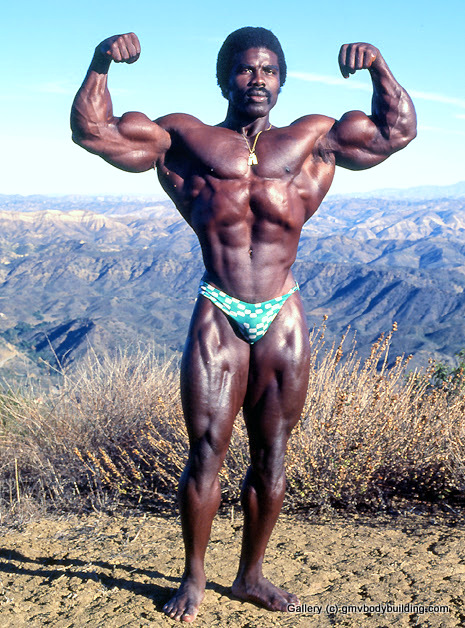
Robby is a legend. Most peaked biceps of his era. I’m sure he did a metric crap-ton of drugs at the time, but he fortunately has been able to avoid some of the health side-effects. His musculature today is better than 95% of men in their 20s.
Goals for me!
He claims otherwise, on account of having sickle cell anemia.
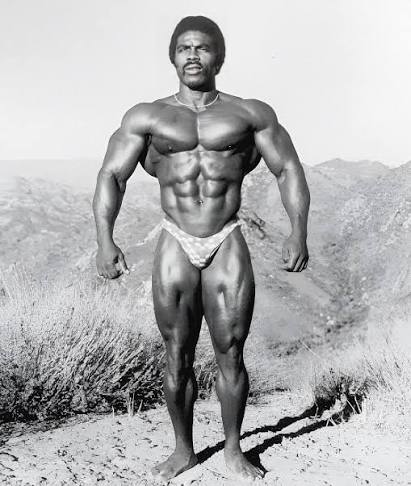
Now, that doesn’t mean I think he was totally natural, but I’m not sure that he ever took mega doses. None of the guys from that era (Robinson was training at Gold’s Gym in the mid 1970s with Arnold Schwarzenegger) really did.
What is undoubtedly true is that Robinson has great genetics, and has been working out consistently for more some 60 years. He’ll also tell you that he has never eaten junk food.
(For those curious - sorry @puzzlegal , I know it’s gross - here he was in the mid 1970s)
And here are those bicep peaks that @beowulff referenced (from the same location, I think, but in color!)
Although you also state:

Of course they are both true to degrees! Habit, inertia, does a lot of … the heavy lifting … on sticking with anything. And I think @Dr_Paprika hits a key point for the strength focused crowd when he shared his perspective:
And I suspect that there is still some competitiveness involved for many, comparing ourselves to our age group peers. Embarrassingly I catch myself doing it. That bit can be as simple as feeling good that you can assist others with their luggage and are looked to do that.
FWIW allow me to share the impetus for having asked the question - my eldest, now 40, whose main fitness activity has been powerlifting with some transition to learning Olympic lifts, was bemoaning how middle aged he’s feeling. Just started a statin. And tweaked his back a bit starting back up lifting after a hiatus even though he felt he was starting off very carefully. Recognizing that his personal best days are probably now behind him (and they were to me some scary big lifts) … I could hear the motivation leaving his sails. I am not too worried that he’ll just stop; lifting is too much part of his identity. But it made me wonder about how many lifters previously focused on hitting new peaks, just do that?
I shower to feel clean. If i don’t brush my teeth, my mouth feels scummy. I get a direct and obvious reward for doing those tasks. I’m pretty sure that’s why i maintain the habit.
I addressed this. There’s a difference between being motivated and finding something rewarding.
So I agree with this.
I’m not motivated to brush my teeth or shower. I do it out of habit. The reason I make it a habit is because it’s rewarding.
Same with working out. Regardless of my motivation level, I do it out of habit, because I find it rewarding
(if you read the original post, you’ll recall that I said that motivation can wane, but may sometimes arise during a workout. Long term lack of motivation, though, could be a sign of physical issues like poor sleep or lack of good nutrition. Clearly, a feeling that the exercise isn’t beneficial anymore would be another obvious reason)
Someone like Robby Robinson, or anyone who looks like that, is going through extremes to maintain that kind of body. It takes solid dedication to a workout and nutrition plans, along with committing a significant amount of time to working out. Few people would be willing to make that kind of commitment to get those results. I’m sure lots of people would like to have a body like that, but only if it was easy to get. That’s especially relevant in a thread like this. Having a super lean and muscular body is not really a realistic goal for most people in this thread. Hypothetically it’s possible, but few people would be willing to make that kind of commitment to working out and eating lean, especially if they are not into lifting weights to begin with. It’s like having a thread about encouraging hiking and showing Everest climbers as the role models. That kind of commitment is not necessary. Regular people should not have that kind of hypermuscular body as their goal. Regular people should be doing basic weightlifting with the goal of improving strength and mitigating muscle loss. Basic and simple exercises with weights can yield large health improvements with relatively little effort.