This is a recurring theme - pilots “fighting” the plane and it’s automation and forgetting about the basics.
For example, over-speed warnings are sounding, yet the engines are at idle and the artificial horizon says level flight… you shouldn’t pitch up to reduce speed.
Sure, there may be an overload of conflicting information but the pilots often do things that go against first principles. Like that Air France co-pilot who was pulling back on the stick in a stall situation.
One of the significant factors is that airplanes spend most of their trip much farther away from each other than are cars, even accounting for speed difference, and cars are mostly unable to avoid each other by using vertical motion. I have heard flying an airplane described as “hours of boredom punctuated by short intervals of stark terror.” It appears that the lion’s share of unintentional lithobraking is about errors in maintenance or design.
Yes, that was the one previously mentioned to which many ghost sighting were attributed. Allegedly Eastern reused parts from the wrecked plane and the ghost of Bob Loft went around Eastern as a result. You would think that the ghosts of the passengers Bob Loft was responsible for killing would be likelier to haunt Eastern.
“Hurryupitis” is a factor in so many accidents, this could refer to a dozen or more of them. It’s a very common thing contributing to crashes. The Tenerife disaster was in part caused by hurryupitis; the KLM crew was in a big rush to get back to Amsterdam.
Incidentally, a few days ago I flew on a 737-8. That was nerve wracking, after the incidents it’s had and a new grounding just last year.
This reminds me of the time in 1991 when my son, then 9, and I were flying from San Diego to Denver, where we had a tight connection to Billings, MT. The captain came on the PA to say, “Those of you on the left side of the aircraft will be able to see the awesome Grand Canyon!” Then a minute later, “Ladies and gentlemen, that’s such a spectacular sight, we’re going to turn back so those of you on the right side of the aircraft can see it.” Noooooo!
We were late into Denver, but we ran (not easy for a pregnant woman) and barely made our connecting flight. It seems like an expensive waste of fuel. I wonder if the captain got in trouble for such a foolish maneuver.
NTSB accident data suggests that pilots who are distracted by less essential tasks can lose control of
their aircraft and crash. In light of this pilots are reminded to maintain aircraft control at all times. This may mean a delay in responding to ATC communications and passenger requests, or not responding at all unless positive aircraft control can be maintained throughout. In other words,
Fly the Aircraft First!
Decades ago my dad was a US Navy pilot for a VIP transport aircraft. One day they were flying somewhere when they experienced a minor problem with the plane that managed to distract both him and his copilot. The plane entered a shallow descent, and it was luck that one of the cabin crew happened to be looking over their shoulder and spotted the altimeter unwinding. He said “hey, is that supposed to be doing that?” at which point my dad and his copilot started, you know, piloting the plane again. It wasn’t a “holy shit that was close” thing at that point, but they were well off of their intended altitude, and had it gone on much longer it might have become a major problem.
AIUI, part of cockpit crew operating procedures these days is an explicit declaration/understanding of who is responsible for physical control of the aircraft at any given moment, which is especially critical during in-flight emergencies.
That was my dad’s job in the Air Force. I gather that it was mostly routine, except for one flight bringing Vietnam POWs back to U.S.
I’ve seen two different series in the U.S. that are quite similar. The Smithsonian Channel shows Air Disasters, which is their title for the Canadian show Mayday. There was an episode on the Payne Stewart crash, titled “Deadly Silence”.
I know of at least one other case of multiple engines failing and the same plane. British Airways Flight 38 crashed on landing at Heathrow after both engines shut down due to ice crystals which had formed in the fuel.
I stand corrected then. An instance where I am just fine with being wrong. Seems to me the more information a pilot has access to the better off everyone is.
Not being able to locate the crash site, wreckage, or black boxes will make an investigation extremely difficult. OK, if I recall, some wreckage has washed up on beaches but it’s out of context and yielded only limited information.
That part of it would be pilot error, true - there’s that whole business about being clear who is and isn’t flying the airplane. But I’m still not convinced that all blame rests on the pilots of that flight.
Which leads to the question of why, could it have been replaced, and so on… it was part of the chain that lead to the accident.
Airplanes do have systems fail. The plane was perfectly flyable. They had more than enough time to overcome what really should have been a minor issue and they failed repeatedly and spectacularly. It’s not quite as 100% pilot error as, say, the B-52 crash at Fairchild in 1994, but it’s 99% there.
I don’t feel like arguing the point here, I just read the accident report differently. But I’ll freely admit I’m not sort of professional accident investigator. I’m not saying the pilots have no blame, just not all the blame and I think laying it all at their feet covers up things that could be done better. I also believe there might be bias on the part of the French government trying to protect their Airbus reputation.
I watch a lot of Allec Joshua Ibay and The Flight Channel on YouTube. ISTM that most crashes occur because of multiple failures. I’d like to think most people associated with flight worthiness understand that in a plane you just can’t pull over if something goes wrong. It’s not that one mechanic but him and the previous three that didn’t grease the jackscrew correctly and their supervisors that didn’t check the work and a corporate culture that allows it. It’s all of the designers that look at the the hydraulic lines and think their placement next to each other so one engine explosion can take them all out makes sense. It is a captain that “knows more than everyone else” that has never flown in winter conditions dismissing everyone’s concerns over his actions then getting the FO who knows something is wrong on the takeoff to doubt himself and the culture behind that.
There was one tragic story in the Air Safety Institute’s Accident Case Study series where a Hobby Airport ATC flew a poor lady in a private plane all around the airport to prioritize the commercial flights (a rules violation itself). Line up for this runway, now that runway, now get back in line, get out of line, … and sure enough she stalled on a tight turn. But what ASI made clear on this and a few other stories is as pilot in command that YOU have the power to fly your plane safely and if she had made the ATC followed the rules, or diverted to a smaller airport, or replied “Unable” when they yet again changed her runway she would have gotten on the ground safely. I’m not blaming her, but it goes to the point that most crashes have multiple causes, changing any one of which would probably change the outcome.
I was going to post this. He has covered many of the incidents mentioned in this thread, based primarily on the official accident reports. He doesn’t have the budgets to do fancy recreations like the broadcast shows do (some of his computer animations are almost comically bad), and he doesn’t interview survivors, but he is more technical and avoids the sensationalism of some of those shows.
This article implies – but does not explicitly say – that A330s are standardly equipped with angle-of-attach sensors. There may not be actual instrumentation association with them, but there is ALWAYS a stall warning, usually some combination of an audible warning and a stick shaker. I think that by the time the pilots stalled the plane there were so many warnings and lights that they no longer had a clue what was going on, although a stall warning seems hard to miss or ignore regardless of other confusion.
As @LSLGuy pointed out some time ago, this description of the 737 MAX AOA setup which has been endlessly repeated in the media is not quite accurate. They all had a “disagree” warning light as standard equipment to warn if the 737’s two AOA sensors were returning different data. Actual AOA meters were optional. The problem with the MAX was twofold: it used only one AOA sensor to activate the MCAS nose-down trim, and secondly, due to a software bug, the “disagree” warning didn’t work if the optional AOA meters weren’t present.
I posted previously (I assume you’re talking about this crash)
To put it in a more chronological way, starting at about 38:00 of the video—
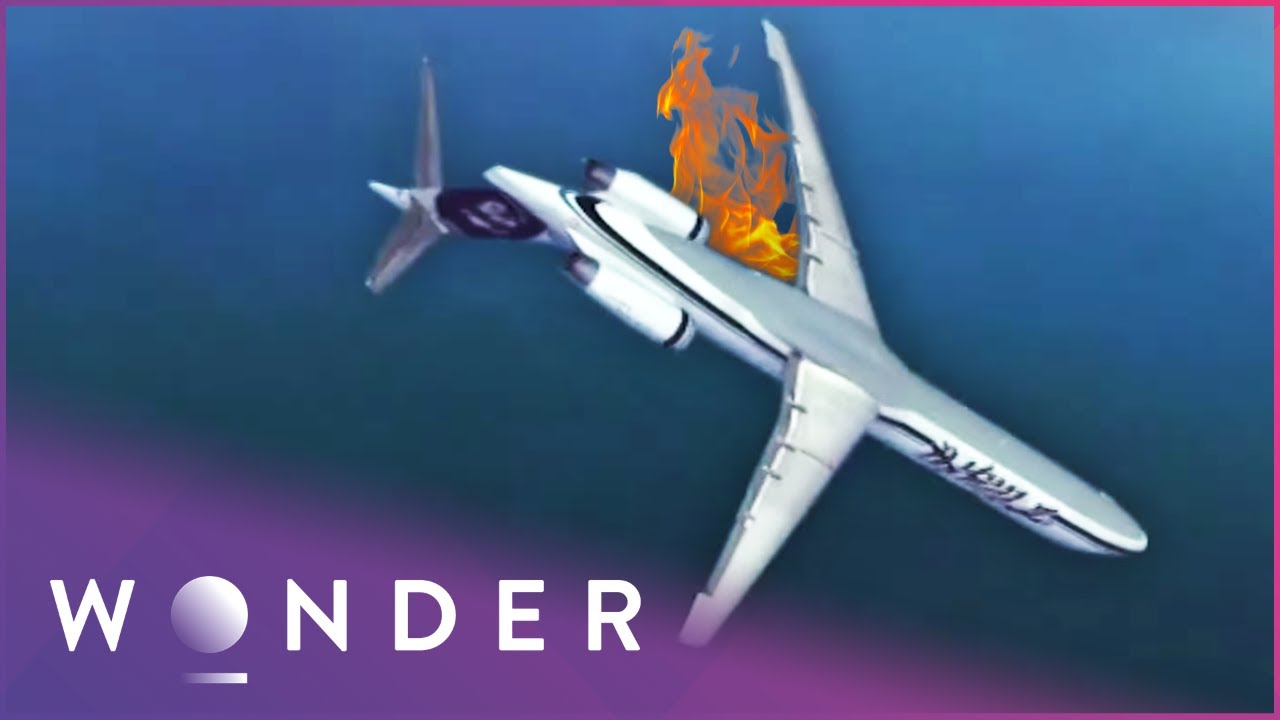
Air Alaska was floundering financially. They doubled theirilled their schedule and became a “success story,” but maintenance became a big challenge.
Wikipedia says:
Between 1985 and 1996, Alaska Airlines progressively increased the period between both jackscrew lubrication and end-play checks, with the approval of the Federal Aviation Administration (FAA). Since each lubrication or end-play check subsequently not conducted had represented an opportunity to adequately lubricate the jackscrew or detect excessive wear, the NTSB examined the justification of these extensions. In the case of extended lubrication intervals, the investigation could not determine what information, if any, was presented by Alaska Airlines to the FAA prior to 1996. Testimony from an FAA inspector regarding an extension granted in 1996 was that Alaska Airlines submitted documentation from McDonnell Douglas as justification for their extension.[5]
Apparently they had approval to do that from the FAA, but the justification is iffy. I also didn’t know airlines were allowed to alter the schedules without penalty, along the lines of voiding a warranty.
If you watch the episode, it also talks about the whistleblower who warned that maintenance was getting shoddy. He went back after the crash and discovered he had a direct link to the crashed airliner (start at about 43:00)—he had ordered that the jackscrew be replaced. The shift after his overruled him. That pushed back replacement by two years. Four months before the overhaul was due, it crashed.
I know I’m being pedantic, but there is no airline called “Air Alaska”. The airline you mean is called Alaska Airlines. Sorry, but that is a major pet peeve of mine when people butcher airline names like that.
It’s interesting that they title this video using “Air Alaska,” and that’s what the narrator reads at 1:06.
The original video I cited doesn’t title it that way, but calls it the same at :48 but it’s just a different packaging—same narrator etc. I guess this is where the phrase entered my brain.
Speaking of MH370, the BBC reports:
He combined different data sets that were previously kept in separate domains, to align to this new location in the Southern Indian Ocean.
Mr Godfrey said it was a “complicated exercise”, but previously there was simply a lack of lateral thinking, across multiple disciplines, to bring this together.
“No one had the idea before to combine Inmarsat satellite data, with Boeing performance data, with Oceanographic floating debris drift data, with WSPR net data,” he said.
Mr Godfrey said work with a team has been progressing for a year now, and “we’ve done quite a lot of testing of this new idea and we’ve came to the confidence to apply it to MH370”
If BBC reports it I’ll assume it’s credible. Fingers crossed!
Back to Air France 447 for a moment. If you want a thorough explanation of that crash, read Understanding Air France 447 by Bill Palmer. While slightly technical, you don’t need to be a pilot to understand the book as he explains things very well. I can’t recommend it enough.