Not to turn this into a brand debate (possibly featuring Calvin peeing stickers), but I would argue that Honda has really gone down hill in terms of making innovative cars. Honda had a renaissance during the 80’s and 90’s, making affordable cars that were both more reliable and better performing than anything even close to their price range. They were introducing innovative features like the double wishbone suspension and multi-valve engines into all of their cars when the same things were just starting to show up in other higher end cars. The 3rd gen (86-89) Accord, Honda’s “boring” mid-size sedan, was faster and handled better than a lot of the supposed sports cars of the day.
These days they still make very reliable and well-built cars, but their bread-and-butter Accord and Civic are both pretty straightforward cars comparable with everything else on the market. I guess if you want Honda razzle dazzle you need to buy a spendy Acura now.
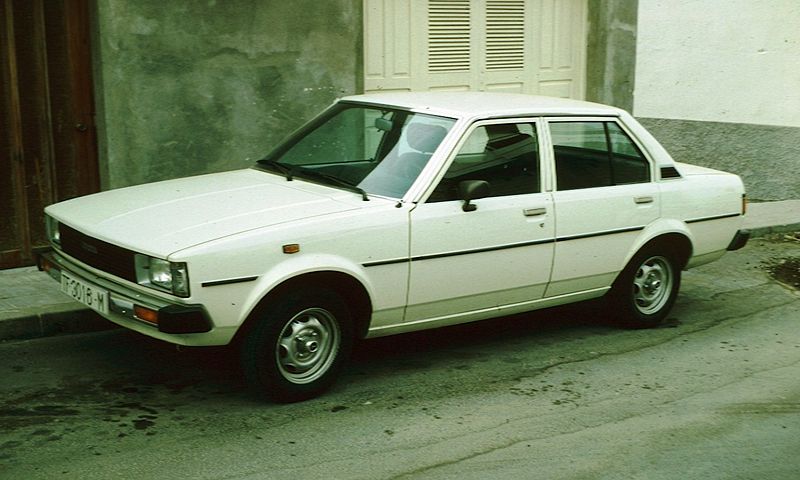
So the reason more people customize Hondas is because Tayota sells more cars? Honda, sick of playing second fiddle to Toyota, came up with a brilliant plan to cater to the vast tuner market and try to stick it to Toyota? Just how big do you think the tuner market is, and how often do you think they’re buying new cars? The tuner cars I see are driven by guys in their early 20s who probably can’t afford a brand new $18000 Corolla, but can afford a '97 Civic or Toyota equivalent for less than $5 grand. Given an equal choice, iot seems reasonable the person interested in working on cars picks the Honda because it has more customization options and flexibility to soup it up. Others in this thread have given great reasons why tuners choose Honda over Toyota, and it has shit all to do with sales.
Personally, I do see some Toyotas with big spoilers and mufflers, but maybe those drivers are limited to just cosmetic stuff, whereas a civic might be hiding something big under the hood, where it really matters.
I second this. Despite being from an “American car” state, I owned two Hondas for the reasons given (an '88 and then a '95). There was nothing else out there that could compare for the price. Hondas really were special cars. These days, there’s nothing particularly distinguishing about them.
You’re naive if you think that companies don’t target young people with hip products to develop a consumer base as they age, helping them become loyal to a brand.
A number of manufacturers cater to the aftermarket companies, sometimes giving them access to models, specs, etc in advance of a model’s release date. It’s called marketing. It’s a pretty mundane concept.
It’s so mundane, you’ve almost got me thinking you are kidding and are too busy with this Honda vs. Toyota stuff.
. Search around and/or chat with people who make aftermarket parts. There is a reason some companies are eager to help them get their products ready for market. It’s one marketing technique among many. Not all are the sole ways of propelling a company to number one in sales. Companies employ of number of strategies. This is but one.
But it does show more evidence about the difference between Honda and Toyota - To me the Fit looks like a kind of cool, futuristic, sporty little car. The Yaris looks like a transportation appliance. A quick look at reviews shows the Fit described as sporty handling and the Yaris described as ‘competent’. If I needed a small car I would consider the Fit and never the Yaris. (I enjoy driving and would prefer a ‘drivers’ car)
The ease of swapping engines may have given Honda a boost with the aftermarket tuner crowd, but I am sure 90% of the ‘modified’ Hondas on the road have little more than cosmetic mods. There is also the positive spiral effect - Aftermarket companies support models owned by more tuners, tuners buy cars with more aftermarket support, etc.
I do not understand how this car looks boring and this one doesn’t.
Both of them, to me, look boring. The Yaris looks slightly better to be because it doesn’t have the squared-off rear end that the Fit does - in other words, it looks more stylistically consistent.
If the comparison was between this car and this one, yes, I could see why Honda has the edge.
With their current designs though? No. They’re both “jellybeans” with ugly shapes.
First - Looks are (of course) going to be subjective, but I still think the fit is better and more modern looking. It also has a look that is more likely to appeal to younger buyers IMO.
Second - The fact that reviews say the fit has sporty handling and the yaris is competent give the fit an edge with the driving enthusiast, tuner type.
Third - I was saying the fit looks sporty as compared to economy cars.
Fourth - that is the best looking picture of a yaris I have seen and a horrible picture of a fit. It is a first generation fit (the second generation looks much better IMO), and it looks like the owner put aftermarket rims on it that look worse than the stock ones. The second generation fit in red with the alloy rims looks nice and sporty (again, for an economy car) IMO.
Fifth - a quick google image search for Honda fit and every one on the first page looks way better than the picture you posted :dubious:
I work in the automotive industry and see industry journals that don’t always get to the public.
In addition I don’t have a horse in this race.
In the public’s mind Toyota used to be the gold standard for quality. Due to all the recalls and publicity about them, Their reputation has taken a huge hit.
Because of this Toyota has taken a huge hit in sales over the last year. They are not offering that free servicing on a new car because they are nice guys, they are desperate to regain market share.
Toyota had at least one recall on every single model car they sold in the US in 2010. I don’t think any other major car maker can make that claim.
In one industry publication when the gas pedal fiasco went down a headline in an op ed piece read “Who would have thought that when Toyota overtook GM in total sales they would also pick up GM’s arrogance?” The gist of the article was that Toyota did not handle this incident (as well as others) very well at all.
Honda on the other hand has its own issues. They have not had a big hit in their last several product launches. The Crosstour is generally considered fugly and they appear to be nailed to the dealer’s lots.
The Insight is no Prius contender.
If it were not for the Civic and Accord, Honda would be in deep shit.
I’m was in Toyota trouble threads and bashing them.
I know their issues of declining quality. However, there was nothing anyone could say/cite that would make the Toyota defenders believe quality was slipping.
I was LMAO, because they went on to bash GM’s quality, which is on par now and has been for a few years. And GM tanked over other issues recently, not even quality. Well, perception issues maybe.
People will buy Toyotas and Hondas because the rep of running for well beyond 100k miles is still there. Doesn’t mean Toyota should keep falling down in JD Powers (initial quality). Doesn’t distract from the fact that Toyota and Honda have marketing practices that differ. Whatever Toyota did, it worked. Let’s see if they fall below Honda and then those upthread will have a point.
GM’s decline took 40 years. It didn’t just happen in the past decade; the economic problems probably just hastened their trip to BK but it was (IMO) going to happen sooner or later.
Honda is the 4th largest vehicle manufacturer in Japan. Worldwide, it is in tight competition for passenger car sales with Suzuki, who outsell it in Japan.
When truck & bus sales are included, Suzuki is the 2nd largest transportation manufacturer in Japan. If they sold more passenger cars in the US they’d wipe Honda. I believe the Chevy Aveo is the only car here.
Nissan places 3rd for all vehicles worldwide and a close 4th in passenger cars.
There is no possible way that Honda will surpass Toyota, who are larger than Honda, Suzuki and Nissan combined, both in total and passenger car sales.
None of these companies are striving to beat Toyota in sales. It would be foolish and wasteful. The only thing that will knock Toyota from the top is themselves.
Yes, as I stated, there were perception issues. It didn’t matter what GM was making, what mattered was a perception formed over decades. So, I repeat that GM went into the crapper over things other than their current/improved quality.
Yeah, they started their troubles decades ago, but with the inability of the press/media and others to be objective (that elusive illusion), their biz kept stalling long after the issues went away. But’s that a great debate, and I can blather on about how the greatest propaganda machine in the history of man (U.S. Media/Hollywood) helped bring them down.
I felt sooo bad for Toyota, once they were seen as evil corporate bad guys with crap products. :rolleyes:
To address the OP, during the height of the import customization car culture of the 1990s and early 2000s, the main difference between Honda and Toyota was that Toyota made actual performance cars, while Honda did not. If you were a Toyota person, and wanted a hopped-up ride, you bought a Supra of any generation, or a 7th gen Celica, or an AllTrac Celica or an MR2. If you were a Honda person…well, you were stuck with a Civic variant, assuming you could not afford an NSX. So you had to make do with what you had. Or you went with an Integra. Honda was focused on their image of longevity and fuel economy.
Now, it appears the tables have turned, and Honda has been trying to turn their attention more toward performance, while Toyota has dropped all sports cars from their line. We’ll see how the FT-86 does…
I’d defer to your likely more recent auto experience, but I was under the impression that Toyota was specifically trying to avoid GM-style arrogance in being proactive with recalls. GM’s problem wasn’t that they had a lot of recalls, it’s that they would spend months to years to decades denying a problem (See GM Power Steering Syndrome, for example) before they actually issued a recall, and even then would be sneaky or dodgy about it (the mid-80’s flaky paint “secret recall” for example). That sounded awfully familiar with Toyota’s response to the unintended acceleration problem, but it turns out Toyota was doing nothing about the problem because there really wasn’t a problem beyond the pedal and mat issues they did promptly issue recalls for. My take on the plethora of other recalls the same year (most of which are trivial) is just that Toyota was desperately trying to show they were really being proactive about quality problems in the face of the absurd media hysteria, which they of course couldn’t address directly because they couldn’t find a problem!