Why in bootcamp aren’t women shaved bald like the men? Also, why aren’t they held to the same grooming standards beyond bootcamp? Why do they have their own uniforms that feature differently designed covers and some even skirts? Why do they have different PT standards? Why did it take so long to let them into combat roles? Basically, why aren’t women and men blended into one uniform fighting force with one universal set of standards?
Because military dress and grooming is based on civilian dress and grooming, and men and women dress and groom themselves differently. It’s all arbitrary, after all.
10,000 years of tradition? Deeply entrenched social and sexual mores? Bear in mind that in many combat roles, troops need to live and work together very closely and intimately, with a great deal of physical contact and little to no privacy. Having mixed gender combat units makes many people - especially religious people, but not only them - very uncomfortable.
You have to remember that the military was not created tabula rasa in the modern age; it’s built on beliefs, philosophies and practices that have evolved for centuries. It takes a lot of time for things to change, and nobody can agree what it should change into. Besides, the military’s job isn’t to be an instrument of social change, it’s to win wars. The social change part is a bonus.
The way this was explained to me was, first, we ask whether you can carry X amount of weight over Y distance in Z time: if you can’t, you fail; that’s the job, and you need to be able to do the job, period.
And then, second, we do a test based around the following idea: you know how the world record for running the mile is faster for men than it is for women? And you know how that male tennis player who wasn’t in the Top 200 beat the Williams sisters? And we’ll go on if you want, but the point is: we expect a man to be faster and stronger than an all-else-being equal woman. If they’re both in average shape and they’re both twenty-five, or if they’re both a little overweight and they’re both thirty, or if each is a world-class runner of twenty, then we expect the guy to cover the mile in a little less time.
So — once the Can’t Do The Job types are out — we look at a man who runs the mile as fast as a woman of comparable height and weight and age and so on, and we say, uh, what’s going on, buddy? Why aren’t you faster than her? Because, y’know, she got the time we’d expect from a fit woman, and you got the time we’d expect from a guy with a medical condition or something.
What disguises it is, we don’t bother to do two separate tests; folks just run once, and we use the time for the Can You Do The Job test, and then we use that time for the Are You Fit test, even though one of those tests is sex-blind and the other one isn’t.
[Moderating]
This isn’t really a question that lends itself well to factual answers. Moving to IMHO.
Imagine that women were told that they had to get their heads shaved in boot camp if they joined the military and that after they graduated they would have to keep it tapered on the back and sides and off the ears. How many do you think would join?
The hair requirements keep some men out of the military, let alone women.
The history of women’s participation in the military is a slow one. There was a time when the only women attached to the military were nurses, camp followers, and women who disguised themselves as men and enlisted. Then they started enlisting women in auxiliary, non-combat roles (clerical, drivers, postal workers, etc.), mainly around WWII. At the time, jobs – and society in general – was still heavily gendered, so there was no question of subjecting women to the same style of uniform and grooming standards as men.
As women started taking on more of the roles that men had in the armed forces, some of these uniform regulations were changed. But we still live in a society where, for all the equality achieved, men and women are not indistinguishable. Most men have shorter (and less meticulously groomed) hair than most women. Women remove body hair more than men do. Most women wear at least some makeup at least some of the time; very few men do. And so on and so forth. Military appearance reflects that. I myself have long hair for a man, but also a beard.
For what it’s worth – and I am very happy for this – in 2022, the Canadian Armed Forces removed gendered appearance rules for service personnel. Now both sexes (or all genders, if you prefer) may have long hair (and beards are allowed, though they eventually restricted the length to 2.5 cm), and where a “gendered” option for a uniform exists (a few of these remain, for example in the Navy, a ladies’ tricorne hat instead of a peaked cap), a person of any gender may wear it. So, if I understand correctly, theoretically, a cisgender dude sailor may wear a tricorne hat and no one should say anything.
The previous standard of men having short hair and women having hair longer than them (still very strongly adhered to in the USA, especially under Secretary Hegseth’s tenure: “We’re going to cut our hair, we’re going to shave our beards, and adhere to standards.” Yadda yadda yadda) is based on standards from the gendered and militarized time of the World Wars and the Cold War when full equality of the sexes and respect for different forms of gender expression was not a thing at all. We have moved on as a society from that time, and this has been reflected in changes to appearance standards in Canada’s Armed Forces.
If it were up to me, I would make uniforms the same for both men and women (no skirts except for kilts - where worn, no little tricorne hats instead of peaked caps or the equivalent, neckties for everyone, no neck tabs), but would allow long hair regardless of gender, as long as it was tied back safely. That should I think be acceptable for most modern people.
I’d be happy with short hair and no skirts, myself.
Because the people who make these decisions in the military aren’t morons like Pete Hegseth, and they realize that having certain varying standards to accommodate reality is preferable to ideologically pure rhetoric and complete inflexibity?
Yes. Even during the Corps of Discovery, commonly called the Lewis and Clark Expedition now, exploring the west, Native tribes viewing the party asked themselves, Is this a military raiding party? Who the hell brings a woman on a military campaign? Maybe we could go meet them.
Just the presence of Sacagawea changed the way that the whole incursion was seen.
Also bear in mind that in many cultures, shaving a woman’s head was considered an act of shaming and humiliation.
10,000 years of tradition? A bit before the French Revolution, many soldiers had to have long hair and some had pigtails, queues, sidelocks, etc. It’s all fashion.

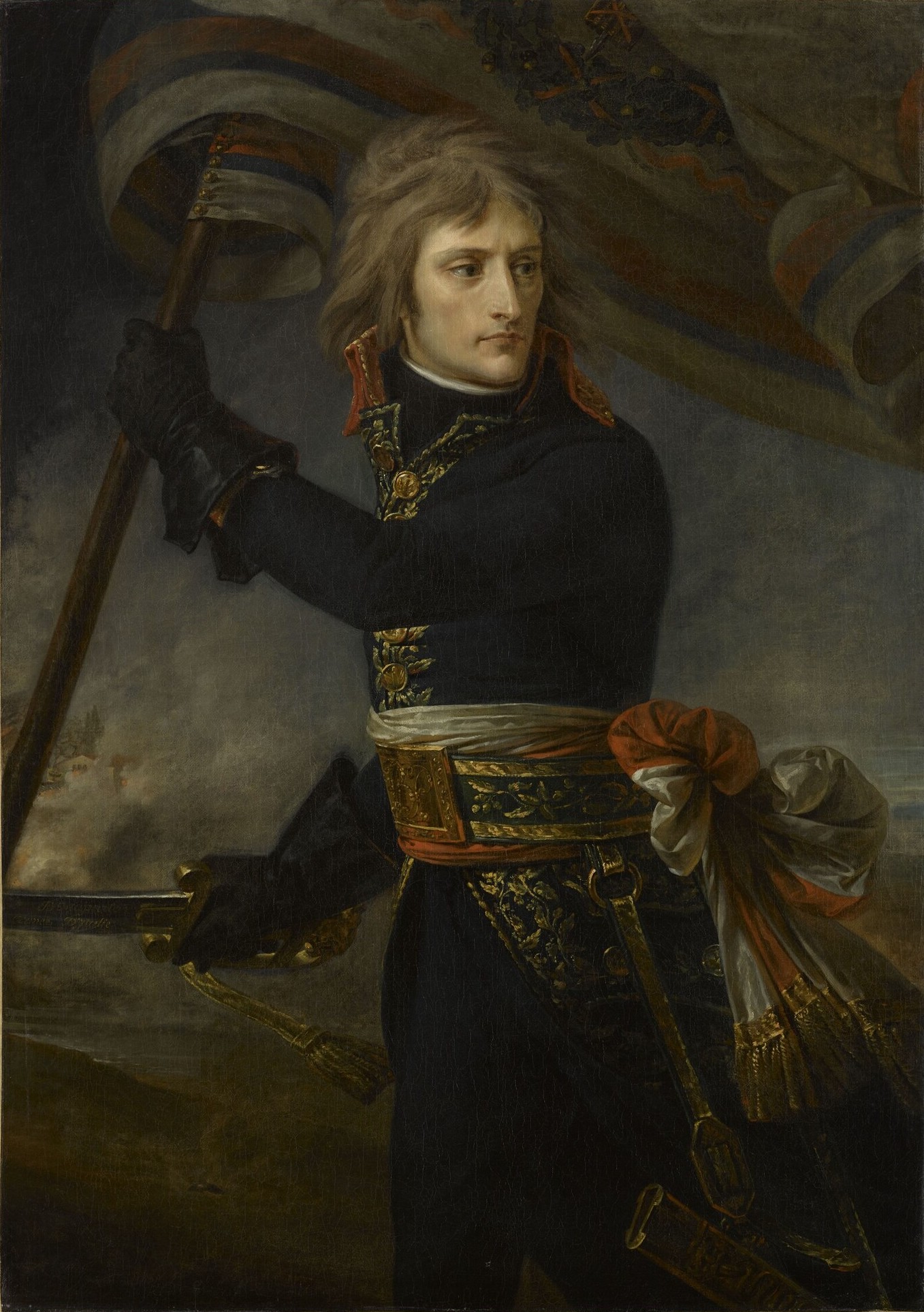
I was referring to soldiering being a predominantly male occupation.
Historically, military grooming tended to reflect grooming trends in society as a whole. During the Revolutionary and Napoleonic Wars period, most men were clean-shaven or had mustaches, so the military demanded shaving, but half a century beards were back (but hair grew shorter), which gave us the magnificently bearded soldiers of the Civil War. Beards disappeared towards the end of the 19th century, and were replaced by mustaches (as per WW1) which also died out by WW2.
These days, the U.S. military is actually working against tradition, by demanding that its soldiers be clean shaven - two thirds of Millennial men have facial hair of some sort, and 4 out of 10 have beards. By all rights, the armed services should be bearded again.
Things have changed since I was in the Army, back in the seventies. But when it came to hair we women could have our hair long, but while in uniform it had to be in an accepted style that did not reach below the bottom of the collar. Certain styles were forbidden, like corn rows.