Just thought of this movie while fuming about the Qatari jet: a new design of a jet is sitting out on the tarmac, and a guy, possibly the designer, does whatever raises the nose gear. The nose crashes to the runway. A question: could nose gear be retracted while a plane is on the ground with the weight on the gear? Seems like there would be a bind on it somehow. Lesser question: what was the movie? 
There are interlocks to prevent you from accidentally raising the nose gear while on the ground. There is a “weight on wheels” switch which detects that the plane is sitting on the ground and will prevent you from raising the gear. However, it is possible for maintenance crews to override this.
Typically, the maintenance crew will insert pins to mechanically lock the wheel in place. Then they will override the weight on wheels switch so that they can test or repair the wheel’s hydraulics.
If they don’t insert the pins properly, or somehow forget to install them, this happens:
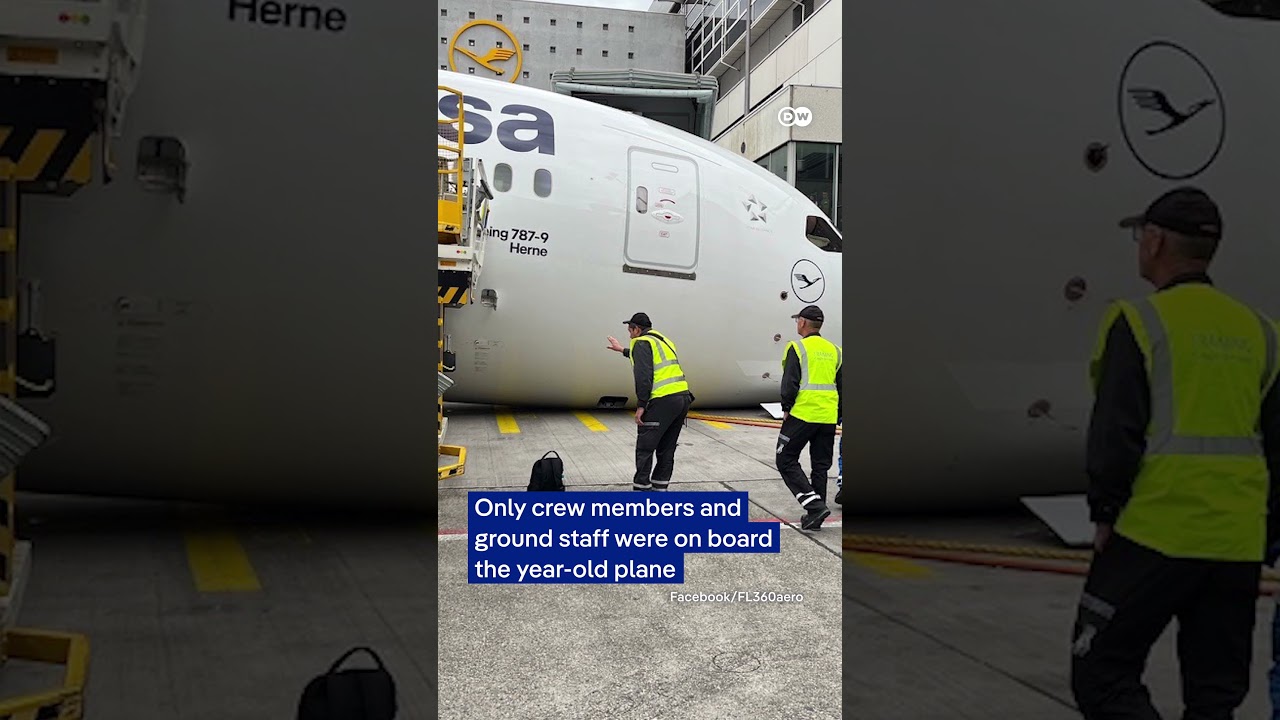
No idea about what movie that was.
Are you sure it was a movie and not a Simpsons episode?

(1:27)
I just posted that clip in another thread and was going to post it again, and I would’ve got away with it too, it it wasn’t for those children and their dog…
The movie was “No Highway in the Sky” with Jimmy Stewart as an eccentric engineer who deliberately dropped the plane because his calculations showed it would soon break up from metal fatugue.
And as other posters noted, you can’t really do that unless several safety features have been defeated.
Sorta.
At least on a pre-fully computerized airplane, the typical design is pretty simple. There are microswitches on at least the mains and usually the nose that signal when there’s weight on the gear. The presence of that signal activates a solenoid that sticks a mechanical locking pin through the gear handle in the cockpit. Which locks it in the down position.
But there is a switch or pushbutton or trigger or something right next to the gear handle to override that lock. Which is intended for the situation where the gear handle remains locked down after takeoff. So for a typical airliner sitting at the gate powered up, if somebody pushes the override and raises the gear handle, the gear will try to move under normal hydraulic power.
Now there are two more elements to “try”.
During maintenance activities in a hangar, it’s typical for the maintenance folks to stick safety locking pins in the mechanism of all 3 gear legs. Likewise during tire changes at the gate. Which pins mechanically prevent the hydraulics from moving some part of the downlocks because the hydraulics aren’t strong enough to shear off that ~1/2" diameter steel pin. And if the downlocks haven’t moved, the rest of the gear system can’t move either; it’s mechanically wedged in place.
So if the safety pins are installed, the gear isn’t moving, period. If the pins are not installed, and they typically are not during normal day to day operations, then there’s one more obstacle between safety and CRRRR-UNNNCCH!!.
The way the mains retract on the vast majority of big airplanes is inward. Which means scrubbing the tires sideways to pull the gear inward enough that the weight of the airplane causes the gear to fold and the whole thing to come crashing down. Typically the hydraulics aren’t strong enough to do that. So the mains won’t retract even if there are no locking pins and somebody overrides the cockpit handle lock & raises the handle.
The way the nose gear typically retracts is fore or aft. Which means the tires roll freely in that direction. As such, it’s real easy for the hydraulics to unlock the locks, then begin to move the nose gear leg towards the retract position until the weight of the nose (~20% of total airplane weight) on the partly retracted gear is enough to send the nose crashing down to the ground.
Overall bottom line: Of gear screwups on the ground across all types of parked airplanes, the vast, vast majority result in the main gear not moving and the nose gear collapsing.
For an airplane in motion, the forward rolling of the main gear is often enough to overcome the need to slide sideways to retract. Such that raising the gear handle on the ground while taxxiing or slowing after landing usually retracts the nose and one or both mains.
Then it takes a LOT more power to taxi. 
AKA ‘squat switch’.