Are the figures for Germany net worth or income? If the former, we’d be top 1% there, probably, if we liquidated our assets and converted them to Euros. Mostly, that’s because we bought a house in Boulder, Colorado back in the 90s that is now worth much more than we could afford if we were buying it now. Doubt we’ll ever come close to top 1% in wealth in the US.
If it’s income, we’re probably somewhere in the top 25%, maybe top 15% (both Germany and US).
Net worth, says the article: assets plus cars plus jewelry plus art minus debts. Indeed, considering what has happened with house prices recently I guess 10% are in the 1% bracket now.
German are traditionally renters, not buyers, but they don’t usually invest in the stock market what they save in mortgage. Spaniards, Italians and Greeks are obsessed with buying houses. Germans are often quite surprised (and pissed, when “they” have to bail “them” out) when they find out that Southern Europeans are on paper much richer than they are when the houses are counted.
How can 10% be in the 1% bracket now?? Or do you mean here on the 'dope? If so, then the response to this OP doesn’t seem to bear that out. Currently, it’s at 6 people claiming to be 1% and 145 claiming to not be…that’s a touch over 4%. Even using all assets and even with the price of some housing going up so much I don’t think there are 10% of 'dopers in the 1% US bracket. Now, like you, there are a lot of non-US 'dopers, so perhaps by their own metric in their own country, they are part of their own 1%.
Some of the first things you learn when studying sociological surveys are that:
(a) significant numbers of people answer surveys based on concerns about how their answer would be perceived, even if the surveys are anonymous and
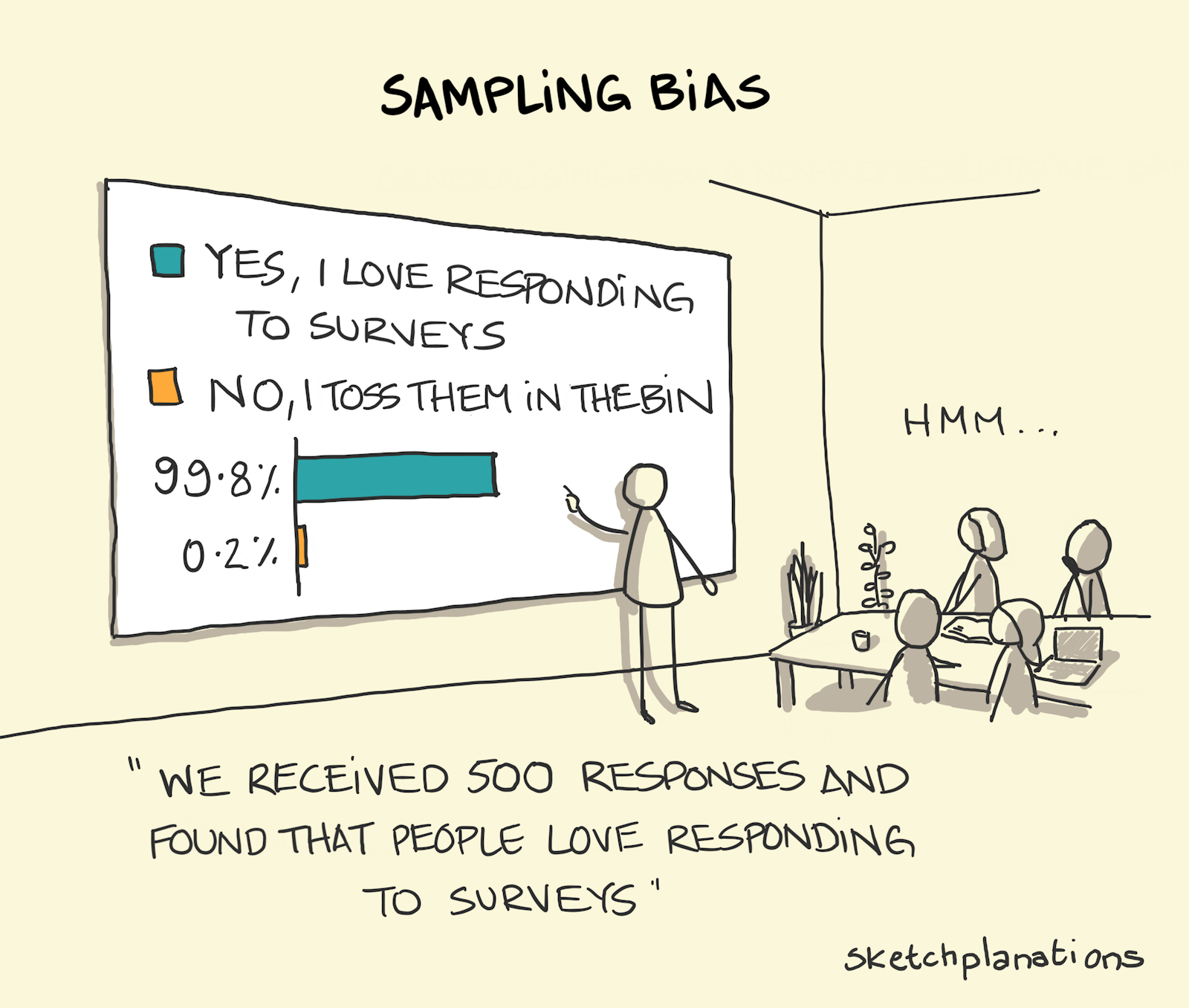
(b) voluntary surveys are always badly skewed because they are inevitably surveys of people who are interested in answering your survey which immediately biases the outcome.
People who are proud of their wealth or income (which is pretty commonplace) or interested in wealth or income are going to be far more likely to respond to this survey than people who are not. People are going to be concerned about “revealing” their income/wealth status, even though the survey is anonymous.
It’s interesting that a (wealth) 1%er in the US would be a 0.1%er in Germany. Sure, I expect more wealth disparity in the US, but 1% isn’t that rare, especially considering that most households will only reach that level when near retirement.
I haven’t answered the poll because I’m unsure how to answer - I’m not 1% by US standards, but I am by global standards, and by local South African standards.
It varies, of course, with great structural differences between urban and rural areas. I can tell you about Berlin, which I know best. Houses in Berlin are traditionally 5 stories high and have ten appartments in the front (Vorderhaus), five on the side (Seitenhaus) and five in the back (Hinterhaus), behind the Innenhof. Here is a typical case in central Berlin. That means a typical house has between 10 and 20 appartments. But you usually could only buy a house, not the individual appartments, because that is how the cadastre was set up. The smallest unit that could be bought was the whole house. Typically rich people bought houses and rented them, the classical cliché buyer was a dentist, a notary or a heir and he paid the house with the rent saving a lot of taxes over several years. The tenants used to have relatively cheap rents and were very well protected against eviction: Mieterschutz (link in German) meaning the unalienable rights of the tenant are very strong in German law. Some of this has been changing over the last years, but the situation remains very different from Spain, for instance. I never bought a flat and do live very happily paying my rent (but, unlike most Germans, invest in the stock exchange): I could only be evicted if I stopped paying my rent or willfully damaged the property or the like and I don’t have to care about keeping the building, attending owner’s meetings (which are a drag, there is always a PIA-lawyer among them, it seems), keep up the insurances, organize the removal of snow from the sidewalk in winter (importasnt: you are liable if someone falls and breaks a bone, can be very expensive) and so on. But my Spanish family looks down on me and my wife because we are only tenants, they have a completely different mindset and tradition. We often laugh about that.
In rural areas and small towns the situation is completely different: the owner’s rate is much higher.
This was very short and superficial, of course: things are always more complicated. But to put it in simple terms: Germans are by far not so obsessed with owning real estate as the South Europeans are and are distrustful regarding investing in the stock exchange (the traditional savings account with fixed interest or the life insurance were the usual saving instruments). And Germans still fear inflation.
Sorry, I made copy&paste and did not check: you are right. About the notation too.
Curious, isn’t it? Does that mean that Germany is a rich country but the Germans are not? Does this distribution suggest that Germany is more or less unequal than the USA? Or (my guess) that 98% of Germany is less unequal than the USA, but the 0.1% is rich in an American way: their lawyers and accountants studied in Harvard.
StraightDope polls always produce statistically reliable results, said no one ever.
Germany’s GDP per capita would rank in the lower quarter of the US states ranked by GDP per capita. All the while it is more than double the population of California, our largest state by pop. Not surprising their top 1% wouldn’t be close the US.
Germany (and I believe all of western Europe) has a Gini coefficient significantly lower than the US. The majority of the countries that are more skewed than the US are in Central American, South American, African, and the Caribbean.
The Gini coefficient assumes that the income or asset distribution disparity is homogeneous through the whole spectrum, but from my example I would think that Germany is more homogeneous than the USA in the “lower” 95-95%, but our very high earners/owners are just as inhomogeneous in relation to the rest as in the USA. No data to back this up, just a feeling. The problem with the Gini coefficient is that it is just a single number, when it should be IMO a set of numbers for the different brakets. I am aware that this would make it less poignant.