In my long continuing efforts at decluttering, last week I tackled a couple of boxes of ‘stuff’ I inherited after my mother died. Lots of things to donate/dispose of (much easier given the passage of a couple of decades) but I did find one treasure – the handwritten cookbook she’d kept of her favorite recipes ever since she’d had her first ‘domestic arts’ class back in, I think, Jr. High. Great fun to see her handwriting again, her notes and comments, and recipes I remember from my childhood.
The dish in the title is one I remember very well, because it became her go-to dish for pot lucks and church dinners and such for the rest of her life. I think it may be a classic of the genre: a dish that is easy to make, requires virtually no talent or skill or finicky timing, calls for no expensive ingredients, provides a lot of servings while asking little of you beyond dumping the ingredients into a suitable heat-proof casserole, stirring, and stuffing it into an oven for about 50 minutes. Done!
Anyone else familiar with it? It may be relevant that she was an Iowan girl born and raised until she started following my dad about the country. He was an engineer, one of those guys the high-tech companies of the 50s and 60s would ship around from regional outpost to regional outpost to deal with the current challenge.
Way more than a kissing cousin, I’d say. (Damn near incestuous.) The only real difference is we never added celery but diced carrots instead, and token differences in the the quantities of vinegar and ketchup and so on.
As NearWildHeavens says, lotsa variations. The beans, especially, just use pretty much anything you like except maybe green or wax beans, just aim for a multicolored effect. We generally had pork’n’beans, dark kidney beans, pinto beans, and cannelone.
I’d use black beans, those little red beans used in Cajun cooking, and the little white beans used in soup a lot - navy beans IIRC although they certainly aren’t blue.
Trouble is, it’s a difficult recipe to scale down and I detest leftovers. I’m sure it’s tasty.
Culinary variations by country interest me! Bean meals have never been a staple in Australia, yet it seems that many meals in the US centre around beans as the main protein.
I guess our geography matters here, not being bound by other countries, and our early (British) settlers brought sheep and cattle, not beans. I’m seriously fascinated, and would appreciate any good bean recipes if any of you could be obliging!
Yes, AFAICT it’s the dish as a whole that’s supposed to look like a multicolored calico print.
(And following up a remark upthread, white “navy” beans are so called because they were standard fare in the US Navy, just like the color “navy blue” gets its name from association with blue naval uniforms.)
IKR? The recipe does say “or to taste” about the sugar, at least.
That’s one place where I part ways with both traditional “Midwestern” and much Ashkenazi Jewish cuisine: the determination to dial up the flavor profile of a savory dish by sweetening it. No thanks. (Similarly, am not such a fan of Chinese sweet-and-sour dishes either, come to think of it.)
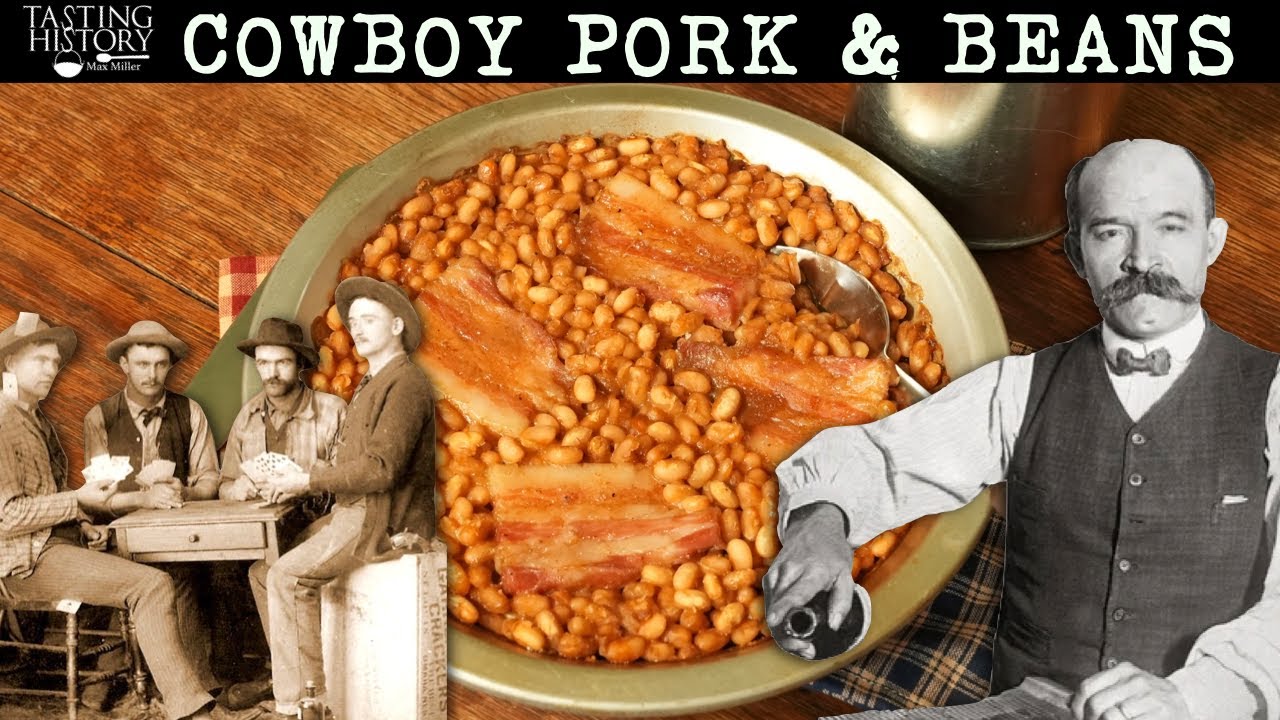
I suspect this goes back to Pioneer days, when settlers trekking West needed to bring foodstuffs with them that were nonperishable and could easily be reconstituted. A typical chuckwagon would carry beans, salt pork, flour, coffee, molasses, and little else.
Am I to understand settlers in the Australian Outback subsisted solely on meat? That must have kept them … filled up, to say the least.