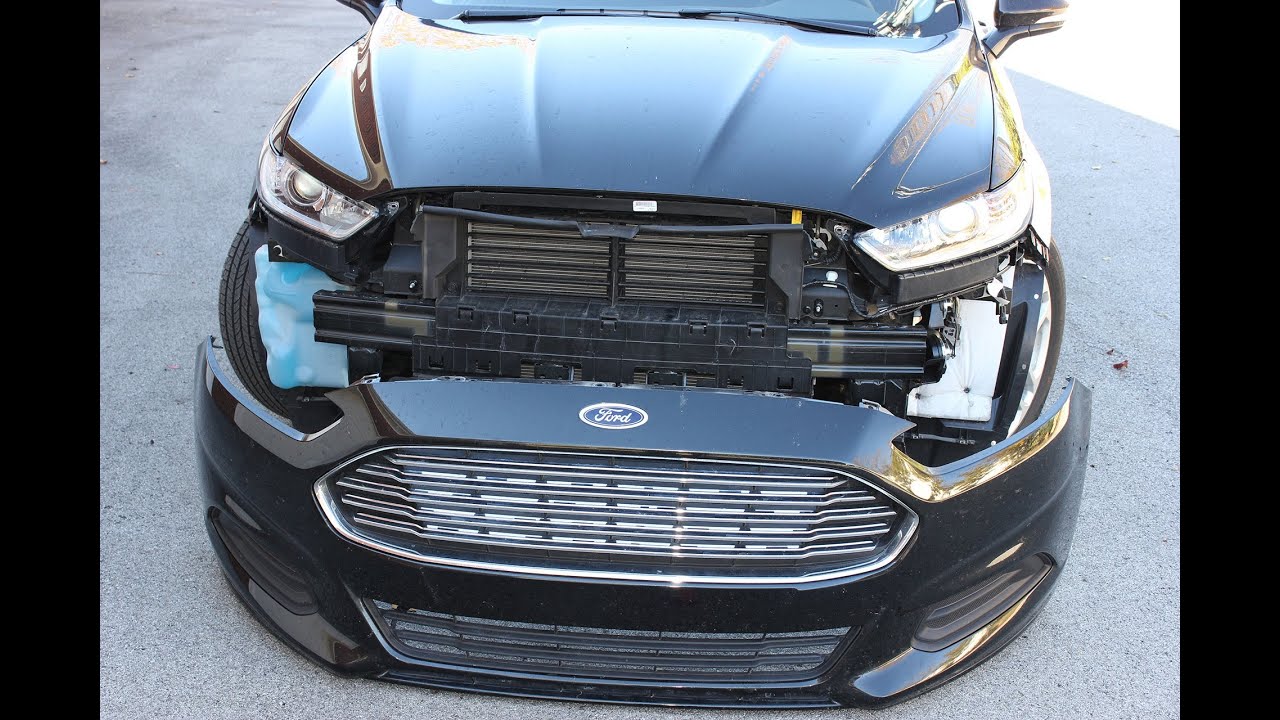
the “bumper” you see on the outside of the car is a fascia; it’s a plastic appearance piece. the actual “bumper” is behind it and is strictly there to protect certain critical systems from damage in low-speed impacts.
apropos of nothing, since the fascia and bumper contribute nothing to crash safety. You’ve bought into the “German Engineering” myth hook, line, and sinker.
which is why they have a reputation of being horrific money pits once out of warranty. They may “feel” more solid when new, but since “German Engineering” apparently means “make it as ridiculously complicated as possible yet still work” you get nonsense like this Audi timing chain setup. Not only is that timing chainset ridiculously convoluted, Audi also put it on the back of the engine, sandwiched between the engine and transaxle. And the guides and tensioners were prone to premature failure, meaning you could look forward to an engine-out repair at 50,000 miles.
Let me tell you about fasciae. The wheel hubs on my Jeep had exposed lug nuts. To make them look pretty, they all had a chrome cap.
I didn’t really care until the first time I got a flat tire and had to change it. That’s when I found that the chrome caps were so fragile they would tear off the lug nuts when you tried to unscrew them. And the tire iron was not the right size to unscrew the lug nuts without the chrome caps. I ended up having to spend the night sleeping in my Jeep because I couldn’t change a flat.
The next morning I walked to an auto parts store to buy a socket for the lug nuts. They told me that there was no socket for the lug nuts - they did not match any English or metric size socket. I ended up having to remove them with vice grips and a hammer.
I went out the next day and bought a set of standard sized all metal lug nuts and replaced all the remaining chrome-capped lug nuts.
That’s Jeep in a nutshell: they’re shiny but impractical and should be replaced by something that works better.
1.4 million. FTR, recalled for problems like these:
a heater for the positive crankcase ventilation valve can overheat and cause the valve to melt, increasing the risk of a fire even when the vehicle is not in use.
Wiring for the heating and air-conditioning system can overheat and cause connectors to melt, also increasing the fire risk, even when vehicles are unattended.
On the subject of “German engineering”, it can be very good (classic example was the venerable original VW Beetle) but in general I tend to regard them as high-strung and temperamental, like a nervous pedigree dog. And the more expensive they are, in general, the more demanding they are of the required maintenance – the high-tech ones are unforgiving and you can’t piss around with them. This applies more to the Mercedes class than say to Volkswagen, which makes some well-engineered practical cars, notwithstanding the emissions scandal.
Here’s a fun video of a typical temperamental car – not a German car, it’s a Lamborghini, but it seems to burn about as well as a BMW. My favorite parts are around 1:40 or so when the guy throws the borrowed fire extinguisher on the road in disgust after failing to douse the flames, and later on when the firemen casually rip off the front hood and throw it aside like a Coke can.
Not to get in to a burning-car meme here, but it’s odd how it tends to be the super-expensive cars that like to turn into bonfires. Here’s a $1 million Porsche 918 hybrid cheerfully burning away. In this case, the owner was an idiot for using a squeegee to clean spilled gas off the car in a way that pushed it into the hot engine compartment through the cooling slots. But the larger question is what idiot designs a mid-engine car in a way that places engine openings so close to the fueling port.
With all due respect, I’ve owned about 25 cars of different species and the BMWs feel very different to me and are far more solid-feeling than any other cars I’ve driven. My '02 is esp. solid at 170 K+ My Cherokee really did sustain $800 worth of damage from the same impact as the X3 did yesterday.
But def agree on the money pit and my 2015 is over-engineered, that’s why I won’t buy a newer one out of warranty. The 02 530i is before they became over-trinketed.
I do love reading your posts, you have a lot of car knowledge and I learn from your stuff.
Fun vid! My older 530 runs really hot, in spite of replacing nearly all the cooling components. I’ve never had this issue with my Jeeps/Nissans/Suzukis. I don’t know if this is usual or if my car is just haunted by heat demons. I didn’t finish my last HPDE this summer because the car kept throwing overheating codes that the BMW fanboys at the meet couldn’t figure out.
AFAIK there’s no easily accessible database of reliability comparable to Consumer Rerports’. Perfectly scientific? No. But it’s basically that or anecdotes. JD Power allows its ratings/awards to be used in ads, that’s their business model in fact. Has a significant impact on credibility IMO and no multi yr charts like CR AFAIK.
Chrysler has done worst among any significant manufacturer on those charts on average for a long time. Just go look at them, it’s obvious. Other makes and models have their ups and downs. There have been specific Toyota models with reliability problems, but it’s the exception. BMW has been mentioned: they’ve have had a wider range of ups and downs but overall BMW is pretty good lately. Hardly ever has there been a Chrysler model with an excellent record per CR. I personally think it’s simply unwise to buy a Chrysler, and in general I’m a ‘to each his own’ kind of guy about cars.
That’s reliability, though categories like ‘body integrity’ include squeak/rattles, stuff you wouldn’t necessarily fix but not desirable. As mentioned nowadays it’s more likely to be some electronic thing, not the engine blowing up, but stuff not working is not good*. Quality in terms of eg. cheapo interior materials is different: you can judge that for yourself before you buy.
*for example my 2000 Mercedes E had a software glitch were the AC wouldn’t shut off…with the car turned off and key removed. Not so ‘minor’ to have the battery run down by the time I could get it to service place. So on advice of their help line I disconnected the battery. Whatever that did to the car’s ‘brain’, the CD player never worked again. They were kind enough to replace it free, just after warranty expiration. But it just wiped itself out again. A car with an unfixable CD player still gets you from A to B. But should I have viewed this as ‘minor’? Even for a cheap car I wouldn’t have.
Dude! This post had me rolling! Such a typical Jeep experience!
I bought a well-hammered 1990 Cherokee. 4-wheel drive got broken about the first time I took it off-road. Why? Because the front axle is locked using a vacuum system that hangs down below the axle. You know, right where it would get yanked, wrecked or FUBARed by going off-roading! And the vacuum lines are brittle, hard plastic. Went through 2 or 3 of those little pig-tails.
Okay, repair and strengthen that whole mess. Breaks again. The fork that slides the collar over the two axle halves breaks. No 4-wheel. Repair and strengthen again…
(To be fair, it works pretty well with a few common sense modifications. I have fun and the dogs like it. Can’t drive it on the roads as is, but climbs rocky hills like a goat!)
Chrysler vehicles have been plagued with transmission and electrical issues for quite awhile now. I have no idea why or how Chrysler acquired Fiat either but the Fiat cars are complete junk.
Jeep is a bit of a different animal, particularly the Wrangler. Guys, Jeep Wranglers are built like tanks. My experiences with them is that they are crude, unsophisticated, loud with tire and wind noise, inefficient with fuel, have garbage sound systems…but look cool, are very durable and capable offroad and are generally reliable.
There’s a reason that Wranglers are one of if not THE vehicle that retains it’s value over time in terms of depreciation than ANYTHING else (outside the FJ Cruiser, of all things).
The other Jeeps are mostly junk, aside from the nicer Cherokees. The older Cherokees like the 1995 Grand Cherokee my Dad had are quite reliable with the 4.0 inline six motor. That was a bulletproof engine, one of the best Chrysler has ever made.
Chrysler does make pretty impressive musclecars, but those would be the only Chrysler cars I would ever consider. The new Pacifica minivan is getting rave reviews but it’s only been out a year-ish and so there’s no longterm reliability to look at.
jz is right though…most of your failures on new cars now are of the annoying electric/software kind, not the leave you on the side of the road kind.
There are more cars on the road today that are 10 years old or older with over 100,000 miles on them than there EVER has been before. 100k miles used to be the death knell for a car. Nowadays it’s maybe just time for a tuneup.
I can confirm I’ve seen some of the reasons for this. One software problem…present in Hondas no less…is one of the embedded controllers down in there uses a non power-safe file system. This usually doesn’t cause any problems since the embedded controller only spends a teensy percentage of time writing to the file allocation table, but it means that when you turn the ignition key off, if you do it at exactly the right time, it will corrupt the FAT and the system will not restart.
The “transmission issues” on FCA vehicles have almost entirely been due to the 9-speed ZF 9HP transaxle, and it’s been shift quality complaints. The 9HP uses a dog collar clutch between a few ratios (4-5 and I think 7-8) which requires a brief torque interruption. And if it has to downshift through those ratios it takes longer.
That’s it.
But to listen to the Internet, you’d think there’s a mountain of broken transmissions piling up in Auburn Hills.
I have heard that about the nine speed, it seems that there are mapping issues with the transmission software on some vehicles with like you said, reluctant downshifts, lazy upshifts, etc. I was referring more to transmissions that predated the ZF 9 speed. There have been many issues, from TCM problems/failures, etc.
And no, I don’t get all my information from the internet. I’ve sold lots of cars and I regularly talk to the guys in service about specific vehicles and their bugaboos. I also experienced this on two consecutive Grand Caravans that had major (and expensive) transmission problems before 100k miles.
The last notorious transmission Chrysler had was the A604/41TE which wasn’t fully baked when it launched in the early 90s. Ever since then the most common problem has been clueless owners and shops dumping the wrong fluid in them and wondering why it starts acting up.
 My favorite parts are around 1:40 or so when the guy throws the borrowed fire extinguisher on the road in disgust after failing to douse the flames, and later on when the firemen casually rip off the front hood and throw it aside like a Coke can.