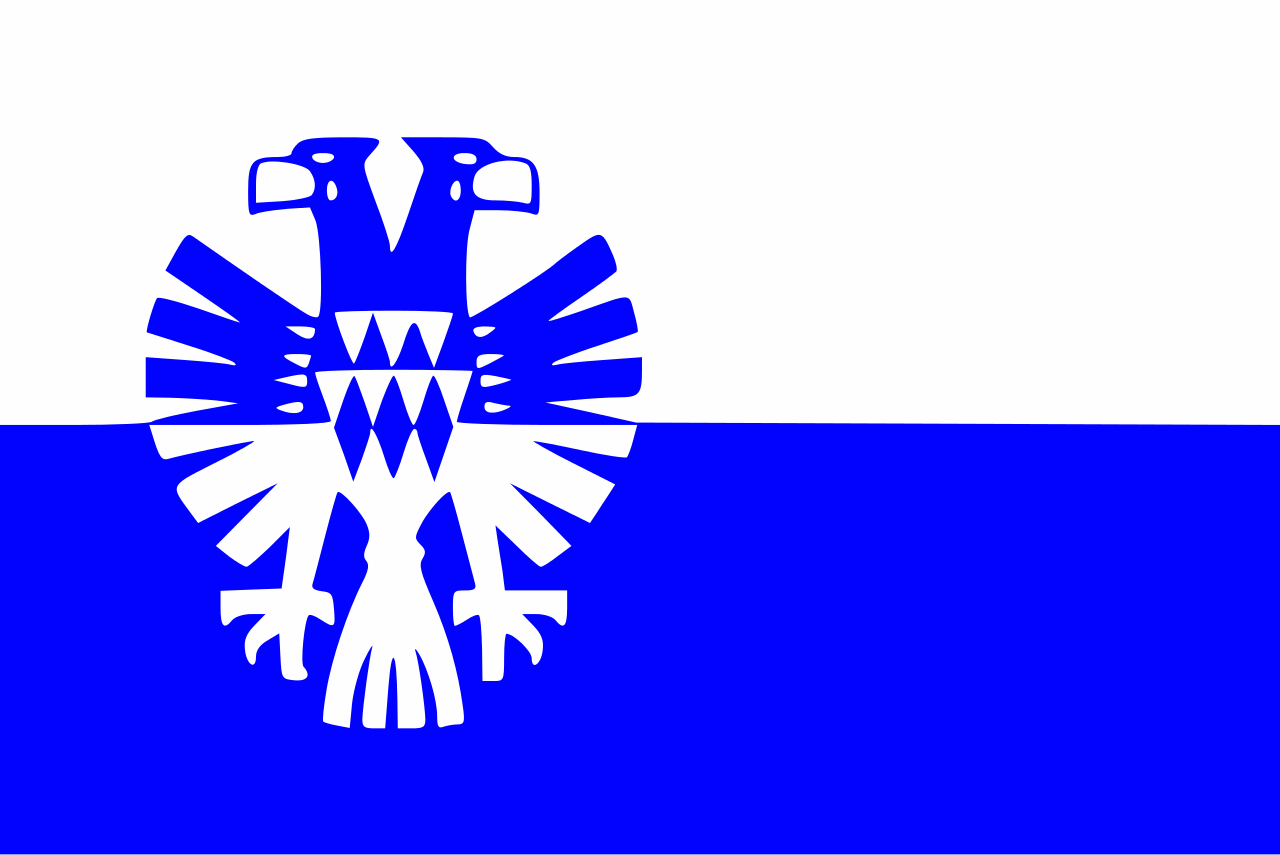
A counterchange (not a countercharge) in heraldry/vexillology is when two colors alternate in different parts of the coat of arms or flag. Two examples I know of in flags:
The UK Union Jack is composed of three crosses. One is the red verticle/horizontal St George’s Cross; the other two are saltires (Xs from corner to corner). One is red and the other white. If you look carefully, you’ll notice that on the hoist side, the white is on top while on the fly, the red is on top. This alteration is a counterchange.
Here’s what it looks like without St George’s Cross:
A more obvious counterchange is the Greenland flag, which is a white and red horizontal bicolor with a counterchanged circle.
Are there any other examples of counterchange in national/subnational flags?
How come? I’d say that the Taeguk/Yin-Yang symbol is a classic example of a countercharge - “two colors alternate in different parts of the coat of arms or flag”.
I never noticed this. Back in my freshman dorm a British professor came to give a talk about Monty Python. We hung a Union Jack on the wall and he mentioned that it was upside down. Until today I assumed he was joking. 48 years later I find out he was serious (it’s taking longer than we thought).
The joke I’ve heard about this is that there is supposedly a naval tradition of flying your flag upside down as a sign of distress, and Brits wanted a really subtle sign of distress.
(Yes, I know, British ships don’t fly the Union Jack as a flag but rather the red or white ensign with the Union Jack in the canton…it’s a joke.)
I’m afraid neither of those actually qualifies as counterchanged. The division line between the two sections needs to be across the thing (charge in heraldry terms) counterchanged, so that half of it is one color and half the other.
The Sámi flag is technically not one either, but that’s because it violates the rules of heraldry, having colors on colors. A counterchange should be between a color (red, green, blue, purple, black) and a metal (yellow, white). The yellow and green stripes just confuse the situation.