Coming into this thread late… I think I read all the posts and major points, but forgive me if I missed something or am repeating points already made.
As someone who is not “white”, I want to offer a hopefully less-loaded perception of “white culture”. Not in a strict sociological analysis sense, just in an everyday lazy shorthand sense, like two friends might use to make fun of each other.
Growing up in Asia, “white” people were often lumped together and stereotyped in various ways, a mix of their often-European ethnicity, genetics, cultures, etc. As with any culture, this is probably a lot more visible from the outside. For example, in my experience, white peoples and cultures:
- Tend to like wheat-based food products as a base carb in most meals (as opposed to rice or corn), e.g. cereal or pastry for breakfast, bread with lunch, pasta for dinner
- Tend to like dairy, especially cow or goat, with most meals (whether it’s milk, cheese, cream, yogurt, etc.)
- Probably not used to eating spicy food
- Tend to order individual meals instead of sharing “family style”
- Tend to eat with forks and spoons instead of hands or chopsticks
- Tend to like competitive team-based sports (as opposed to, say, martial arts and cooperative group exercise like tai-chi or yoga)
- Are more likely to speak & write a European language that uses an alphabetical writing system, probably Roman/Latin-based, along with Arabic numerals (as opposed to ideograms, non-alphabetical languages, and native numerals)
- Are likely religious and monotheistic, most likely an Abrahamic religion or a close offshoot (as opposed to nature or ancestor worship, or polytheism)
- Likely have stronger (relative to East Asians) body odor (due to sweat glands and genes, I think) and may frequently use deodorant, especially if they are American, and perfume or cologne before sexualized social meetings (dances, parties, etc.)
- Likely have a different kind of earwax and so use different tools (irrigation, candles, etc.) to get it out (as opposed to ear picks for people with the harder kind)
- Likely to have full-body hair, and if American and female, will want to shave it on the arms and legs
- Likely to place a stronger emphasis on remembering someone’s hair color, e.g. blonde or brunette or redhead (not really a thing in much of Asia since almost everyone has black or very dark brown hair)
- They are likely more individualistic, value personal achievements, don’t live with their parents, and want more personal space (as opposed to multigenerational familial shared housing, collectivism and a desire to not stand out)
- Tend to prefer direct and explicit communication (High-context and low-context cultures - Wikipedia)
- Tend to value by-the-clock punctuality
- Tend to think of cats and dogs as pets & family members rather than food or nuisances
- Etc.
Now, these are of course just generalities and stereotypes, and you will definitely find many white people who don’t fit several of them, and also non-white people who do. (Indeed, I like many of those things, and have been jokingly told “You’re so white” on more than several occasions… including being mistaken for white here on the SDMB.) But I think generally speaking, a white person is more likely to score higher across many of these.
Some of these are more apparent when looking at white people from the East Asian perspective, where they are typically minorities (and sometimes subject to racism too — Chinese has the pejorative 白鬼, or “white ghost”, and where I grew up, white people were often made fun of, bullied, and excluded from cultural events).
Of course, once I moved to the US, a lot of these just became part of the “dominant American culture”. And in that context, many of those groupings would become altogether invisible, to instead be replaced by the differences within “white”: how the Jews and Irish and Germans and Polish, etc. are different from each other.
As others have already said, “white culture” is often a Venn-like diagram, it’s not always precise, it’s sometimes US-focused, WASP-focused, middle-class suburban male, etc. And it can shift depending on not only the observer but the situation/context the observer is currently in. Imagine if, instead of neat little Venn circles, you had amorphous blobs:
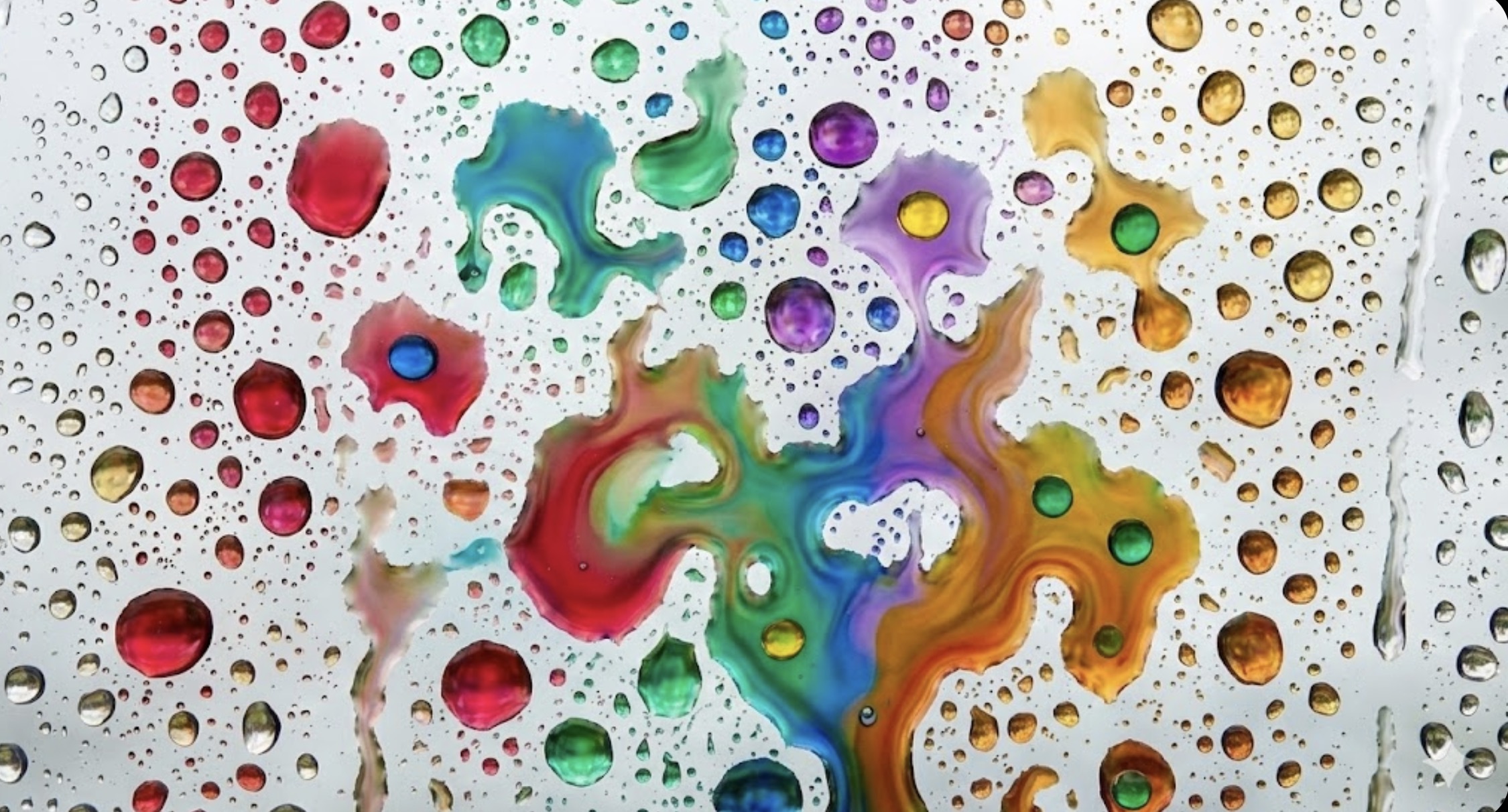
If each colored droplets were a race, a proximal grouping of them could form a culture, but redraw the grouping just a little bit wider and you have several overlapping cultures. Maybe it’s not so clear when you compare the reds in the upper left to the reds in the middle left, but they are probably pretty different compared to the oranges on the right, or maybe the blue-inside-red. Then you have that giant red-green-blue-purple-orange puddle in the middle, which is kinda like the US in that there is a lot intermixing going on but still some distinct pockets within the greater whole. And if you ask ten different people, you’ll get eleven different groupings of those same colors — one guy will change his answer a few minutes later after he thinks about it some more.
To me this doesn’t mean that “there is no white culture”, but that white culture is, again, just a lazy shorthand like any other culture. When we say “Black culture” or “Native American culture” or “Asian culture”, those words do convey stereotypes that may be situationally useful for communications, even if they are never terribly precise or accurate.
But if we can have a Black History Month or an Asian American Heritage Month or an Indigenous People’s Day… well, none of those are a single country, ethnicity, or culture, either, but they are still a chance to partake in the experiences of those who look, live, and love differently from you might.
Yes, it’s unfortunately very true that white supremacy has largely co-opted “white culture”, but I don’t think it’s fair to say that white culture doesn’t exist (any more than any other loose meta-culture doesn’t exist). There is a cultural line you can trace from Greece to Egypt to Rome to Europe to the Americas that does give most Western cultures, including Europe and North America, a shared heritage distinct from an Asian, Arab, or African one. Of course it’s all muddied quite a bit thanks to conquest, imperialism, trade, globalization, and of course the Internet now, but they are still not only useful but interesting groupings of behaviors and customs.
Part of what I loved about moving to the US at first was discovering all those “white people” activities and foods, everything from line dancing to camping & hiking & rock climbing to baguettes to Unitarian Universalism to CSAs to fancy cheeses to drum circles to bumper stickers. It’s a hodgepodge of ethnic and cultural traditions from Europe and Africa and beyond, but they’re still largely “white” things that you would more rarely find in a non-white household. Heck, I used to have a copy of the “Stuff White People Like” book that I would use for inspiration, finding new things to try  My white roommate at the time was both a bit amused and offended by that book…
This was especially true when I first moved here (early 2000s), vs now when there are more 3rd-generation+ post-internet immigrants who have borrowed more from the white people. When I first moved here, I was almost always the only “person of color”* doing those things amongst a sea of white people. I didn’t always know the ethnic lines of those white people, and yes, some — but not all — of those are Americanisms and not white-isms, but some of them are a white European thing. Modern mountaineering, for example, took on a pretty different form after Edmund Hillary, even though certainly the Sherpas and the Japanese and the Tanzanians had their own tall mountains.
I think whenever you move abroad, the dominant culture there will be quite the shock compared to your home culture. But if you visit a few Asian countries, you’ll find some similarities between them (especially the majority Chinese-Japanese-Korean areas). If you visit a few European, especially Western European countries, you’ll find some similarities between them. And in the US, where we’re, eh, maybe not so much a melting pot but a salad bowl with some melted cheese on top, well… there are certain traditions enjoyed by that melted cheese which aren’t so much shared by the croutons and lettuces  That’s all I’m saying.
* Side note: I don’t know how I feel about being considered a “person of color” — I feel like that’s a power difference designation originally meant to protect people of African descent, but whose protections often ended up accidentally benefiting East Asians at the expense of white people, e.g. in affirmative action. I certainly do not share the same experiences of race and racism, and in some ways, I am quite a bit more privileged than your average working class white person. I get very little of the racism usually targeted at black and Latinx people, and yet enjoy all of the legal and social protections that they (and well-intentioned white people) fought for. I’m just kinda along for the ride. But that’s another discussion for another day…