From So Long and Thanks For All the Fish:
“was I found…
…in a handbag
…in the Left Luggage office
…at Fenchurch Street Station”
What is this a reference to? I’ve always wondered…
From So Long and Thanks For All the Fish:
“was I found…
…in a handbag
…in the Left Luggage office
…at Fenchurch Street Station”
What is this a reference to? I’ve always wondered…
I’m not sure what you’re asking. Left Luggage is a lost and found office. There is such a station. You can read about it here:
Oscar Wilde’s The Importance of Being Earnest (1895, so very much public domain).
LADY BRACKNELL.
To lose one parent, Mr. Worthing, may be regarded as a misfortune; to lose both looks like carelessness. Who was your father? He was evidently a man of some wealth. Was he born in what the Radical papers call the purple of commerce, or did he rise from the ranks of the aristocracy?JACK.
I am afraid I really don’t know. The fact is, Lady Bracknell, I said I had lost my parents. It would be nearer the truth to say that my parents seem to have lost me . . . I don’t actually know who I am by birth. I was . . . well, I was found.LADY BRACKNELL.
Found!JACK.
The late Mr. Thomas Cardew, an old gentleman of a very charitable and kindly disposition, found me, and gave me the name of Worthing, because he happened to have a first-class ticket for Worthing in his pocket at the time. Worthing is a place in Sussex. It is a seaside resort.LADY BRACKNELL.
Where did the charitable gentleman who had a first-class ticket for this seaside resort find you?JACK.
[Gravely.] In a hand-bag.LADY BRACKNELL.
A hand-bag?JACK.
[Very seriously.] Yes, Lady Bracknell. I was in a hand-bag—a somewhat large, black leather hand-bag, with handles to it—an ordinary hand-bag in fact.LADY BRACKNELL.
In what locality did this Mr. James, or Thomas, Cardew come across this ordinary hand-bag?JACK.
In the cloak-room at Victoria Station. It was given to him in mistake for his own.LADY BRACKNELL.
The cloak-room at Victoria Station?JACK.
Yes. The Brighton line.LADY BRACKNELL.
The line is immaterial. Mr. Worthing, I confess I feel somewhat bewildered by what you have just told me. To be born, or at any rate bred, in a hand-bag, whether it had handles or not, seems to me to display a contempt for the ordinary decencies of family life that reminds one of the worst excesses of the French Revolution. And I presume you know what that unfortunate movement led to? As for the particular locality in which the hand-bag was found, a cloak-room at a railway station might serve to conceal a social indiscretion—has probably, indeed, been used for that purpose before now—but it could hardly be regarded as an assured basis for a recognised position in good society.JACK.
May I ask you then what you would advise me to do? I need hardly say I would do anything in the world to ensure Gwendolen’s happiness.LADY BRACKNELL.
I would strongly advise you, Mr. Worthing, to try and acquire some relations as soon as possible, and to make a definite effort to produce at any rate one parent, of either sex, before the season is quite over.JACK.
Well, I don’t see how I could possibly manage to do that. I can produce the hand-bag at any moment. It is in my dressing-room at home. I really think that should satisfy you, Lady Bracknell.LADY BRACKNELL.
Me, sir! What has it to do with me? You can hardly imagine that I and Lord Bracknell would dream of allowing our only daughter—a girl brought up with the utmost care—to marry into a cloak-room, and form an alliance with a parcel? Good morning, Mr. Worthing!
I’d been wondering the same as well since I first read the book some 40 years ago. While the Oscar Wilde quote is interesting, the way the scene goes down in Fish with the characters going back and forth makes me think that they were quoting something exactly as it was originally written.
I’d always thought it was a reference to Paddington Bear.
It’s definitely an Oscar Wilde reference. The fact that Jack/Ernest was discovered in a handbag in the Brighton Side of Victoria Station is definitely relevant; the Brighton Side was associated with fun and frivolity, whereas Fenchurch Street is probably the most depressing of all the London railway stations.
Actually not lost and found, but a temporary luggage storage facility:
Some similarity to a cloakroom:
I’ve always had the same question as the OP, and am satisfied with the Oscar Wilde reference. Unless a better answer comes up.
Thank you.
I will add to the Paddington Bear reference (Who was found at Paddington station)
Wikipedia says
is Arthur Dent’s soulmate in the fourth book of the Hitchhiker “trilogy”, the novel So Long, and Thanks for All the Fish . Fenchurch was named after the Fenchurch Street railway station where she was conceived in the ticket queue. Adams revealed in an interview that it was really the ticket queues at Paddington Station that made him think of conceiving a character there, but chose Fenchurch to avoid complications with Paddington Bear.[4]
Brian
I know queueing can be tedious - but that seems a rather ambitious way to pass the time
You certainly wouldn’t want anyone pushing in.
Thank you for the responses. I always wondered if that was a nod to an older work. The importance of being Earnest is now on my reading list!
You can also see it on YouTube. Here’s the classic 1953 film version:
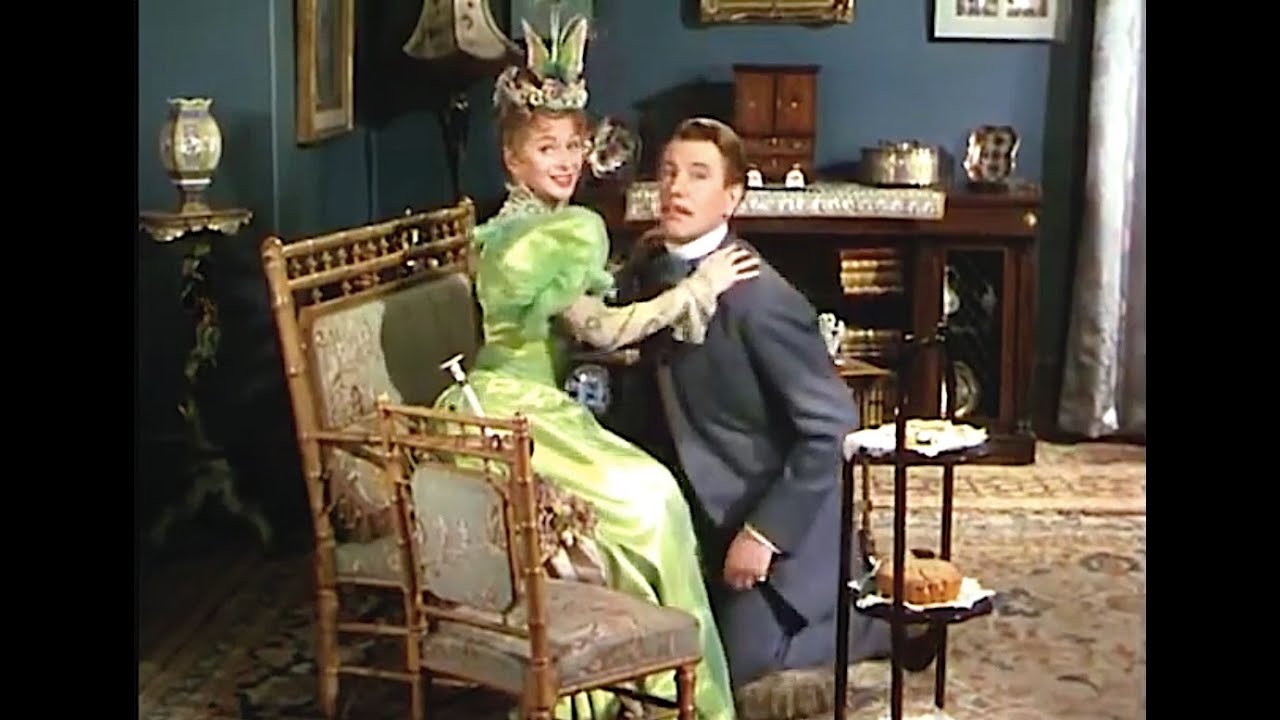
My favourite line. 
well you know … brits and all that …